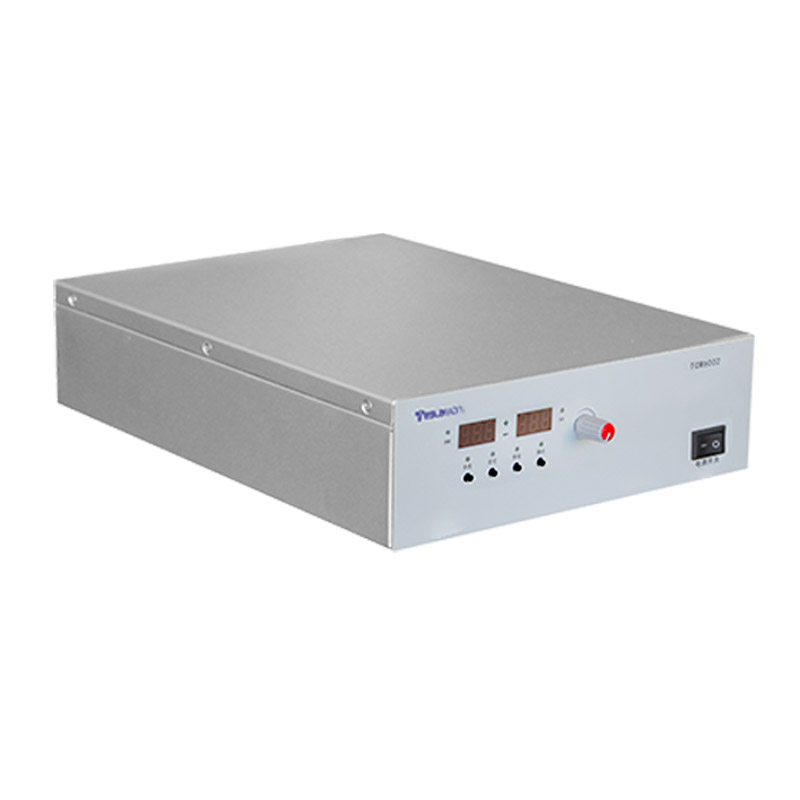
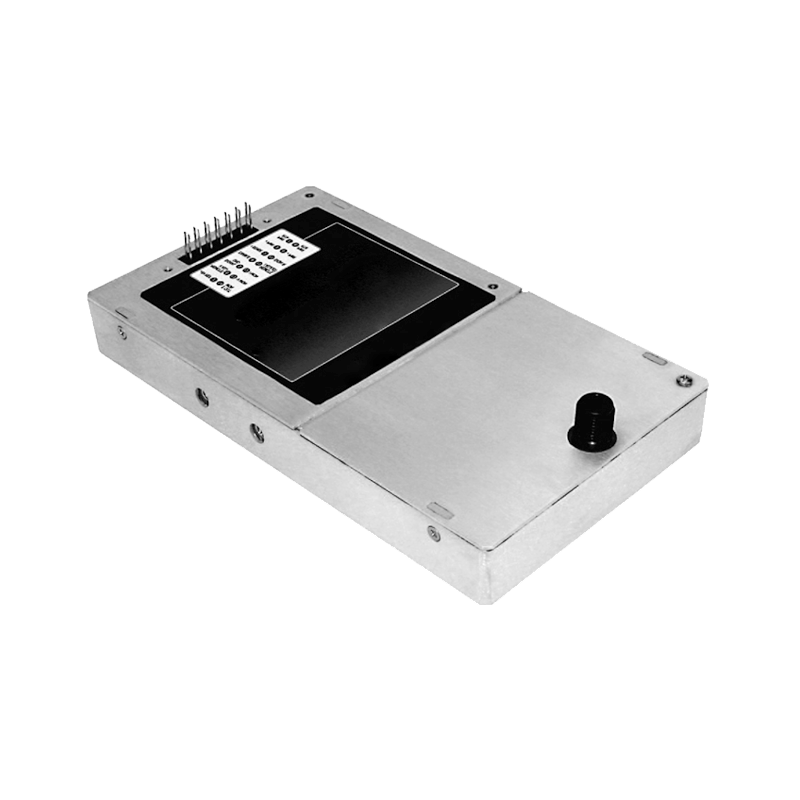
High Voltage Power Supply Precision Control Solutions for Ion Implanters
Ion implantation is a foundational process in semiconductor manufacturing, critical for precisely introducing dopants into a wafer's substrate to define the electrical characteristics of transistors and other circuit elements. The core functionality and, crucially, the process stability of an ion implanter are inextricably linked to the performance and precision control of its high-voltage (HV) power supply systems. These systems are responsible for generating, extracting, accelerating, and manipulating the ion beam, with the primary challenges centered on achieving ultra-low voltage ripple, exceptional long-term stability, and rapid transient response. The precision control of these HV sources directly dictates key process parameters such as the implant dose and depth profile.
The ion source requires high voltage for generating plasma and extracting ions. Precision control here is vital: small fluctuations in the extraction voltage directly impact the initial energy and focus of the beam. A critical control solution involves the use of high-frequency switching topologies coupled with advanced closed-loop feedback systems. By operating the power converters at frequencies significantly higher than traditional line-frequency designs, the size of reactive components (inductors and capacitors) can be minimized, which in turn reduces the energy stored in the output stage. This reduction in stored energy is essential for achieving two primary goals: ultra-low output voltage ripple and a rapid transient response to load changes. The goal is to maintain the extraction potential with a voltage ripple typically in the range of parts per million (ppm) to ensure the initial ion energy distribution is extremely narrow, which is necessary for tight control over the final implant depth profile.
Further downstream, the main accelerating column is driven by the highest voltage potential in the machine, often ranging from tens of kilovolts up to mega-electron volts (MeV) for high-energy implanters. The stability of this accelerating voltage is arguably the single most critical factor determining the accuracy of the doping depth. Errors in the accelerating voltage translate directly into errors in the ion's kinetic energy, and thus, errors in the projected range within the silicon. Precision control here involves sophisticated digital control algorithms that integrate multiple sensor inputs—measuring voltage, current, and beam current—to provide real-time compensation. These algorithms often employ predictive control techniques that model the dynamic behavior of the accelerating column, including parasitic capacitance and beam-loading effects, to anticipate and proactively correct for deviations before they can manifest as measurable voltage droop or overshoot. This minimizes the energy spread of the ion beam, ensuring a consistent and tight depth profile, which is a crucial determinant of device performance and yield.
Moreover, the process stability is significantly affected by the response to micro-arc events. Ion implanters operate in a high-vacuum, high-electric-field environment, making them susceptible to occasional transient micro-discharges (arcs) within the source or accelerator column. When an arc occurs, the HV power supply must instantly detect the event, rapidly quench the energy dump to protect sensitive internal components, and restore the operating voltage to the setpoint as quickly as possible. Specialized arc suppression circuits and ultra-fast current limiting designs, often based on advanced solid-state switching devices, are integrated directly into the HV units. The restoration speed, known as the "recovery time," directly impacts the overall throughput and the uniformity of the dose. A slow recovery leads to sections of the wafer receiving a lower-than-intended dose. Therefore, modern precision control solutions focus on achieving recovery times in the sub-millisecond range, ensuring that process interruptions are negligible and the dose uniformity across the wafer is maintained at the highest level. These interwoven control mechanisms collectively transform raw electrical power into a highly precise, stable, and reproducible kinetic energy source for the ion beam.