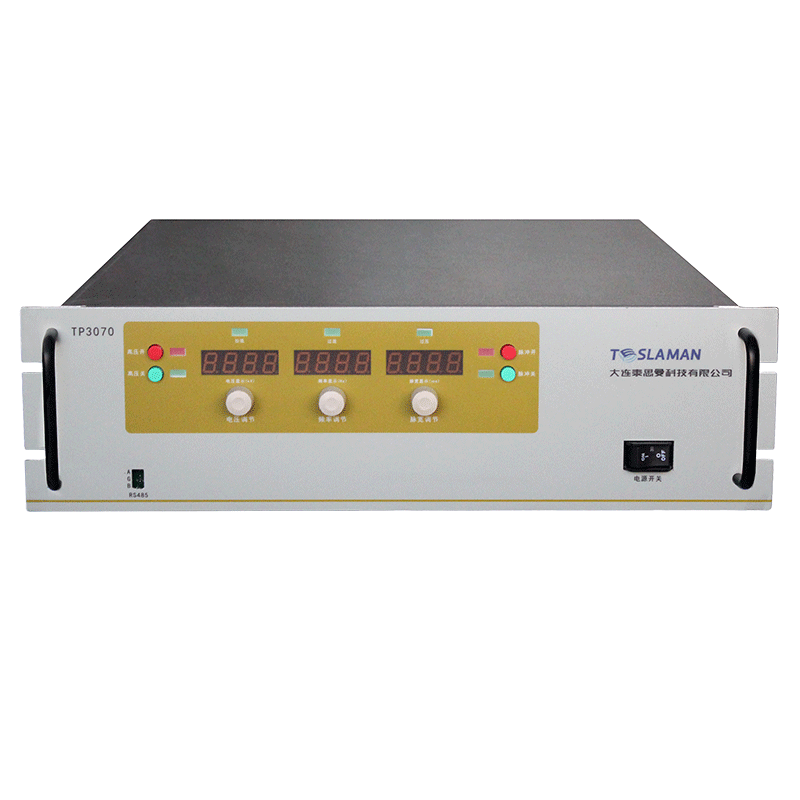
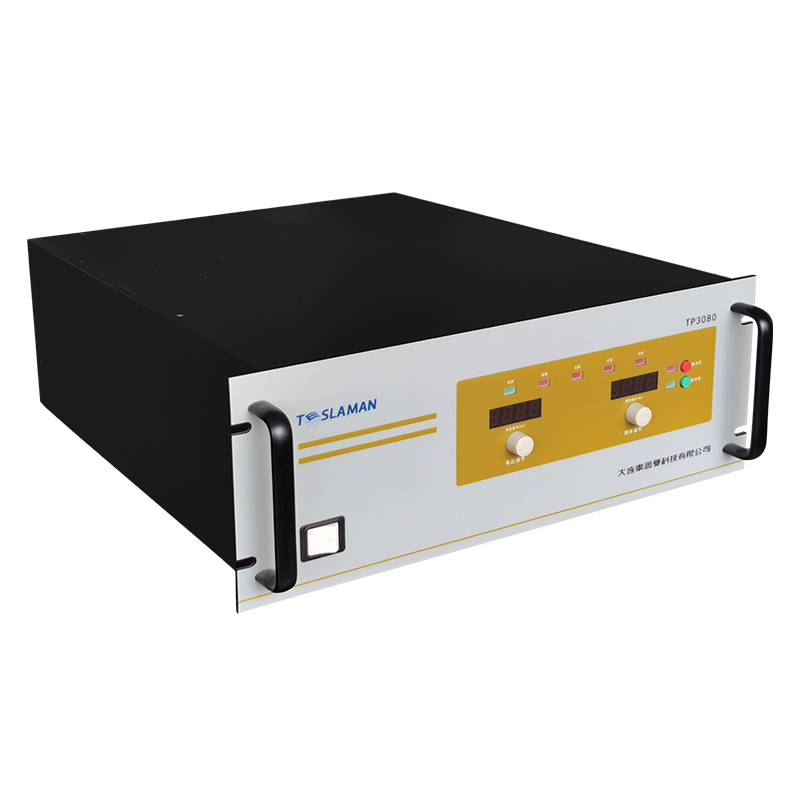
High Voltage Power Supply Driving Vacuum Coating Automation
Automation of vacuum coating processes has reached a tipping point where the power supply is no longer a simple energy source but the primary actuator for closed-loop control of film properties in real time. High-voltage systems specifically architected for automation integrate sensing, decision-making, and actuation at microsecond timescales, effectively turning the plasma itself into a programmable materials synthesis tool.
Central to this capability is the fusion of high-bandwidth power electronics with inline optical and plasma emission monitoring. Broad-spectrum emission spectrometers and laser-based ellipsometers feed thickness, index, and composition data at kilohertz rates directly into the power supply’s FPGA-based control kernel. The controller then modulates output voltage, current, pulse frequency, and reverse-pulse duration to steer the process along a precomputed trajectory that achieves target properties regardless of minor disturbances. Multi-layer optical filters containing more than 200 individual layers are now deposited in fully automatic mode with end-point detection accuracy better than one quarter-wave, eliminating the historical practice of overcoating and subsequent etching correction.
Robotic substrate handling and dynamic rate ramping are enabled by the power supply’s ability to deliver arbitrary waveforms synchronized to substrate position. As carriers enter or exit the deposition zone, the supply executes pre-programmed power envelopes that maintain constant flux on moving surfaces, achieving edge-to-edge uniformity improvements from ±5 % to ±1.5 % on large architectural panels without mechanical shutters. The same waveform capability supports graded-index layers and rugate filters by continuously varying plasma conditions according to position-dependent recipes.
Gas flow automation benefits enormously from power-based partial pressure control. Instead of relying solely on mass flow controllers and capacitance manometers with response times of hundreds of milliseconds, the high-voltage supply infers instantaneous oxygen or nitrogen partial pressure from plasma impedance and optical emission intensity, then adjusts power to maintain the poisoning state at the optimal set-point. This technique achieves reaction completion times below 50 ms during layer transitions, enabling sharper interfaces in semiconductor and optical stacks than possible with conventional flow-based control alone.
Unattended overnight and weekend operation becomes practical when the power system incorporates comprehensive self-diagnostic and fault-recovery routines. Continuous monitoring of partial discharge inception voltage, coolant conductivity, and semiconductor degradation precursors allows the system to predict maintenance needs weeks in advance. In the event of a detectable anomaly such as target arcing or pump failure, the supply executes a safe shutdown sequence that protects both chamber and substrates, then restarts automatically once conditions return to allowable limits. Production facilities running three-shift operations have extended continuous unattended runs from a few hours to multiple days.
Integration with factory-level manufacturing execution systems is achieved through standardized OPC-UA interfaces that expose not only basic operating parameters but also real-time film property predictions derived from the power supply’s internal process model. Higher-level schedulers can therefore optimize job sequencing based on actual remaining target life and current chamber condition rather than conservative fixed intervals, increasing overall line throughput by 15–20 %.
The most advanced automation implementations treat the entire coating line as a single distributed high-voltage power instrument. All cathodes, bias supplies, and electron sources operate under unified control timing derived from a central precision clock, enabling coherent excitation strategies such as synchronized hipims pulses or phase-locked medium-frequency dual magnetron operation that suppress large-particle generation at source. The resulting films exhibit defect densities below one per square meter on Gen 8.5 display substrates, a threshold that previously required extensive post-process inspection and repair.
By making the high-voltage power supply the master controller rather than a slave component, vacuum coating automation has moved from rigid recipe execution to adaptive, self-optimizing materials synthesis capable of meeting the exacting demands of next-generation optical, electronic, and decorative applications without continuous human oversight.