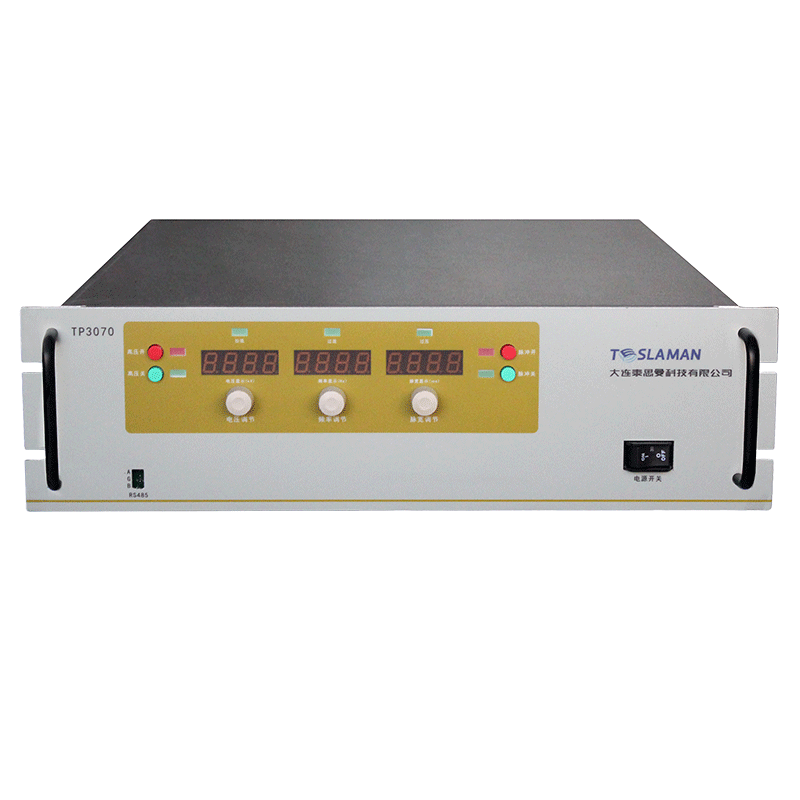
160kV Electron Beam Additive Manufacturing Deflection High Voltage Scanning
Electron Beam Additive Manufacturing (EBAM) represents the pinnacle of metal fusion technology for high-value, complex components, leveraging the intense kinetic energy of a focused high-power electron beam. In systems utilizing fast electromagnetic deflection for beam steering, as opposed to mechanical stage movement, the generation and control of the high-voltage scanning signals present a formidable engineering challenge, particularly at the extreme potentials required for high-voltage electron guns operating at 160 kV and beyond. This high-voltage scanning subsystem is not a simple amplifier; it is a critical determinant of build precision, feature resolution, and process stability.
The fundamental requirement is to translate low-voltage digital scan patterns from a control computer into high-fidelity, high-voltage analog signals that drive the X and Y magnetic deflection coils. The voltages needed at the coil terminals can range from hundreds to over a thousand volts, depending on coil inductance and the required slew rates for fast beam jumps. However, the defining constraint is that these scan amplifiers must operate with their output references floating at the massive negative high potential of the electron gun cathode, typically -160 kV. This places the entire scanning power supply and its control electronics in a uniquely hostile environment.
The design revolves around achieving high bandwidth, high slew rate, and excellent linearity while maintaining perfect isolation from earth ground. Bandwidth is crucial not just for speed, but for accuracy. To accurately trace a complex vector path or maintain positional stability during high-speed melting, the amplifier must have a flat frequency response and minimal phase shift up to tens or even hundreds of kilohertz. This ensures sharp corners in scan patterns are rendered faithfully and reduces dynamic positioning errors. Slew rates must be correspondingly high to support fast jumps between distant points on the build plate, a common tactic for heat distribution management.
Linearity and drift specifications are directly correlated with part dimensional accuracy. Non-linearity in the scan amplifiers results in distorted or warped geometries, as the beam's physical deflection is a function of the current through the coils, which is controlled by the applied voltage. Integral and differential non-linearity must be minimized through careful circuit design and calibration routines. Long-term drift, both thermal and temporal, must be exceptionally low to prevent gradual deviations in part dimensions during builds that can last dozens of hours.
The isolation challenge is monumental. Providing operational power and high-speed digital control signals to circuitry floating at -160 kV requires innovative solutions. Multi-stage isolation transformer systems are often employed for power delivery, while fiber-optic links are universally used for control and data transmission due to their complete immunity to high-voltage transients and ground loop issues. The physical packaging of the scan amplifiers must also manage corona discharge and parasitic capacitance, which can limit bandwidth and introduce noise. The entire assembly is typically housed in a dielectric oil or gas (like SF6) insulated vessel to prevent arcing.
In practice, the performance of this high-voltage scanning system dictates the EBAM machine's capability. It enables advanced scan strategies like multi-spot melting for increased productivity, intricate in-fill patterns for tailored material properties, and real-time beam oscillation for improved melt pool stability. The ability to swiftly and accurately direct the immense power density of a 160 kV electron beam is what transforms a digital model into a defect-free, high-integrity metal component, making the high-voltage scanning subsystem a cornerstone of advanced EBAM technology.