Redundancy Design for 225kV Industrial CT System High Voltage Power Supply
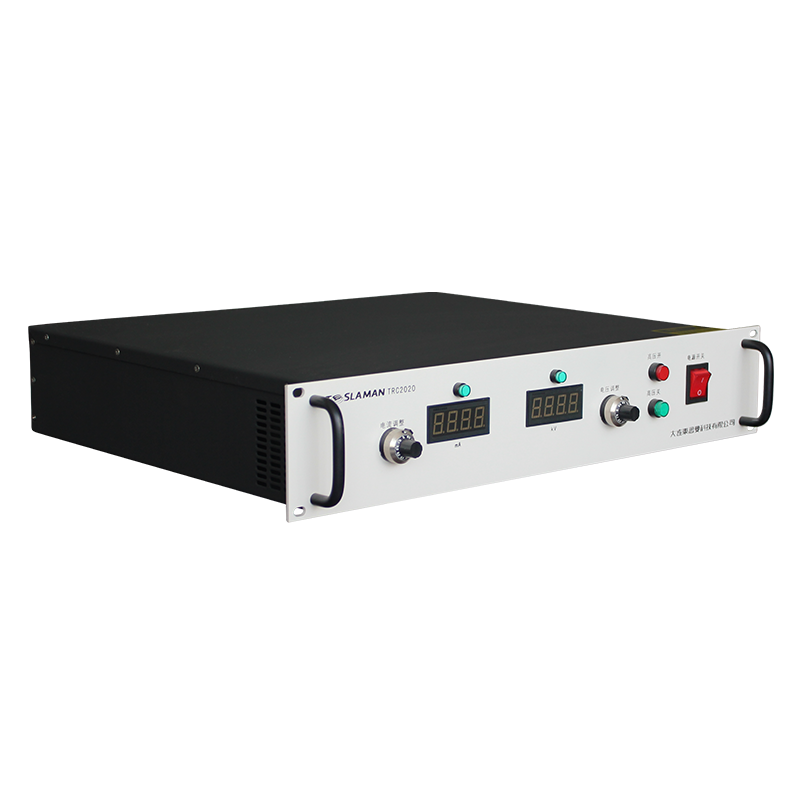
Industrial Computed Tomography (CT) systems operating at high energies, such as those utilizing a $225\text{ kV}$ X-ray source, are essential tools for non-destructive testing (NDT), quality control, and metrology in industries requiring high throughput and high reliability. The X-ray tube in such a system is driven by a specialized high-voltage (HV) power supply, which must deliver the required tube voltage (up to $225\text{ kV}$) and filament current with exceptional stability. Due to the high cost of unscheduled downtime in industrial settings, **redundancy design** for the HV power supply is not merely desirable but an essential feature for maintaining maximum system availability and operational safety.
The primary objective of HV power supply redundancy in a $225\text{ kV}$ industrial CT system is to ensure **fault tolerance**—the ability of the system to continue operation, possibly at a reduced level, following the failure of a single component or power module. This is typically achieved through **N+1 redundancy** or **hot-swappable modular redundancy**. The complexity arises from the very high voltages involved. A centralized $225\text{ kV}$ supply is difficult and costly to fully duplicate. Therefore, the redundancy design is focused on the **modularization of the HV generator**. Instead of a single unit, the system utilizes multiple, interconnected power modules to generate the total required voltage and current.
A common implementation involves segmenting the high-voltage generation stage and the low-voltage control stage. The **low-voltage control circuitry** (responsible for commanding and monitoring) can be fully duplicated (dual redundant controllers), with a rapid failover mechanism. More critically, the **HV output stage** is often built using multiple series-connected power bricks, each contributing a portion of the total $225\text{ kV}$. Redundancy at this level means having an extra power brick (the '+1') that can be quickly switched into the circuit to replace a failed unit, or the system can continue operating by slightly increasing the output of the remaining healthy modules to maintain the target voltage. The most effective redundancy is achieved by a **parallel-redundant current source** for the X-ray tube filament, which directly controls the X-ray intensity. Filament supply failures are common, and having a secondary, fully independent filament supply that can instantaneously take over ensures continuous X-ray output.
The **switchover mechanism** is the most critical element of the redundancy design. It must be implemented using high-reliability, high-voltage switching components (e.g., vacuum relays or solid-state switches) that can safely disconnect the faulted module and connect the redundant module without introducing damaging voltage transients or arcs. The switchover time must be extremely fast—in the millisecond range—to prevent disruption of the X-ray exposure, which would compromise the CT scan data. Furthermore, the redundancy system must incorporate sophisticated **diagnostic and isolation features**. Upon detecting a failure (e.g., overcurrent, overvoltage, or internal temperature excursion), the system must immediately and safely isolate the faulted module to prevent further damage while alerting the operator. The robust redundancy design of the HV power supply ensures the continuous, high-availability operation of the $225\text{ kV}$ industrial CT system, which is essential for maintaining high throughput in production quality control environments.