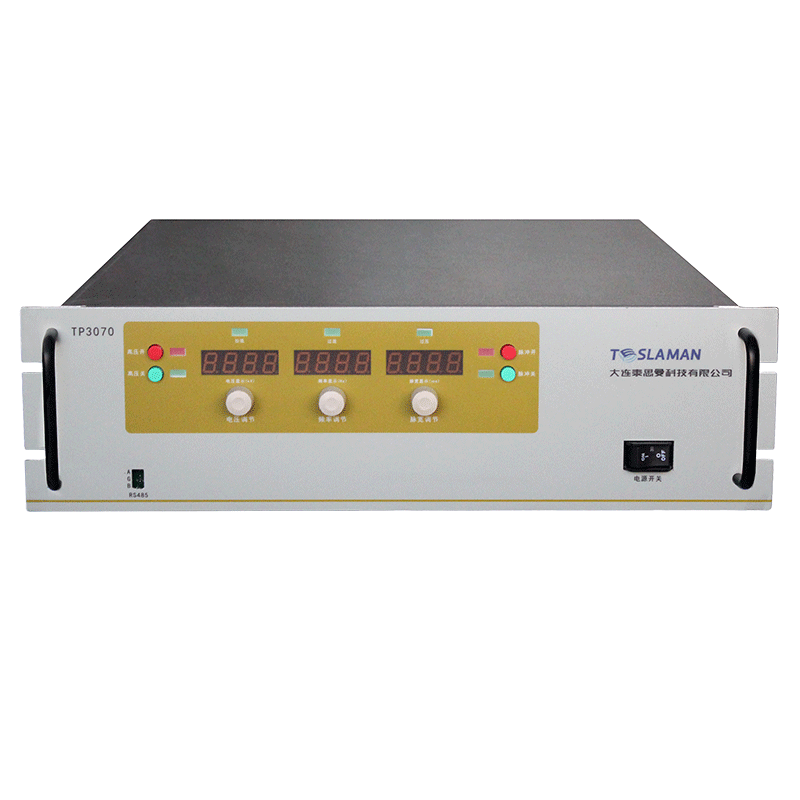
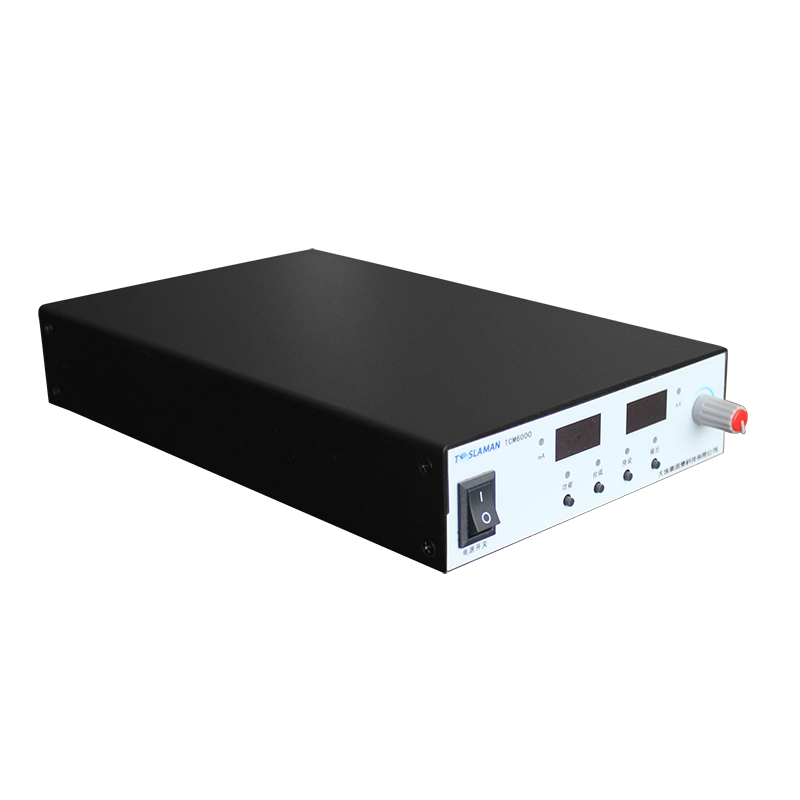
Arc-Suppression High-Voltage Power Supplies for Vacuum Coating Applications
Reactive arc coating processes using titanium, aluminum, and chromium targets routinely generate several hundred macro-arcs per hour that, if not handled properly, cause droplet emission and defect densities unacceptable for optical and decorative finishes. Modern arc-suppression high-voltage supplies, typically operating in the 20-40 kV range for bias applications and 600-1000 V for arc source ignition, incorporate multi-layered arc management strategies that detect, extinguish, and prevent recurrence of discharge events within microseconds while maintaining overall process stability.
Arc detection sensitivity reaches sub-microsecond resolution through a combination of di/dt sensing on the output cable and optical plasma emission monitoring inside the chamber. When current rise rate exceeds 50 A/µs or optical intensity drops characteristic of arc channel formation, the supply executes a staged response tailored to arc severity. Micro-arcs below 10 J stored energy are quenched by simple output collapse to zero for 15-25 µs, while macro-arcs trigger active reverse-voltage application of -150 V for 8 µs followed by controlled re-ignition at reduced current limit.
Reverse-voltage generation uses an auxiliary H-bridge connected across the main filter capacitor capable of injecting up to 200 A negative current. This rapidly extracts electrons from the arc root, collapsing plasma conductivity far faster than passive quenching alone. Energy dissipated in the arc channel is typically limited to 2-8 mJ, well below the 50 mJ threshold for significant droplet generation.
Preventive arc management operates continuously between events. Adaptive current limiting reduces available current 20-30 % below the level that historically triggered racing arcs during target poisoning transitions in reactive processes. When oxide buildup causes voltage rise indicative of impending instability, the supply automatically inserts brief off-periods of 5-10 µs every 100 µs to bleed surface charge while maintaining average power within 3 % of target.
Dual-output configurations separate bias and ignition functions onto independent regulated channels sharing a common grounded return. This prevents ignition transients from coupling into the bias supply where they could trigger substrate arcing, a frequent issue with single-output designs. Bias channels incorporate programmable slew-rate limiting that restricts voltage rise to 2 kV/ms during plasma striking, avoiding field emission that seeds arc formation.
Output filtering uses distributed pi-section networks with vacuum-compatible mica capacitors and air-core inductors to present high impedance at arc frequencies (10-200 kHz) while maintaining low impedance at the fundamental process frequency. Stored energy in the final 2 meters of cable is limited to less than 8 mJ through deliberate selection of low-capacitance coaxial construction.
Active damping circuits inject counter-phase current pulses to cancel ringing after arc quenching events, preventing the voltage overshoot that frequently re-ignites arcs in marginally stable conditions. Damping factor is continuously adjusted based on measured cable parameters to maintain critical damping across temperature and pressure variations.
Process gas pressure compensation adjusts arc detection thresholds and quenching duration based on real-time chamber pressure telemetry. At lower pressures typical of HiPIMS processes, where arc propagation velocity increases, reverse voltage amplitude is automatically increased by 40 % and duration extended by 3 µs to ensure complete extinction.
Long-term poisoning management in reactive aluminum oxide coating employs periodic forced-arc sequences at controlled energy that clean target race-track surfaces without generating defects. The supply executes these cleaning pulses during shuttered periods with precisely metered energy delivery that removes oxide buildup while consuming less than 0.5 % additional average power.
These arc-suppression technologies routinely reduce defect-causing macro-arcs by more than 98 % compared to conventional supplies, enabling reactive coating of optical stacks with defect densities below 0.1 per square meter and extending target utilization by 25-40 % through reduced poisoning downtime in high-volume decorative and functional coating applications.