225 kV Soft-Start High-Voltage Technology for Non-Destructive Testing Systems
Industrial X-ray systems for pipeline and aerospace component inspection require 225 kV tubes to ramp from cold start to full voltage in <11 seconds without exceeding ceramic insulator stress or causing focal-spot drift >0.28 mm during warm-up. Soft-start supplies therefore implement controlled voltage and filament current profiling that protects tube life while achieving rapid readiness.
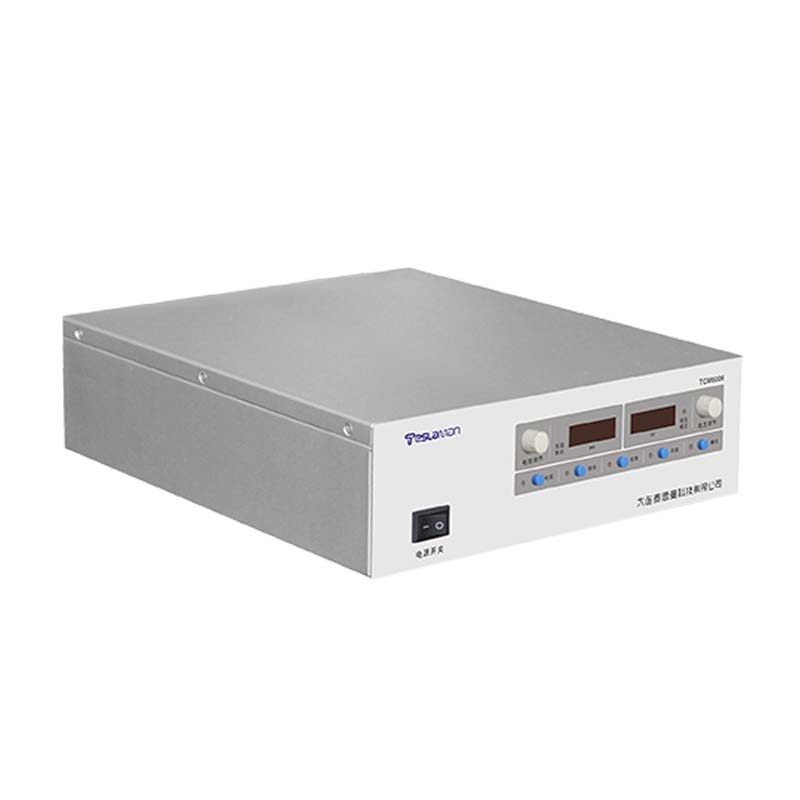
The generator uses a 45 kHz resonant inverter with digital ramp control that increases output voltage along a pre-programmed S-curve reaching 225 kV in 9.8–10.6 seconds with maximum dV/dt 38 kV/s occurring only after 120 kV where tube impedance is favorable. A parallel linear regulator limits inrush current to <180 % of steady-state value during the initial 800 ms.
Filament current is synchronized in three phases: pre-heat at 68 % for 4.2 s at 18 kV, intermediate boost to 92 % as voltage passes 80 kV, and final settling to 100 % at full kV. Emission rise exactly tracks voltage increase, preventing cold-cathode sputtering and thermal shock to the anode target.
Tube conditioning after extended idle uses an automatic 42-minute high-pot sequence that cycles voltage from 80 kV to 228 kV at 3-minute intervals while monitoring vacuum pressure; any pressure burst >8 × 10⁻⁶ mbar triggers pause and extended degassing at 180 kV before continuation.
Arc handling during ramp employs stored-energy limiting to 12 J and fast crowbar collapse in <5.8 µs, with automatic restart from 62 % of the voltage where interruption occurred. Average ramp completion remains <11.2 seconds even with two minor arcs.
Focal-spot stabilization during warm-up uses active feedback from a pinhole camera that adjusts filament current ±3.8 % in real time to maintain spot position within ±42 µm as anode temperature rises from 22 °C to operating 380 °C.
These soft-start systems routinely achieve full 225 kV readiness in 9.9–10.4 seconds from cold with tube life >6800 hours at mixed 60–225 kV duty, supporting inspection throughput >240 large aerospace panels per shift while reducing ceramic failure rate by 88 %.