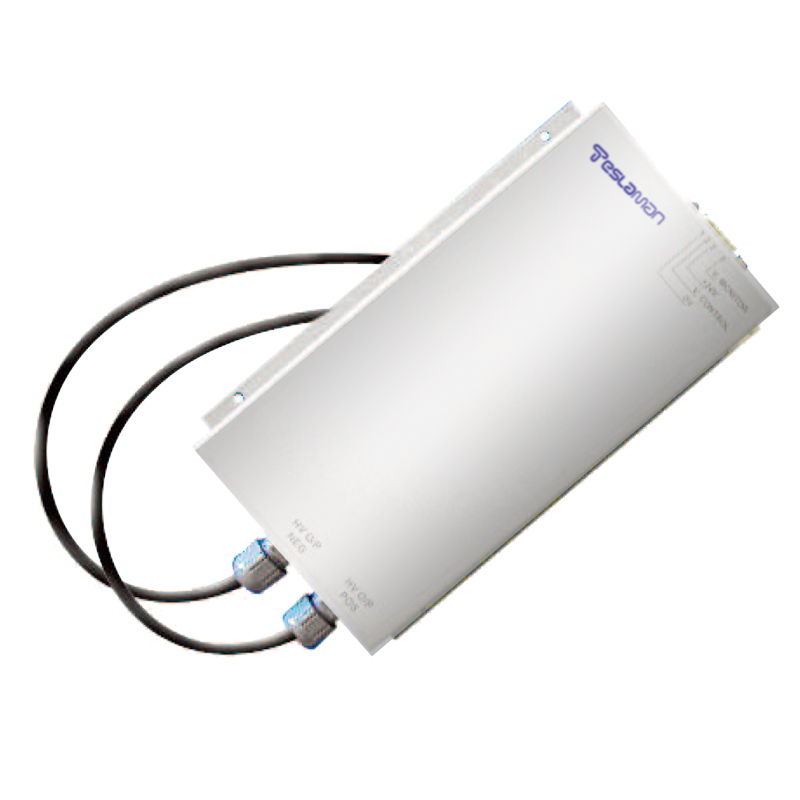
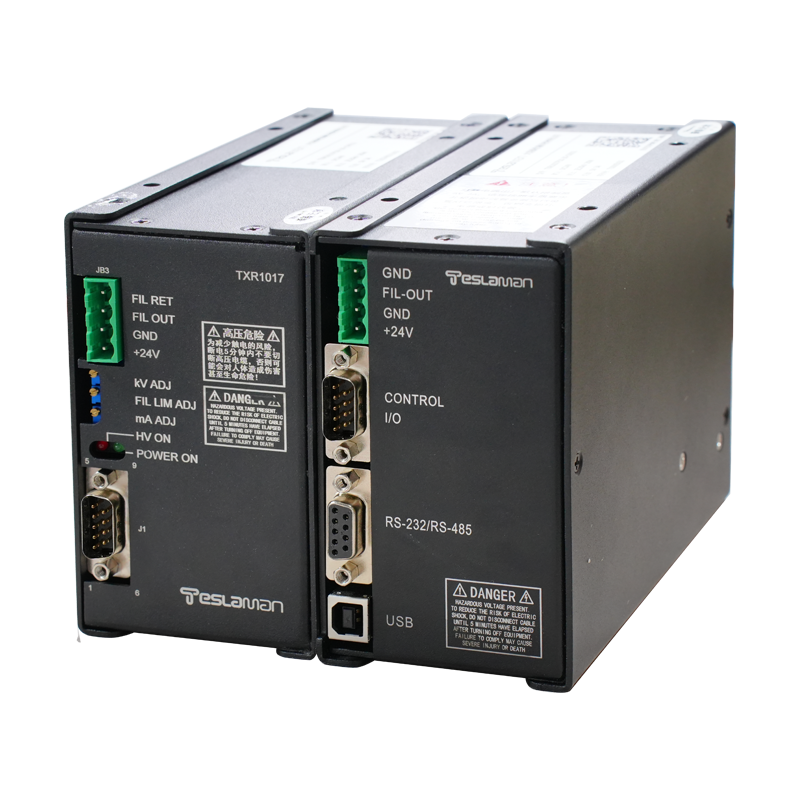
160kV Standard Power Supply Remote Monitoring Interface
High-voltage DC power supplies rated at 160kV and beyond are utilized in critical test and validation environments, such as high-power cable testing, insulator string verification, and as calibration references for other high-voltage measuring systems. Unlike supplies designed for integrated equipment, these are often standalone "standards" or test sets, where operational parameters must be set, controlled, and monitored from a safe distance due to the severe electrocution hazard posed by the output. The remote monitoring and control interface, therefore, is not a convenience but an absolute safety and operational necessity, and its design embodies a series of stringent technical and functional requirements.
The primary function of the interface is to provide complete electrical isolation between the user/operator and the high-voltage output. This isolation must be robust enough to withstand the full output voltage plus a significant safety margin. Consequently, communication is never carried over simple, non-isolated serial lines like standard RS-232. Instead, the interface employs opto-isolated or transformer-isolated digital links, such as optically isolated RS-485, Ethernet with reinforced isolation, or proprietary fiber-optic communication modules. This ensures that a fault in the control room equipment cannot propagate a dangerous potential back to the operator's terminal.
The data protocol and command structure must be comprehensive and deterministic. At a minimum, the interface allows for remote setting of the output voltage and current limit with high resolution. Commands must be unambiguous and include checksum or error correction to prevent execution of erroneous settings due to communication noise. Beyond basic control, the interface provides real-time telemetry: output voltage (often measured via a precision internal divider), output current, the status of internal interlocks (door open, ground stick engaged, emergency off), and operational status (standby, ramping, regulating, fault). For a standard power supply, the metrology aspect is crucial. The interface should provide access to calibrated readbacks, potentially with information on the internal metrology chain's traceability, which is essential for accreditation of test procedures.
Reliability and determinism under all conditions are non-negotiable. The communication link must remain stable in the electromagnetically harsh environment of a high-voltage test lab, where the initiation or breakdown of a test can generate intense broadband EMI. The interface hardware and firmware must be designed with extensive noise immunity. Furthermore, the system must have a well-defined fault response. If the communication link is severed during operation, the power supply must follow a predefined fail-safe behavior, typically ceasing to raise voltage further and initiating a controlled ramp-down to a safe state, rather than locking at the last commanded output. This prevents a scenario where a disconnected control terminal leaves the high-voltage energized indefinitely.
Modern interfaces also cater to automation and data integrity. Support for standard industrial protocols like Modbus TCP, IEEE 488.2 (GPIB), or even secure web services allows integration into automated test sequences. This enables the logging of all setpoints and measured parameters, along with timestamps, for complete traceability of the test—vital for certification purposes. The interface can also facilitate remote diagnostics, allowing technical support to assess the health of internal components like capacitor banks, switching semiconductors, or the filament supply of a rectifier tube, potentially predicting failures before they occur during a critical test. In summary, for a 160kV standard power supply, the remote monitoring interface is the essential bridge between the human operator and the formidable stored energy within the system. Its design prioritizes safety, isolation, data fidelity, and operational reliability, ensuring that control is maintained and information is accurate, even from hundreds of meters away from the lethal potential within the test chamber.