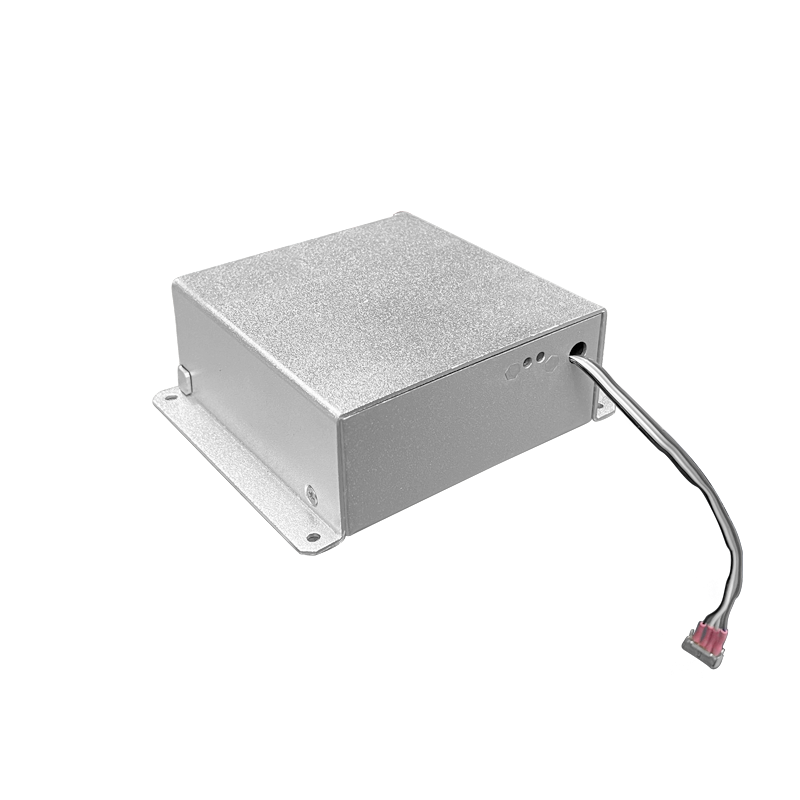
Etching Process Endpoint High-Voltage Signal Recognition
In the sophisticated landscape of semiconductor plasma etching, achieving precise process termination at the exact moment a target layer is cleared, without damaging the underlying material, is a fundamental requirement. This critical transition point, known as the endpoint, is increasingly detected through the nuanced analysis of high-voltage signals intrinsic to the radio-frequency (RF) plasma generation system. Unlike traditional optical emission spectroscopy, which monitors specific wavelengths from plasma species, electrical endpoint detection leverages the direct relationship between plasma impedance and the chemical composition of the etch chamber. This method offers robustness, faster response times, and insensitivity to viewport window clouding, but demands a deep understanding of high-voltage signal behavior and advanced signal processing techniques.
The principle hinges on monitoring the electrical parameters of the RF matching network and the bias power supply. A typical capacitively coupled plasma etch tool employs a primary RF source, often at 13.56 MHz or higher, to generate and sustain the plasma. A separate, lower-frequency bias RF generator, typically in the 400 kHz to 2 MHz range, is connected to the substrate electrode to control ion bombardment energy. This bias supply operates at high voltages, frequently reaching several kilovolts peak-to-peak. As an etching process proceeds, the chemical composition within the chamber undergoes a deliberate shift. Initially, the plasma contains etchants reacting with the target film, producing volatile byproducts. When the film is fully cleared, the underlying layer (e.g., silicon dioxide reaching a silicon stop layer) is exposed, changing the mix of chemical species and their associated electrical characteristics. This alters the plasma's complex impedance.
The bias high-voltage supply, through its automatic matching network and feedback control loop, is exquisitely sensitive to this impedance change. The matching network continuously adjusts variable capacitors and inductors to maintain a condition of zero reflected power, effectively ensuring maximum power transfer into the plasma load. The voltages and currents at key points within this network—specifically, the forward and reflected power signals, the DC self-bias voltage (a negative DC potential that develops on the driven electrode), and the phase relationship between voltage and current—contain the endpoint signature. For instance, during the etching of a silicon nitride layer over silicon oxide, the change in polymer formation and ion mass when transitioning to the oxide layer causes a subtle but distinct shift in the plasma impedance. This is reflected as a change in the magnitude of the DC self-bias voltage or in the required tuning positions of the matching network capacitors.
The technical challenge lies in extracting this weak, often noisy, signature from the high-voltage, high-frequency signals amidst significant background noise. The raw signals are first conditioned using high-voltage differential probes and wideband current transformers with precise frequency response characteristics to ensure signal integrity. These analog signals are then digitized at a high sampling rate, far exceeding the RF fundamental frequency to capture harmonic content, which can sometimes provide stronger endpoint clues than the fundamental. The core of the recognition system is a suite of digital signal processing algorithms. Fast Fourier Transforms (FFT) are performed on time-domain voltage and current waveforms to generate impedance spectra. Advanced techniques like multivariate statistical process control (MSPC) are employed, where multiple electrical parameters (e.g., Vpp, DC bias, phase, harmonic amplitudes) are tracked simultaneously. Principal Component Analysis (PCA) can reduce this multidimensional data to its most significant trends, highlighting the deviation corresponding to the endpoint.
Furthermore, modern systems employ machine learning models trained on historical process data. These models learn the complex, non-linear relationship between the high-voltage signal waveforms and the etch state, enabling them to identify endpoints even in processes with weak optical signatures or multiple sequential layer transitions. The integration of this electrical endpoint detection with the tool's main controller is critical. Upon recognition, a digital signal triggers the sequential cessation of process gases, RF power ramps, and chamber venting. The speed and reliability of this signal chain, from the high-voltage electrode through conditioning, digitization, algorithm processing, and control output, directly impact process repeatability, wafer yield, and the prevention of over-etch damage. Consequently, the high-voltage signal is not merely a power delivery mechanism but a rich, real-time diagnostic sensor for one of the most precise steps in semiconductor manufacturing.