High-Voltage Pulse Waveform for Plastic Flotation Separation
The separation of mixed plastic wastes, particularly those with similar densities, presents a significant challenge for recycling industries. Electrostatic separation techniques have emerged as a viable solution, and among these, the triboelectric charging of plastics followed by separation in a free-fall or fluidized bed with high-voltage electric fields is a prominent method. The efficacy of this process is not solely determined by the presence of a high voltage, but rather by the precise shape, polarity, and timing of the applied high-voltage pulse waveform. Research into these waveform parameters is essential for optimizing charge induction, particle trajectory, and ultimately, separation purity and yield.
The underlying principle involves differentially charging plastic particles through triboelectric contact (e.g., in a vibrating feeder or a cyclone). These charged particles are then introduced into a separation zone between two or more electrodes. A critical non-uniform electric field is established by applying high voltage to these electrodes. The charged particles experience an electrostatic force proportional to their charge and the field strength, deflecting them from their natural free-fall path. Different plastics acquire charges of different magnitudes and, crucially, polarities when contacting each other. For instance, when Polyethylene (PE) and Polyvinyl Chloride (PVC) are agitated, PE tends to charge positively and PVC negatively. The goal of the high-voltage waveform is to create an electric field configuration that maximizes the spatial divergence between particles of opposite polarity.
A simple DC field has limitations. It provides a constant deflecting force. However, particles often carry a distribution of charge magnitudes, and the interaction with the constant field can lead to incomplete separation, especially if particle trajectories are influenced by aerodynamic drag or inter-particle collisions. Pulsed high-voltage waveforms offer dynamic control. One effective approach is the use of alternating positive and negative pulses on opposing electrodes. Consider a system with two vertical plate electrodes. By applying a sharp, high-voltage positive pulse to the left electrode simultaneously with a negative pulse to the right, a strong, horizontally oriented field is created for a brief period. A positively charged PVC particle will be repelled from the left and attracted to the right, experiencing a strong impulse to the right. A negatively charged PE particle experiences the opposite. After the pulse, the field collapses, and the particles travel ballistically. The next pulse, possibly with opposite polarity or a different timing pattern, can further refine the trajectory. This pulsed operation allows for the application of very high peak electric fields (tens of kV/cm) without causing continuous corona discharge or air breakdown that a DC field of the same average strength would induce.
The research into optimal waveforms delves deep into pulse parameters. The rise time of the pulse is critical. An extremely fast rise time (nanoseconds to microseconds) generates a strong displacement current and can induce an additional charge on the particles via induction, enhancing the separation force. The pulse width must be matched to the particle transit time through the active field zone. A pulse that is too short may not act on the particle long enough; one that is too long may allow particles to reach an electrode and adhere. The pulse repetition frequency must be synchronized with the feed rate of particles into the separation chamber to ensure each particle or cluster experiences an optimal number of field interactions. Furthermore, complex multi-electrode systems may require sequenced pulses, where a traveling wave of electric field is created to "sweep" particles of a specific polarity towards a collection bin.
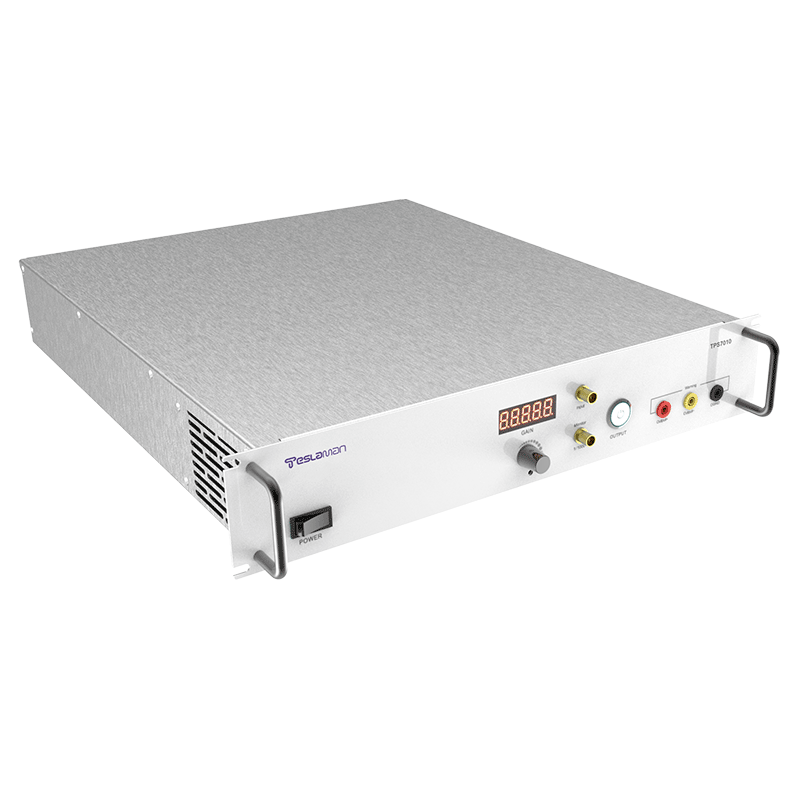
The design of the high-voltage pulse generator for this application is a specialized field. It must produce pulses with amplitudes from 20 kV to over 100 kV, with controllable rise/fall times, widths, and polarities, at repetition rates from single shots to several hundred Hertz. Typically, this involves a Marx generator topology or a pulse-forming network (PFN) switched by a thyratron, a spark gap, or increasingly, solid-state switches like MOSFETs or IGBTs stacked in series. The choice of switch technology directly impacts the reliability, repetition rate, and waveform consistency. Solid-state switches offer precise digital control and high repetition rates but face challenges in achieving very fast rise times at extreme voltages. The output stage must be designed to drive a highly capacitive and variable load (the electrode geometry) without excessive ringing or reflection. Research in this area continuously seeks to develop more efficient, compact, and digitally programmable pulse power sources that can adapt the separation waveform in real-time based on feed composition sensors, pushing the boundaries of purity and throughput in plastic recycling.