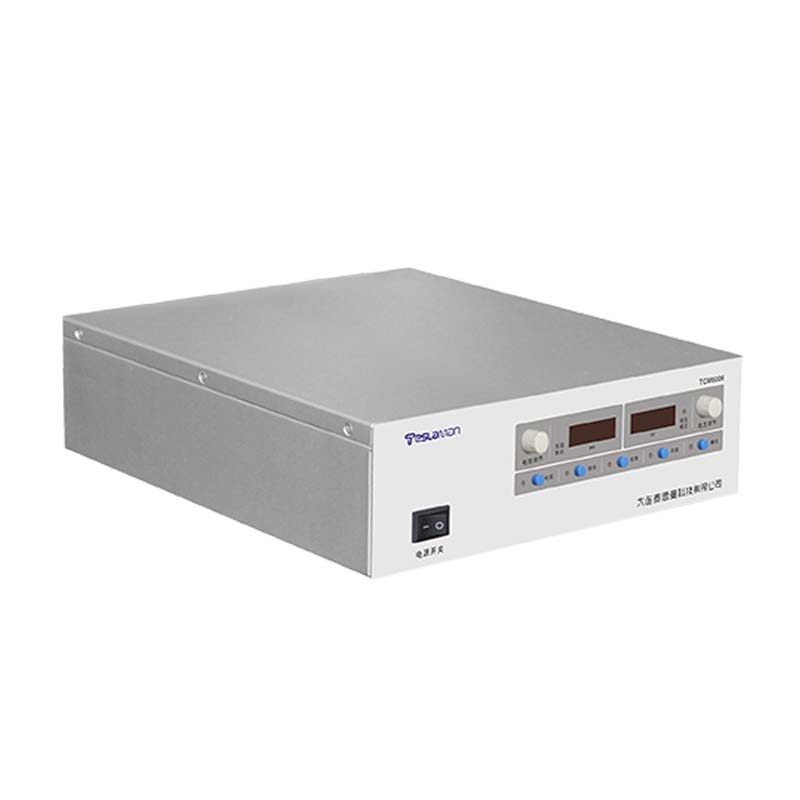
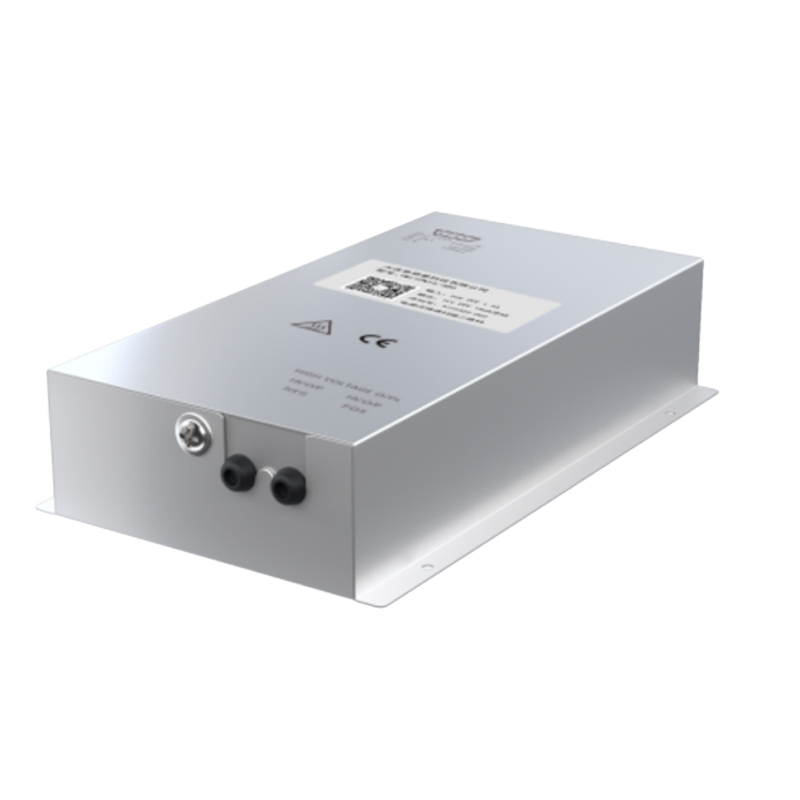
Channel Electron Multiplier Dead Time Power Supply
In the detection of charged particles and extreme ultraviolet photons, channel electron multipliers (CEMs) and microchannel plates (MCPs) are valued for their high gain, fast temporal response, and spatial imaging capabilities. However, a fundamental limitation of these continuous-dynode multipliers is their recovery period, or "dead time," following the detection of a single event. After a pulse is generated, the local region of the channel wall is depleted of secondary-emissive material, rendering it temporarily insensitive. The rate at which this region recovers—and thus the maximum count rate the detector can handle without significant saturation and non-linearity—is not solely an intrinsic material property. It is actively influenced by the electrical operating conditions, specifically the characteristics of the high-voltage bias applied across the device. A specialized dead time power supply is therefore employed not just to provide gain, but to actively manage and potentially minimize the detector's paralyzable period.
The standard operating mode for a CEM is with a high DC voltage, typically between -800V to -3000V, applied between its input (front) and output (rear) ends. This creates a continuous electric field along the curved or straight channel. An incident particle strikes the wall near the entrance, liberating secondary electrons, which are then accelerated down the channel, creating a cascade. The dead time arises because this avalanche temporarily draws significant current from a very localized area of the resistive semiconducting channel wall, dropping the local potential gradient. Replenishment of this charge, and thus recovery of the local electric field to its initial strength, depends on the resistivity of the channel material and the current available from the external power supply to recharge the distributed RC network formed by the channel's resistance and wall capacitance.
A conventional high-voltage DC supply with high output impedance will exhibit a significant local voltage sag during a pulse event, prolonging the recharge time and thus the dead time. The dead time power supply is designed to mitigate this. Its core feature is an exceptionally low dynamic output impedance. This is achieved through a combination of a high-bandwidth, low-noise linear regulator stage following the main HV generator, and the strategic placement of a high-quality, low-inductance capacitor very close to the detector's high-voltage input connector. This capacitor acts as a local energy reservoir, capable of supplying the instantaneous current needed to recharge the microscopic section of the channel without causing a measurable dip in the overall terminal voltage. The supply must maintain this low impedance over a frequency range from DC up to several megahertz to cover the duration of the pulse event and the subsequent recovery.
For applications requiring the highest possible count rates, more advanced active recovery techniques are implemented within the supply's architecture. One method involves incorporating a brief, controlled "recharge pulse" immediately following the detection of an output signal above a certain threshold. Upon receiving a trigger from the detector's pulse output, the power supply can momentarily increase its output current or apply a small, fast voltage overshoot for a microsecond duration. This actively pumps charge back into the depleted region of the channel, forcibly shortening the recovery period. The timing, amplitude, and shape of this recharge pulse are critical parameters that must be optimized for the specific CEM model and operating voltage to avoid causing spurious pulses or damaging the channel.
Furthermore, the supply often includes sophisticated monitoring and feedback. It can measure the average anode current of the CEM, which is directly related to the count rate and the pulse charge. By monitoring this current, the supply's controller can dynamically adjust the main bias voltage to maintain a constant gain as the count rate changes, compensating for gain depression at high rates—a phenomenon related to dead time. This closed-loop gain stabilization is essential for quantitative measurements in mass spectrometry or photon counting. The physical design also considers noise; any switching noise or ripple from the supply can be amplified by the CEM and appear as background counts. Therefore, these supplies emphasize linear regulation techniques and ultra-clean output filtering. In summary, the channel electron multiplier dead time power supply is a precision instrument that goes beyond simple biasing. It actively participates in the detector's temporal performance, extending its linear counting range and stabilizing its response through careful control of dynamic impedance and, in advanced implementations, active recovery circuitry.