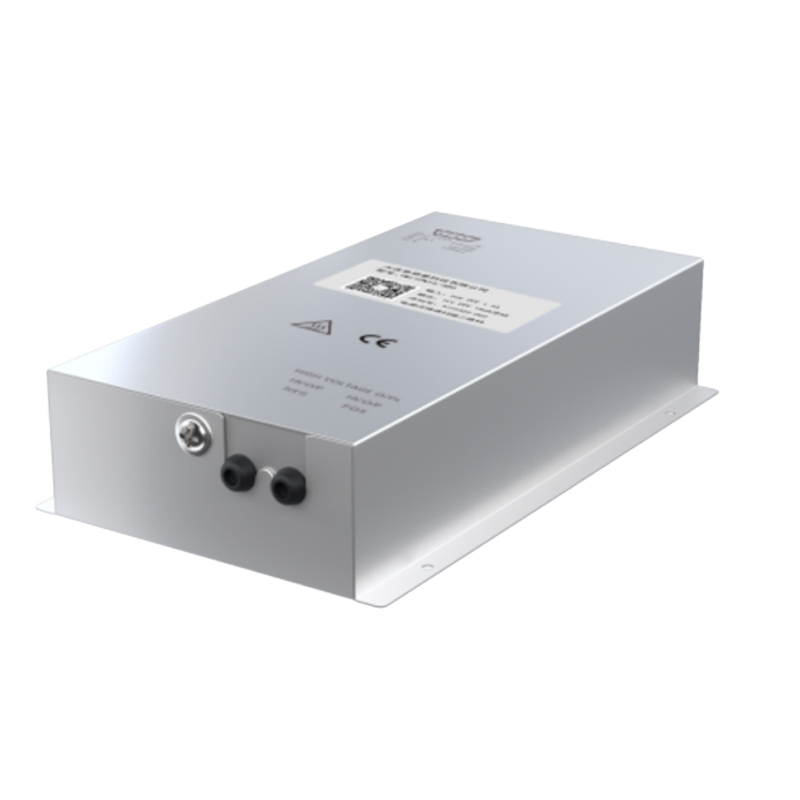
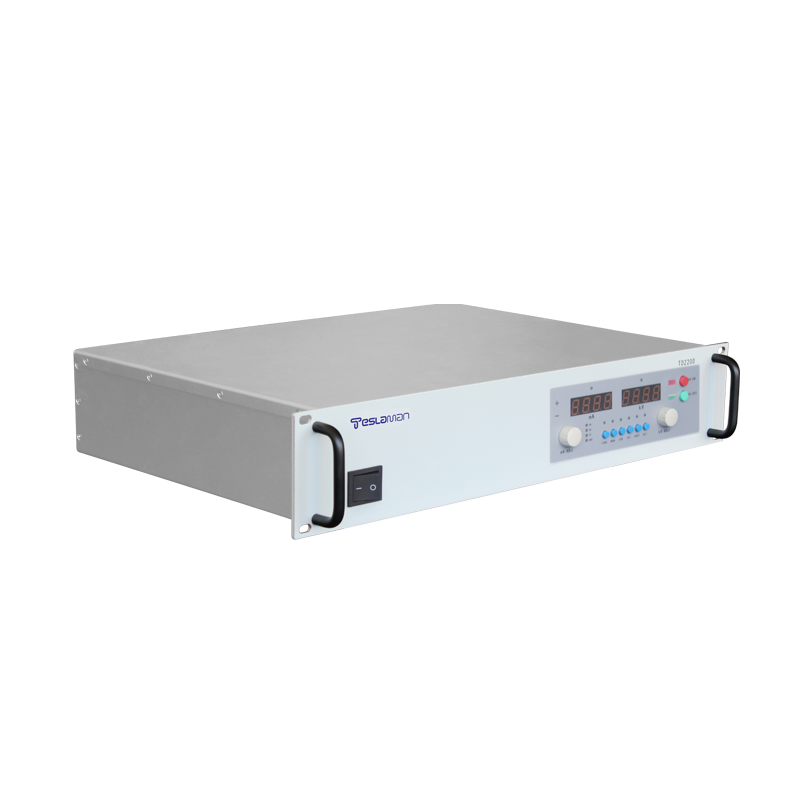
Magnetron Sputtering Unbalanced Magnetic Field Matching Power Supply
Magnetron sputtering is a cornerstone of physical vapor deposition, prized for its high deposition rates and applicability to a wide range of materials. A key advancement in this technology is the use of unbalanced magnetrons, where the magnetic field configuration is intentionally designed such that the magnetic flux lines extend beyond the target surface and into the substrate region. This traps electrons, enhancing ionization near the substrate and allowing for increased ion bombardment of the growing film at lower pressures, leading to denser, better-adhered coatings. However, the effective utilization of an unbalanced magnetic field is not merely a matter of permanent magnet design; it requires a sophisticated, matching power supply that can dynamically adapt its output characteristics to the changing plasma impedance created by this extended field. This power supply goes beyond simple DC or mid-frequency AC power delivery to become an active participant in plasma confinement optimization.
The core challenge lies in the plasma load's nonlinear and spatially variable impedance. In a balanced magnetron, the plasma is tightly confined to the "racetrack" region directly above the target. The impedance seen by the power supply is relatively consistent. In an unbalanced configuration, the plasma volume expands significantly. Electrons follow the extended magnetic field lines, creating a diffuse plasma plume that reaches the substrate. This changes the effective electrode area, the current conduction paths, and the overall electron temperature distribution. A standard DC power supply operating in constant voltage or constant power mode may respond inadequately. If the impedance drops in the plume region, a constant voltage supply would increase current, potentially leading to arc instabilities on the target or excessive heating. Conversely, if the impedance rises, the power delivery may become insufficient to maintain the desired ionization level at the substrate.
The matching power supply addresses this by incorporating real-time impedance sensing and adaptive control algorithms. It constantly monitors the forward and reflected power (in the case of RF-driven magnetrons) or the voltage and current at the target (for DC or pulsed-DC systems). From these, it calculates the instantaneous plasma impedance. A digital signal processor (DSP) compares this to an ideal impedance range, pre-determined for optimal coating conditions with the specific unbalanced magnetron geometry. The power supply then adjusts its output parameters to steer the plasma impedance toward this optimal zone. For a DC-pulsed supply, this could mean dynamically adjusting the pulse frequency, duty cycle, or even the shape of the reverse voltage period. For an RF supply, it involves tuning the matching network capacitors and inductors not just for minimal reflected power, but to achieve a specific plasma potential or ion current density at the substrate, as inferred from the impedance data.
This active matching is particularly critical during reactive sputtering of compounds like oxides or nitrides. The introduction of reactive gas changes the plasma chemistry and impedance dramatically. In the unbalanced mode, these changes are amplified because the reactive species interact with the extended plasma. The matching power supply must respond swiftly to prevent the target from transitioning into the poisoned, low-rate mode or from arcing due to dielectric buildup. The control algorithm can use the rate of change of impedance as an early warning signal and preemptively adjust power or gas flow to maintain process stability.
The hardware implementation is demanding. The power supply must have a wide operational envelope in terms of voltage, current, and frequency. Fast switching components like Silicon Carbide (SiC) MOSFETs are often employed to allow for rapid pulse parameter adjustments. The voltage and current sensors must have high bandwidth and accuracy to provide clean data for the impedance calculation. Isolation and shielding are paramount, as the control electronics must function reliably in the presence of strong stray magnetic fields from the unbalanced magnetron, which can induce noise in measurement circuits.
Furthermore, the system is often integrated with substrate bias supplies. The goal of unbalanced magnetron sputtering is frequently to create a controlled flux of ions to the substrate. Therefore, the matching power supply may communicate with the substrate bias supply, creating a coordinated system. For instance, if the impedance measurement indicates a drop in plasma density (perhaps due to target erosion changing the magnetic field profile), the matching supply can increase power to compensate, while the bias supply might adjust its voltage to maintain a constant ion energy. This holistic approach ensures that the benefits of the unbalanced magnetic field—enhanced ionization and controlled ion assistance—are consistently delivered throughout the deposition process, leading to reproducible, high-quality coatings for demanding applications in optics, tribology, and microelectronics.