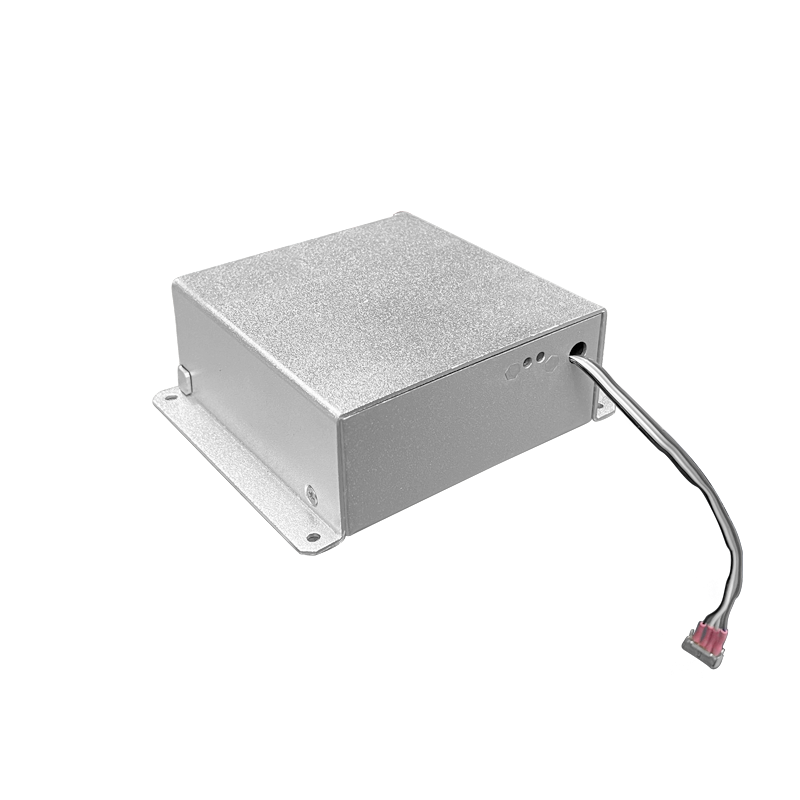
Magnetron Sputtering High-Rate Sputtering Mode Power Supply
Magnetron sputtering is a cornerstone Physical Vapor Deposition (PVD) technique. The drive for higher throughput in industrial coating applications, such as architectural glass, display manufacturing, and decorative finishes, has pushed the development of high-rate sputtering processes. Operating a magnetron in a high-rate mode transcends simply increasing power; it involves a deliberate shift into a distinct operational regime characterized by elevated plasma density and target power density. The high-voltage power supply enabling this transition must be engineered not only for high power output but specifically for the unique electrical characteristics, stability demands, and fault conditions prevalent in this aggressive sputtering mode. This examination details the specific requirements for power supplies operating magnetron cathodes in high-rate sputtering configurations.
The transition to high-rate sputtering is typically achieved by increasing the applied power density on the target beyond conventional levels, often utilizing advanced magnetron designs with stronger magnetic confinement (e.g., unbalanced magnetrons) or rotating cylindrical targets. This pushes the plasma into a state where the ionization fraction of the sputtering gas (usually argon) is significantly higher, and the sputtered atom flux is greatly increased. Electrically, this manifests as a lower discharge voltage for a given current, or conversely, a much higher possible current for a given voltage ceiling. The power supply must be fundamentally designed to deliver very high continuous cathode currents, often ranging from tens to hundreds of amperes, at moderate voltages (300-600V). This shifts the design emphasis from high-voltage capability to high-current, low-voltage operation with exceptional efficiency.
The primary challenge is managing the immense thermal load and power dissipation. A power supply delivering 50 kW at 500V must handle 100A of output current. The internal components—particularly the output switching devices (IGBTs or MOSFETs), transformers, and busbars—must be rated for continuous operation at these high currents with minimal resistive losses. Cooling becomes a critical design factor, often requiring liquid-cooled heatsinks for the power semiconductors. The efficiency of the conversion topology (e.g., a full-bridge or dual-interleaved converter) is paramount, as every percentage point of loss represents hundreds of watts of heat that must be removed from the supply itself.
Stability in this high-current, low-impedance regime is non-trivial. The magnetron plasma presents a negative differential resistance characteristic; an increase in current can lead to a drop in voltage. This can create an unstable operating point if the power supply has a high output impedance or a slow control loop. The supply must be designed as a true voltage source with very low output impedance, or more commonly, it must operate in a precise constant current (CC) or constant power (CP) mode. For process repeatability, constant power mode is often preferred in high-rate deposition. This requires the supply to have fast, independent sensors for both output voltage and current, and a control loop that continuously calculates and regulates their product. This loop must be agile enough to respond to transient disturbances, such as the momentary gas pressure fluctuations that occur when a large amount of material is being sputtered.
Arc management becomes exponentially more critical. At high power densities, the target surface is under extreme thermal and ion bombardment stress. Microscopic inclusions, oxide patches, or uneven erosion can lead to arc events. While arcs in conventional sputtering are manageable, an arc at 100A represents a massive release of energy that can instantly melt the target surface at the arc point, creating a permanent defect and ejecting macro-particles. Therefore, the high-rate sputtering power supply must have the fastest possible arc detection and quenching circuitry. Detection must occur within 1-2 microseconds, and the response must be to cut off the output power and often apply a high-voltage positive "kick" to extinguish the arc plasma. The supply's output stage must be designed to interrupt these enormous currents safely without causing destructive voltage spikes across the switches. Following the quench, the recovery to setpoint power must be controlled and gradual to prevent immediate re-ignition.
For reactive high-rate sputtering (e.g., of aluminum in oxygen to form alumina), an additional layer of complexity is added. The process operates on the unstable "transition zone" of the hysteresis curve to achieve both high rate and desired stoichiometry. The power supply must work in concert with a fast, closed-loop gas control system. Some advanced strategies involve directly modulating the sputtering power in response to optical emission or plasma impedance signals to stabilize the process. This requires the power supply's power control loop to have a high modulation bandwidth, capable of following correction signals at frequencies of up to several hundred Hertz.
Furthermore, the power supply must interface with advanced magnetron designs. For rotating cylindrical magnetrons, which enable very high material utilization and continuous operation, the supply must be tolerant of the periodic variation in electrical contact resistance as the target rotates. For co-sputtering from multiple cathodes to deposit alloy films at high rate, the individual power supplies must be stable and not interfere with each other electrically, necessitating good isolation and independent control.
In essence, a high-rate sputtering mode power supply is a high-current, high-power engine built for stability in a violent electrical environment. Its design priorities are raw current delivery capability, ultra-fast arc suppression, efficient thermal management, and precise constant-power control with high bandwidth. It is the enabling component that allows magnetron sputtering to compete in high-throughput industrial applications, providing the controlled yet intense plasma conditions necessary to deposit functional and decorative coatings at commercially viable deposition rates.