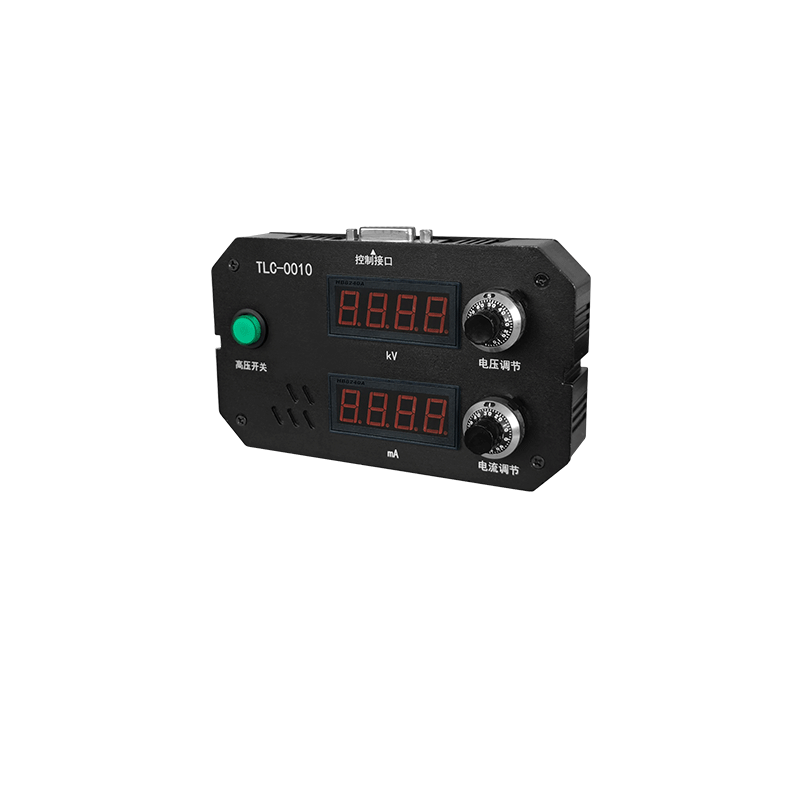
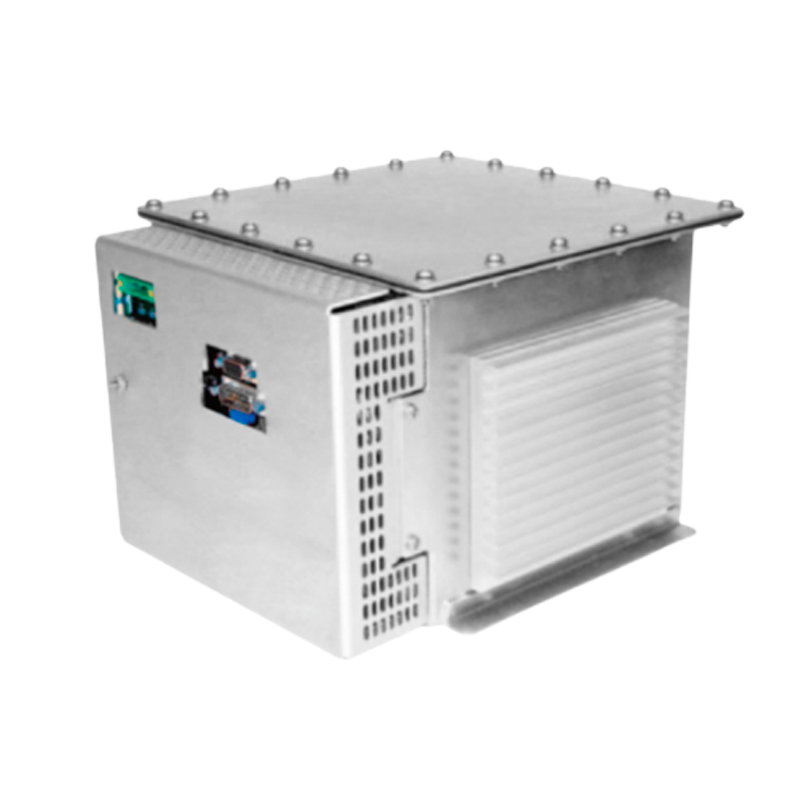
Excimer Laser Linewidth Narrowing High Voltage Modulation
Excimer lasers, particularly those based on KrF (248 nm) and ArF (193 nm) exciplexes, serve as the workhorse light sources for deep-ultraviolet (DUV) photolithography, micromachining, and advanced spectroscopy. The inherent broadband emission of these pulsed, gas-discharge lasers, spanning several nanometers, must be drastically narrowed and stabilized to meet the demanding spectral purity requirements of these applications. For lithography, a narrow, stable linewidth is essential to minimize chromatic aberrations in the projection optics and control critical dimensions on the wafer. Linewidth narrowing is achieved through the use of an intracavity spectral filter, typically a grating-based oscillator or an etalon. However, the spectral output is acutely sensitive to the discharge conditions within the laser chamber, which are governed by the high-voltage pulse power module (PPM) that energizes the gas. Therefore, active high-voltage modulation, synchronized with the optical pulse, has emerged as a critical technique for achieving and maintaining sub-picometer spectral stability.
The fundamental challenge lies in the dynamic relationship between discharge parameters and the laser's gain profile. The excimer laser pulse is initiated by a high-voltage, fast-risetime pulse applied across the main electrodes within the gas-filled chamber. This avalanche discharge creates a population inversion in the excimer molecules. The spectral characteristics of the amplified spontaneous emission (ASE) and the subsequent lasing action are influenced by several discharge-sensitive factors: the electron temperature and density, the spatial uniformity of the discharge, and the time-dependent refractive index gradients in the gain medium. Any jitter or instability in the amplitude, shape, or timing of the excitation high-voltage pulse translates directly into variations in these factors, causing pulse-to-pulse shifts in the central wavelength and broadening of the time-averaged linewidth.
High-voltage modulation for linewidth compression operates on two primary time scales: intra-pulse and inter-pulse. Intra-pulse modulation involves shaping the high-voltage waveform *during* the laser discharge event itself (a span of ~20-50 nanoseconds). A standard excitation pulse is a roughly sinusoidal or critically damped waveform. By actively modifying this pulse shape—for instance, by introducing a second, smaller voltage peak or a controlled plateau during the gain period—it is possible to manipulate the time evolution of the discharge plasma. This can be used to suppress later-time broadband ASE that contributes to spectral wings or to maintain a more stable electron density that favors amplification of the narrowband seed from the oscillator. Implementing this requires a pulse power module with multiple, independently triggered switch stages (e.g., magnetic switches or thyratrons combined with solid-state switches) and sophisticated magnetic compression circuits that allow for sub-nanosecond control over the voltage applied to the electrodes.
Inter-pulse modulation operates on a shot-to-shot basis. Here, the amplitude or timing of the main high-voltage pulse is adjusted based on feedback from the previous laser pulse. A high-resolution spectrometer monitors the laser's output wavelength and linewidth in real-time. If a drift is detected, the control system sends a correction signal to the high-voltage power supply's charging system. This can involve adjusting the charge voltage on the primary storage capacitors by a few tens of volts, which directly changes the peak discharge voltage. A higher voltage typically leads to a higher gain and can cause a slight blue-shift and broadening; a lower voltage has the opposite effect. By modulating this charging voltage on a pulse-to-pulse basis, the system can actively lock the spectral output to a reference. This demands a power supply with an exceptionally stable and linear charging loop, capable of making precise, small adjustments without introducing noise.
The integration of these modulation techniques imposes severe demands on the high-voltage subsystem. The components must handle not only the extreme peak powers (megawatts) but also the high repetition rates (several kilohertz for modern lithography lasers). The switching elements and magnetic materials must exhibit low jitter and minimal thermal drift. Any timing jitter in the high-voltage pulse relative to the Q-switch or spectral selection elements degrades the spectral stability. Furthermore, the entire system must be designed for minimal electromagnetic interference (EMI), as noise coupling from the PPM into the sensitive wavelength metrology electronics can corrupt the feedback signal.
The ultimate goal is to transform the inherently noisy excimer discharge into a spectrally pristine optical source. High-voltage modulation, therefore, is not merely an energy delivery mechanism but a dynamic actuator for spectral control. By treating the high-voltage pulse as a programmable waveform rather than a fixed trigger, engineers can actively combat the physical processes that lead to spectral broadening, enabling these lasers to meet the angstrom-level wavelength stability required for patterning the most advanced semiconductor nodes.