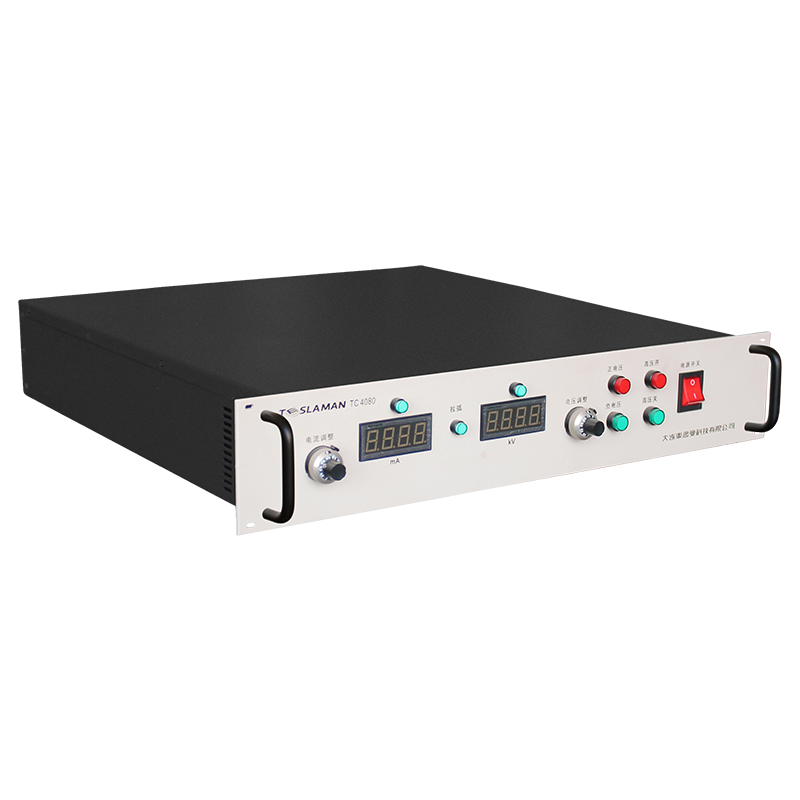
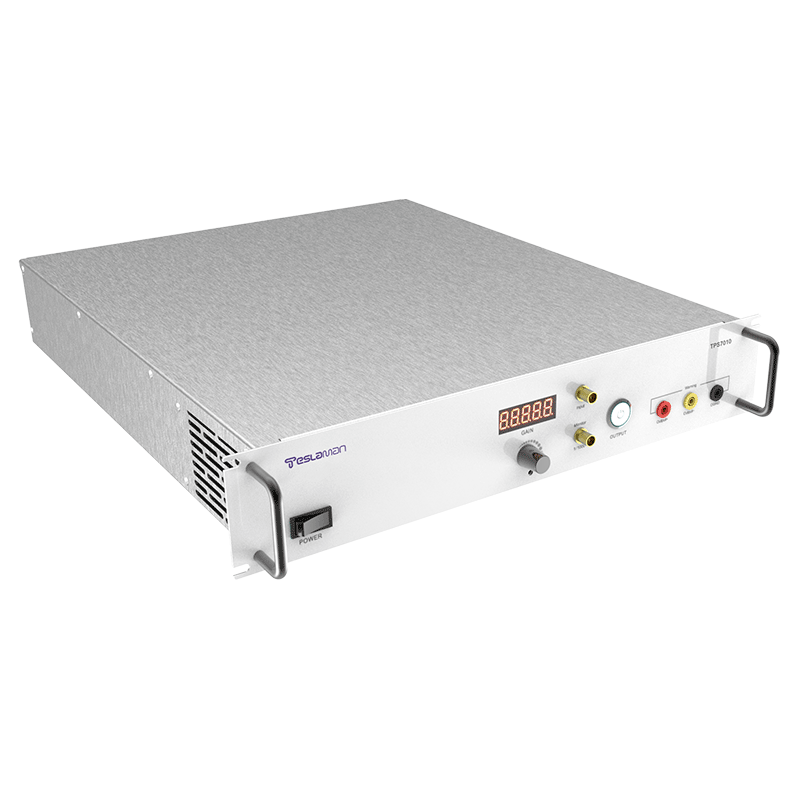
Plastic Near-Infrared Sorting High-Intensity Light Source Driver
The automated sorting of post-consumer plastic waste via near-infrared (NIR) spectroscopy is a high-throughput, industrial-scale process critical to modern recycling. Its efficacy relies on the rapid and accurate identification of polymer types based on their unique molecular absorption fingerprints in the NIR wavelength range (typically 900-1700 nm). At the core of the spectrometer module is a high-intensity, broadband NIR light source—often a tungsten-halogen lamp or a customized high-power LED array—that illuminates the fast-moving plastic fragments. The performance of the entire sorting system, including its identification accuracy, sorting purity, and operational stability, is fundamentally dependent on the driver that powers this light source. This driver is not a simple constant-voltage supply; it is a precision current regulator designed to maintain optical output intensity with exceptional stability against a backdrop of electrical noise, thermal drift, and source aging.
The primary requirement for the driver is to provide a constant, ripple-free current to the light source. The intensity of light emitted by both thermal (tungsten-halogen) and solid-state (LED) sources is a direct function of the driving current. Any fluctuation in this current—whether from AC line ripple, switching noise, or load-induced transients—causes a proportional fluctuation in the light output intensity. Since the spectrometer measures the *ratio* of reflected light at specific wavelengths to a reference, intensity noise directly translates into spectral noise, degrading the signal-to-noise ratio (SNR) of the acquired spectrum. This can lead to misidentification, particularly for dark or contaminated plastics where the reflected signal is already weak. Therefore, the driver must exhibit ultra-low output current noise, often specified in the range of a few microamperes RMS on a driving current of several amperes. This typically mandates a linear regulator topology or a high-frequency switching regulator followed by multi-stage LC filtering and linear post-regulation.
Thermal management is intimately linked to stability. A tungsten-halogen lamp has a positive temperature coefficient; its resistance increases as the filament heats to operating temperature (around 3000°C). A constant-voltage driver would see an inrush current surge at cold start far exceeding the operating current, potentially damaging the filament, followed by a gradual decrease in current and light output as the filament resistance rises. Hence, a constant-current driver is essential. It automatically adjusts the voltage to maintain the set current, ensuring stable optical output from the moment the filament reaches thermal equilibrium. However, the driver itself must be thermally stable. Its current-sensing resistor and feedback amplifier must have negligible temperature coefficients, or be actively temperature-compensated, to prevent the set current from drifting as the driver's internal temperature changes during a 24/7 sorting operation.
For systems employing high-power LED arrays, additional challenges arise. LEDs require a precisely controlled forward current, but they also have a dynamic resistance and a temperature-dependent forward voltage. A high-performance driver must compensate for these characteristics. Furthermore, to achieve a uniform illumination field across the conveyor belt, multiple LED strings may be used. The driver must manage these strings, ensuring identical current through each for consistent intensity, often requiring multi-channel output with individual channel calibration. The driver may also incorporate pulsed operation modes. Pulsing the LEDs at high frequency (kHz) synchronized with the line-scan camera can increase peak intensity for a given average current, improve SNR, and reduce heat generation. This demands a driver with fast switching capability and precise timing control to synchronize the light pulse with the camera's exposure period, eliminating motion blur.
Integration into the harsh industrial environment presents further design imperatives. The driver must be immune to conducted and radiated electromagnetic interference (EMI) from large motors, actuators, and other sorting machinery sharing the same power line. Conversely, the driver's own switching circuits must not emit EMI that could interfere with the sensitive spectrometer detector or the system's control electronics. Robust shielding, input filtering, and careful layout are mandatory. Diagnostic features are also critical for predictive maintenance. The driver should monitor and report operating hours, output current stability, and source voltage (which can indicate lamp aging or LED degradation). A gradual increase in voltage required to maintain the set current in a halogen lamp signals filament thinning, allowing for scheduled replacement before catastrophic failure halts the production line. In essence, the NIR light source driver is the guardian of spectral fidelity. Its relentless current stability ensures that the fundamental "illumination" variable in the spectroscopic equation is held constant, allowing the complex identification algorithms to focus solely on the subtle absorption differences between polyethylene and polypropylene, thereby enabling high-speed, high-purity plastic stream separation.