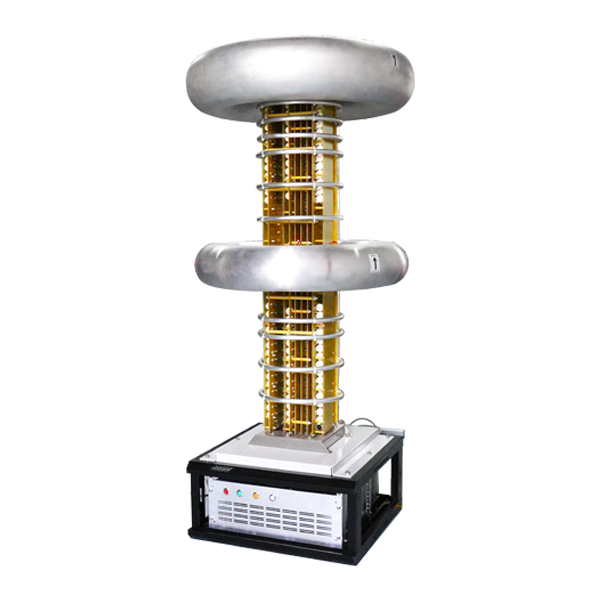
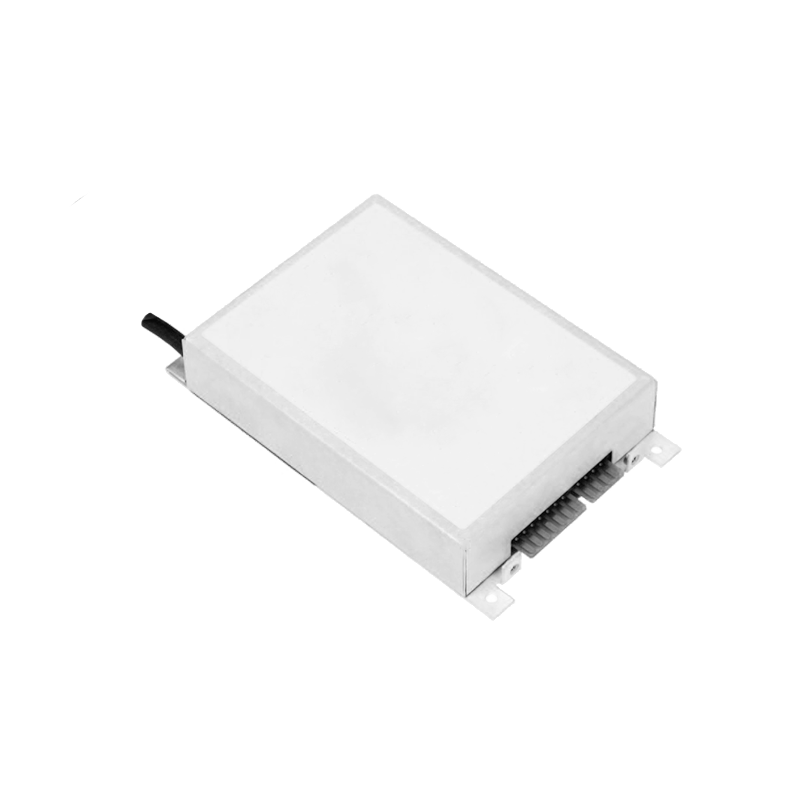
Electron Beam Metal 3D Printing Residual Stress Control Power Supply
Electron Beam Additive Manufacturing (EBAM) for metals offers unparalleled capabilities in producing large, near-net-shape components for aerospace and defense. However, the intense, localized heat input from the high-power electron beam inherently generates significant thermal gradients, leading to the buildup of residual stresses within the part. These stresses can cause distortion, cracking during fabrication, or reduced fatigue life in service. While strategies like substrate preheating and build plate design are employed, advanced control of the electron beam's power delivery itself has emerged as a critical tool for active stress management. A specialized residual stress control power supply modulates the beam's parameters in real-time, based on thermal models and sensor feedback, to manipulate the thermal history and mitigate stress formation.
The underlying principle leverages the relationship between heat input distribution and stress genesis. Residual stresses arise primarily from the constraint of thermal contraction as molten material solidifies and cools. By actively controlling the spatial and temporal distribution of energy, the cooling rates and temperature uniformity can be influenced. The power supply, therefore, must move beyond providing a stable beam for melting to becoming a dynamic heat source that can execute complex power modulation schemes synchronized with beam position.
The core requirement is for a power supply with exceptionally fast and precise modulation capabilities for both beam accelerating voltage and beam current. The most direct method is to modulate the beam power (the product of voltage and current). A reduction in power during the melting of certain feature types (e.g., long, thin walls prone to buckling) can lower peak temperatures and reduce thermal strain. However, simply reducing power can lead to lack-of-fusion defects. A more sophisticated approach involves modulating the beam's focus. By dynamically adjusting the focus coil current (which is supplied by a fast, high-stability current source often integrated with the main high-voltage supply), the beam spot size can be varied. A slightly defocused beam spreads the energy over a larger area, creating a shallower, wider melt pool with gentler thermal gradients, which is beneficial for reducing stress. The power supply system must coordinate changes in focus current with changes in beam power to maintain a stable melt pool depth.
A highly advanced strategy involves implementing a dual-pass or multi-pass scanning strategy with varying parameters. The first pass uses high power and speed to achieve full penetration and establish the melt pool. A subsequent, immediate repass of the same vector with a significantly lower power and a slightly defocused beam acts as a localized "thermal anneal," smoothing the temperature gradient. This requires the high-voltage and focus supplies to switch between two precisely defined setpoints within milliseconds, with minimal overshoot and settling time, as the beam revisits the track.
To implement these strategies effectively, the system relies on model-based feedforward control and sensor feedback. A thermal model of the part, updated layer by layer, predicts areas of high stress concentration. The path planning software tags these areas, and the power supply receives modulation commands (e.g., "reduce power by 15%, increase spot size by 20%") for the corresponding toolpath segments. For feedback, infrared pyrometers or thermal cameras monitor the melt pool and the surrounding heat-affected zone. If the thermal signature indicates an excessively steep thermal gradient (e.g., a very bright, small pool with a large dark surround), the control system can command the power supply to adjust its parameters in real-time to broaden the thermal footprint.
The hardware demands are substantial. The main accelerator supply (typically 60 kV) must have a modulation bandwidth in the tens of kilohertz to respond to these commands. This is often achieved with a linear regulation stage following a switching pre-regulator. The beam current control loop, acting through the bias electrode (Wehnelt), must have an even higher bandwidth to modulate current at the same speed. The focus lens supply must be a low-noise, high-speed bipolar current source. All these supplies are synchronized by a central motion controller that aligns power commands with galvo scanner positions to within microseconds. This level of integration ensures that the energy deposition is not just a function of geometry, but of the evolving thermal and structural state of the part. By transforming the electron beam from a static tool into a dynamically modulated heat source, this power supply technology is key to producing large, structurally sound metal components with minimal post-build distortion and enhanced mechanical integrity.