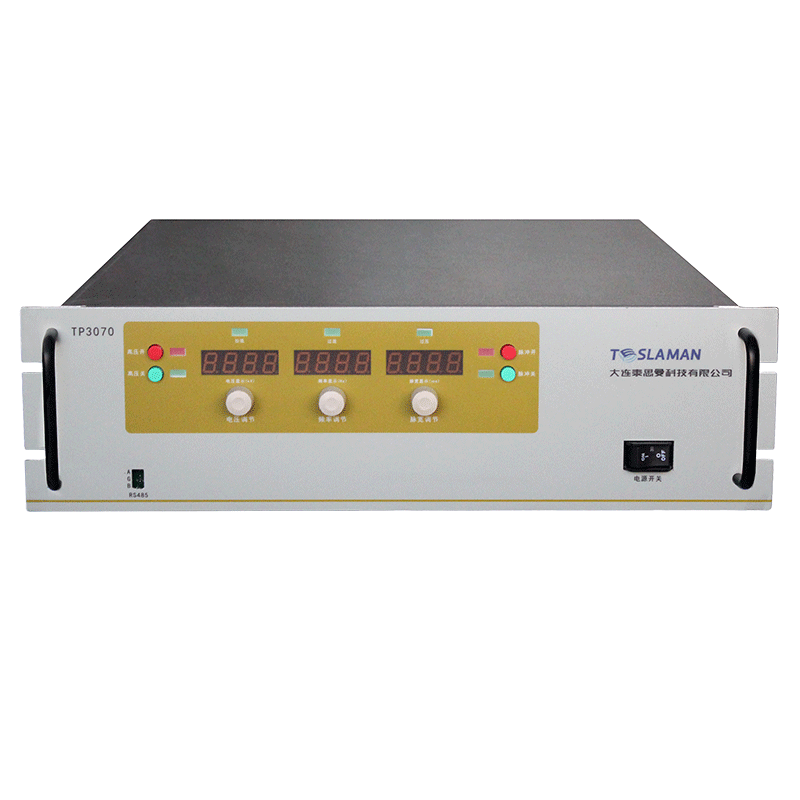
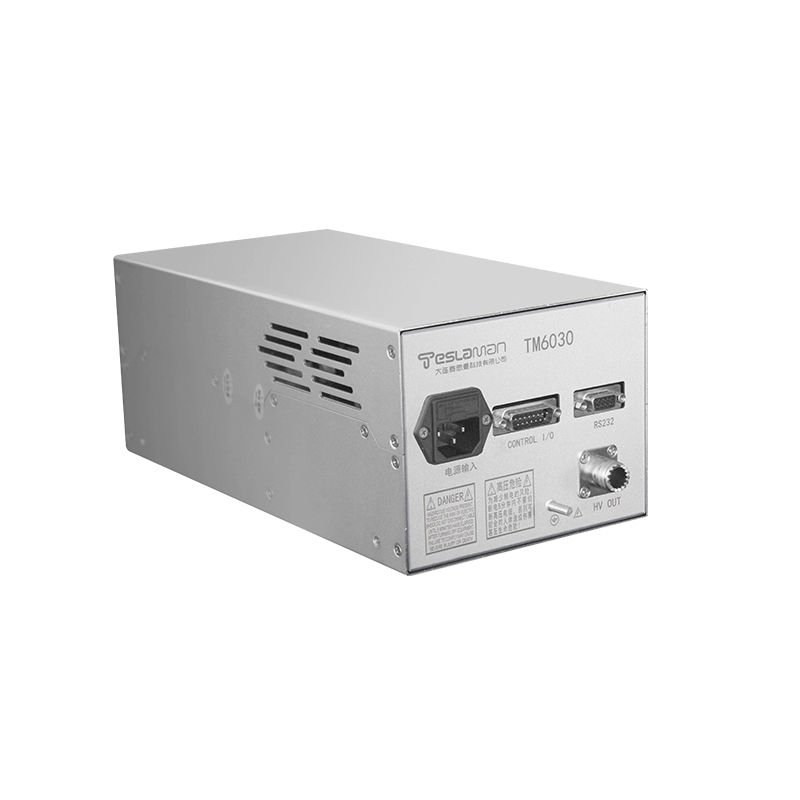
Ultrasonic Non-Destructive Testing High Voltage Transmit-Receive Integrated Power Supply
Modern ultrasonic non-destructive testing (NDT) and evaluation systems, particularly those used for automated in-line inspection or complex composite material assessment, increasingly rely on phased array ultrasonic testing (PAUT) technology. A key enabler for compact, portable, and high-channel-count PAUT systems is the integrated transmit-receive (T/R) module. At the heart of each channel of this module is a specialized high-voltage power supply that performs the dual, conflicting roles of generating a high-energy excitation pulse and then switching to become an ultra-sensitive, low-noise receiver amplifier. The design of this integrated power supply is a study in managing extreme dynamic range, fast switching, and impeccable signal integrity within a single compact circuit.
The operational cycle of a T/R module is binary and repetitive. In the transmit phase, the power supply must deliver a short, high-voltage pulse to the piezoelectric transducer element. This pulse, typically ranging from 50V to 400V with a duration of 50 to 500 nanoseconds, energizes the transducer, causing it to vibrate and emit an ultrasonic wave into the test material. The key requirements for the transmitter are high peak current capability (to quickly charge the transducer's capacitive impedance), a fast rise time for broad bandwidth excitation, and precise pulse width control. This is commonly achieved with a simple but robust circuit: a high-voltage MOSFET switch pulls one side of the transducer to ground while the other side is held at a high DC voltage from a storage capacitor. The switch is driven by a fast gate driver. The critical component is the high-voltage DC rail that charges the storage capacitor. This rail must be stable and have low impedance to ensure consistent pulse energy from shot to shot, which is vital for quantitative defect sizing.
Immediately after the transmit pulse, the system must switch to the receive phase. The same transducer now acts as a microphone, generating microvolt-level signals from returning echoes. The power supply circuitry must undergo a radical transformation. The high-voltage MOSFET switch is turned off, isolating the damaging high voltage from the sensitive receiver input. However, the transducer is left "ringing" from the excitation and may have a large residual DC offset. If connected directly to a high-gain amplifier, this would saturate it, causing a long "dead zone" during which near-surface defects are undetectable. Therefore, the integrated supply includes a fast recovery network, often called a "damping" or "clamping" circuit. This network, which might use diodes or actively controlled switches, quickly drains the residual charge from the transducer and clamps its terminals to a safe voltage, bringing the receiver input to a quiescent state within a microsecond or less.
Once settled, the receiver amplifier, which is an integral part of the T/R module's power management system, takes over. This amplifier must have exceptionally low noise, as it is amplifying signals that can be only a few microvolts. The power supply providing the bias voltages for this amplifier must be extraordinarily quiet; any ripple or noise on these rails will be amplified and appear as background noise in the ultrasonic signal, masking small echoes. This often requires dedicated, locally regulated low-dropout (LDO) linear regulators fed from a clean, isolated DC/DC converter. The entire T/R module, including the transmitter switch, damping circuit, and low-noise amplifier, is typically packaged as a single application-specific integrated circuit (ASIC) or a dense hybrid circuit to minimize parasitic inductance and capacitance, which degrade high-speed switching and noise performance.
The integration of transmit and receive functions places severe demands on isolation and protection. A primary failure mode is the accidental firing of the transmitter while the receiver is connected, which would instantly destroy the amplifier. The control logic that governs the T/R switching must be absolutely reliable, with interlock timers and hardware fault protection. Furthermore, in multi-channel phased array systems, dozens of these T/R modules operate in close proximity. Cross-talk between channels, either through the power rails or electromagnetic coupling, must be minimized to prevent false indications. This necessitates careful layout, extensive use of decoupling capacitors, and sometimes, synchronized firing sequences to manage peak current demands on shared power buses.
Ultimately, the high voltage transmit-receive integrated power supply is the workhorse of modern ultrasonic inspection. By combining the brute force of a high-voltage pulser with the delicate sensitivity of a low-noise receiver in a single, fast-switching package, it enables the high-speed, multi-angle electronic scanning of PAUT. This allows for the creation of detailed volumetric images of internal structures, the accurate sizing of flaws in critical welds, and the reliable inspection of complex aerospace composites, all from a compact and efficient electronic module.