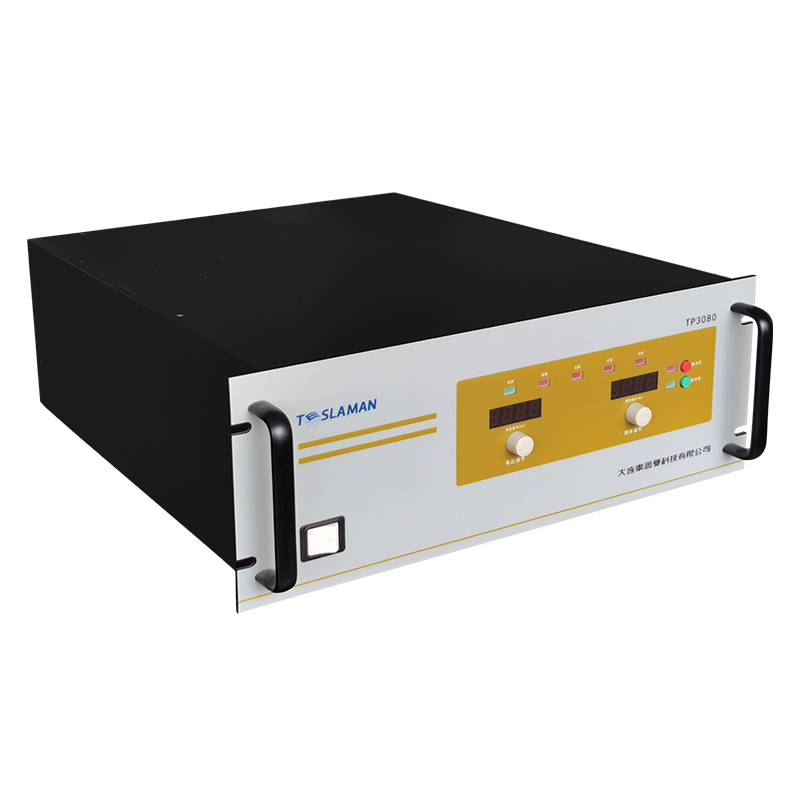
High-Current Power Systems for Powder Bed Preheating Uniformity in Electron Beam Melting
Electron Beam Melting is an additive manufacturing technology distinguished by its use of a high-power electron beam as the thermal source for selectively melting metallic powder. It is particularly valued for processing refractory metals and alloys, such as titanium, tantalum, and nickel-based superalloys, which are crucial for aerospace and biomedical implants. A critical, yet sometimes underappreciated, precursor to the melting process is the uniform preheating of the powder bed. This stage is not merely supplementary but is fundamental to process stability and part quality, and it is enabled by specialized high-current, often medium to high-voltage, power systems. The preheating phase serves multiple essential purposes. Primarily, it sinters the powder particles together lightly, providing mechanical stability to the surrounding powder that supports the part being built. This prevents the famous smoke or scattering of powder that can occur when the high-energy beam first interacts with loose powder. Secondly, and crucially, preheating drives off moisture and other volatile contaminants adsorbed on the powder surface. Most importantly, it raises the bulk temperature of the powder bed to a high, consistent level, typically several hundred degrees Celsius below the material's melting point. This uniform temperature baseline dramatically reduces thermal gradients and the resultant residual stresses during subsequent melting and solidification, minimizing part distortion and the risk of cracking. Achieving this uniformity is an immense engineering challenge, directly addressed by the design of the preheating power system. The electron beam used for preheating is deflected at high speed across the entire build area in a carefully programmed pattern, often a raster or vector scan. The power system driving the beam during this phase must be capable of delivering a high-current, but not necessarily full melting-power, beam with exceptional stability and dynamic control. While the accelerating voltage remains high, the focus is on the precise modulation of beam current. The power supply must provide a highly stable DC current output, with minimal ripple, to ensure each point in the powder bed receives an identical thermal dose. Any fluctuation in current directly translates into a temperature variation, leading to non-uniform sintering, localized stress concentrations, or even uncontrolled arc discharges in the powder. The control system's sophistication is paramount. To compensate for edge effects and heat losses at the boundaries of the build platform, the system must be capable of dynamically adjusting the beam current or dwell time in different zones—a capability known as profile or contour heating. This requires a power system with a fast response time and the ability to accept complex real-time input from thermal sensors or predictive models. Some advanced systems employ closed-loop control, where infrared pyrometry measures the powder bed temperature, and the power system adjusts the beam parameters accordingly to maintain a setpoint across the entire field. The technical demands on the power system are severe. It must operate continuously for the duration of the preheat phase, which can be many hours for a large build, with unwavering reliability. Efficiency is critical due to the substantial power levels involved; losses must be managed to prevent overheating of the power supply and the EBM machine itself. The system must also be designed to handle the unique load characteristic of a thermionic or cathode electron gun, which presents a constant power load that must be regulated with precision. Integration with the beam deflection and focus coils is also essential, as the power supply's output can be influenced by the rapidly changing electromagnetic environment. In essence, the high-current power system for powder bed preheating is a cornerstone of robust and reproducible EBM manufacturing. It transforms the electron beam from a mere melting tool into a precision heating instrument. The uniformity it enables in the initial thermal state of the powder bed is a direct contributor to the dimensional accuracy, mechanical integrity, and microstructural homogeneity of the final built component. As EBM technology advances towards larger build volumes, higher throughput, and new material alloys, the development of more advanced, intelligent, and responsive high-current power systems for preheating will remain a vital area of research and engineering, directly impacting the technology's adoption in critical, high-value industries.