High-Voltage Power Sources in Plastic Laser-Induced Breakdown Spectroscopy for Enhanced Excitation
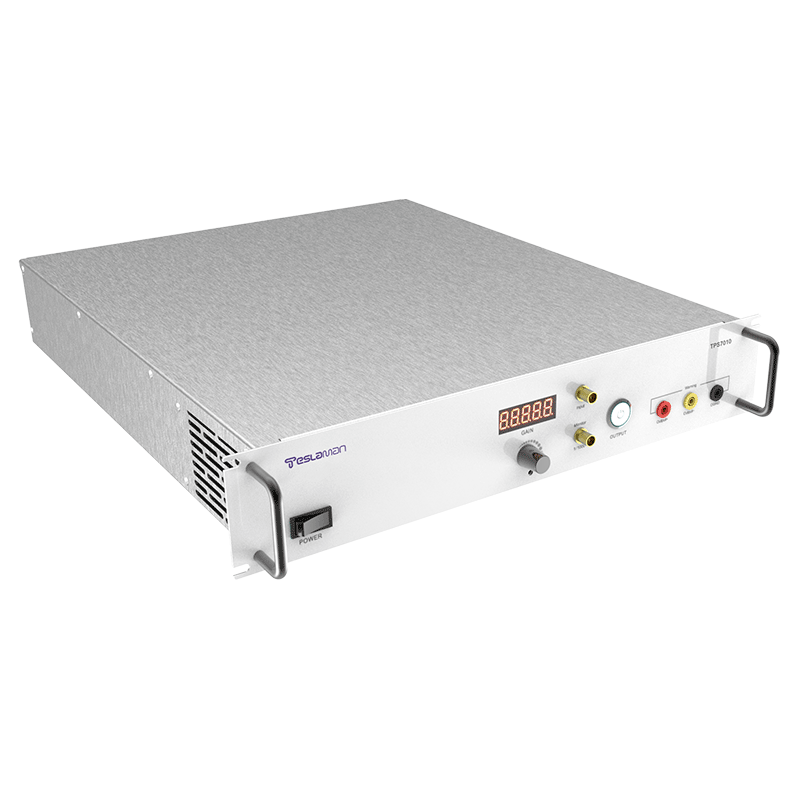
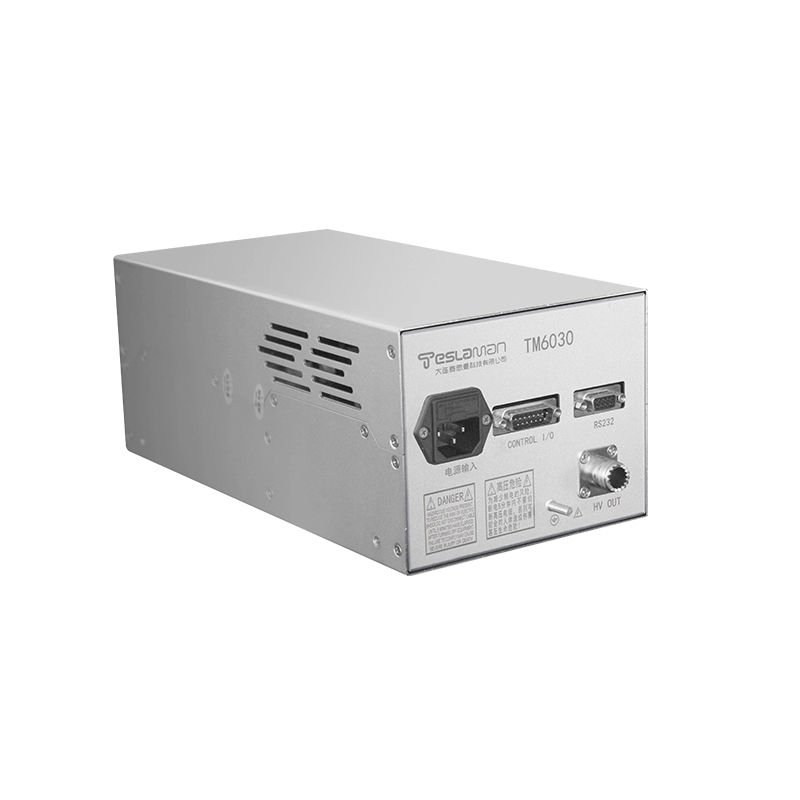
Laser-Induced Breakdown Spectroscopy (LIBS) has emerged as a powerful analytical technique for the rapid elemental analysis of various materials, including plastics. The core principle involves focusing a high-energy laser pulse onto a sample surface to generate a transient plasma. The subsequent emission from this plasma, as it cools and de-excites, is spectrally analyzed to determine elemental composition. While the laser itself is a critical component, the role of high-voltage power sources in driving the excitation mechanism, particularly for creating robust and analytically useful plasmas on plastic substrates, is profound and often under-discussed. Plastic materials present unique challenges for LIBS analysis. Their low ablation thresholds, tendency to produce continuum background emission, and potential for carbon-rich spectral interference necessitate precise control over the plasma generation process. This is where specialized high-voltage excitation circuits become paramount. A standard Q-switched Nd:YAG laser system, the workhorse of LIBS, relies on a high-voltage power supply to charge its flashlamp capacitor banks. The stability, ripple characteristics, and discharge profile of this high-voltage source directly influence the laser's output energy stability and pulse-to-pulse reproducibility. For plastics, inconsistent laser energy can lead to erratic ablation, varying plasma temperatures, and ultimately, poor analytical precision. Modern high-voltage power supplies designed for such applications offer exceptional regulation, often better than 0.1 percent, ensuring each laser pulse delivers identical energy to the sample surface. This consistency is crucial for building reliable calibration models for polymer identification or additive quantification. Beyond powering the laser, a more direct application of high-voltage in LIBS for plastics lies in the concept of spatially or temporally enhanced excitation. One advanced approach involves coupling a secondary electrical discharge to the laser-induced plasma. A separate, synchronized high-voltage pulse generator can be triggered milliseconds after the initial laser ablation. This secondary discharge, applied via electrodes positioned near the plasma plume, effectively re-heats and re-excites the plasma. For plastic analysis, this dual-pulse or hybrid excitation scheme offers significant benefits. The secondary high-voltage pulse, often in the range of several kilovolts with precisely controlled current and duration, boosts the plasma temperature and electron density. This enhancement leads to a more complete atomization of the ablated plastic material and a stronger emission signal from both trace additives (like flame retardants or pigments) and the polymer matrix itself. Moreover, it can effectively reduce the continuum background radiation, improving the signal-to-noise ratio for elements whose emission lines are otherwise obscured. The temporal synchronization between the laser Q-switch signal and the secondary high-voltage pulse generator is critical. It requires a power supply control interface capable of microsecond-precision triggering. This allows researchers to probe the optimal time window for re-excitation, which differs for various plastic types due to their differing ablation dynamics and plasma expansion velocities. Furthermore, the electrical characteristics of the secondary discharge—whether it is a direct current arc, a pulsed unipolar discharge, or a damped oscillatory discharge—are defined by the high-voltage power supply's architecture. Each waveform interacts differently with the laser plasma, affecting excitation mechanisms such as electron impact versus collisional radiative processes. Selecting and tuning these parameters allows the analytical chemist to tailor the plasma conditions specifically for the polymer under investigation, optimizing sensitivity for certain elements. Another consideration is the sample chamber environment. For certain plastics, analysis under a controlled gas atmosphere (like argon or helium) at slightly elevated pressure can improve plasma confinement and spectral line sharpness. This may necessitate designing high-voltage feedthroughs and connections that are vacuum-compatible and prevent corona discharge or arcing at the operational pressures. In summary, the application of high-voltage power technology in plastic LIBS extends far beyond merely energizing the laser flashlamp. It is an integral tool for precision control and active enhancement of the plasma excitation process. Through stable primary laser excitation and sophisticated secondary discharge re-excitation, high-voltage systems enable LIBS to overcome the intrinsic analytical challenges posed by plastic materials, transforming it from a semi-quantitative tool into a reliable technique for polymer characterization, recycling sorting, and failure analysis in the plastics industry. The continued evolution of compact, digitally controlled, and highly stable high-voltage modules promises to further integrate these advanced excitation methodologies into portable and industrial LIBS systems for on-site plastic analysis.