Electromagnetic Acoustic Transducer Non-Destructive Testing High-Voltage Pulse Excitation
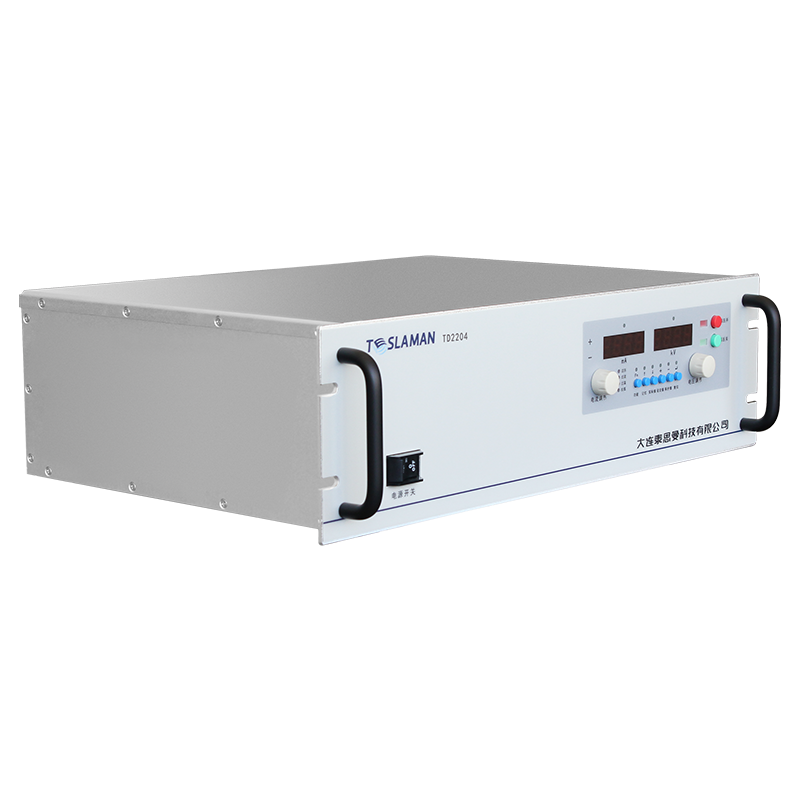
Non-destructive testing (NDT) techniques are essential for ensuring the structural integrity of critical components in aerospace, energy, and transportation industries. Electromagnetic Acoustic Transducers (EMATs) offer a unique contactless method for generating and detecting ultrasonic waves in conductive materials, eliminating the need for couplants and enabling operation at elevated temperatures or through thin coatings. The effectiveness of the EMAT generation mechanism, however, is inherently weak, producing ultrasonic signals orders of magnitude smaller than those from piezoelectric probes. To overcome this signal-to-noise limitation, high-voltage pulse excitation systems are employed as the driving heart of EMAT inspection systems. These specialized supplies deliver the intense, short-duration magnetic field pulses required for efficient ultrasound generation.
The core function of the excitation system is to discharge a stored electrical energy rapidly through the EMAT's transmission coil, which is placed near the test specimen. A high-voltage power supply first charges a pulse-forming network (PFN) or a capacitor bank to a specified voltage, typically ranging from 500 volts to several kilovolts. This charging supply must be robust and stable, as the final energy delivered is proportional to the square of the charging voltage. The critical component is the high-speed, high-current switch—often a thyratron, a solid-state silicon-controlled rectifier (SCR), or increasingly, an insulated-gate bipolar transistor (IGBT) stack. Upon receiving a trigger signal, this switch closes in nanoseconds, allowing the stored energy to resonate through the coil. The resulting current pulse, which can peak at thousands of amperes, creates a strong transient magnetic field at the surface of the test piece. Through the Lorentz force mechanism or magnetostriction, this field induces surface stresses that launch bulk ultrasonic waves, such as shear or longitudinal waves, into the material.
The design of the high-voltage pulse excitation system is a careful balancing act of multiple parameters. The pulse shape (damped sinusoidal, square, or tone-burst), width, and repetition rate must be tunable to match the specific EMAT coil inductance and the desired ultrasonic mode. A poorly matched system leads to inefficient energy transfer, excessive ringing, or coil heating. Furthermore, the system must be designed for durability. The high-current switching action subjects components to immense electrical and thermal stress. Robust snubber circuits are necessary to protect the switch from voltage spikes during turn-off. The physical layout is also critical to minimize parasitic inductance in the discharge loop, as any stray inductance slows the current rise time, reducing peak magnetic field strength and ultimately, ultrasound amplitude. Modern systems often incorporate programmable logic to synchronize the excitation pulse with precise data acquisition from the EMAT's receive coil, enabling advanced techniques like phased array imaging with EMATs. Thus, the high-voltage pulse excitation system is not just a power source but a tailored waveform generator that unlocks the full potential of contactless ultrasonic inspection in challenging industrial environments.