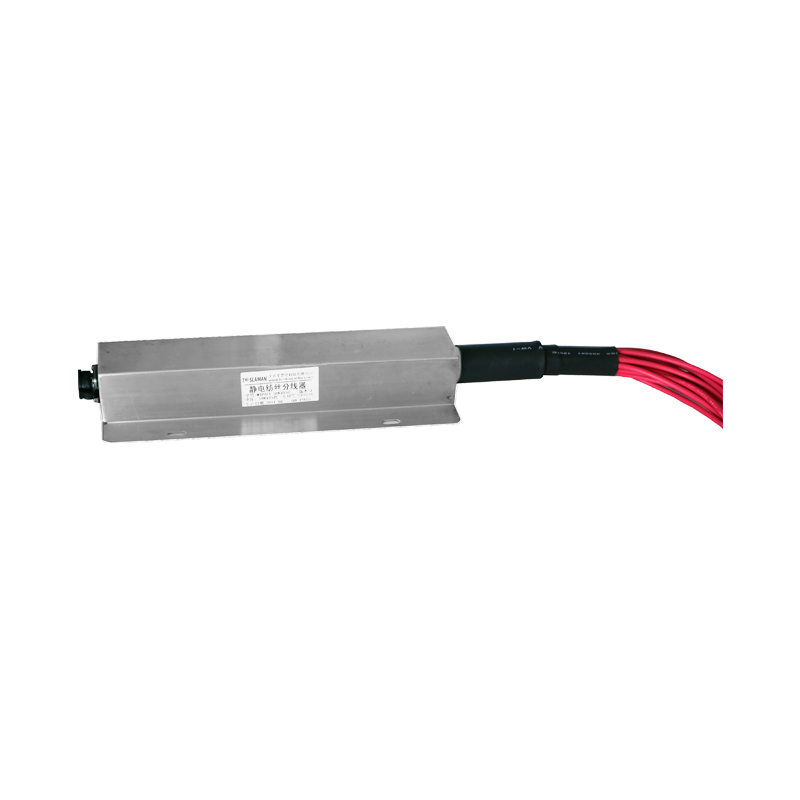
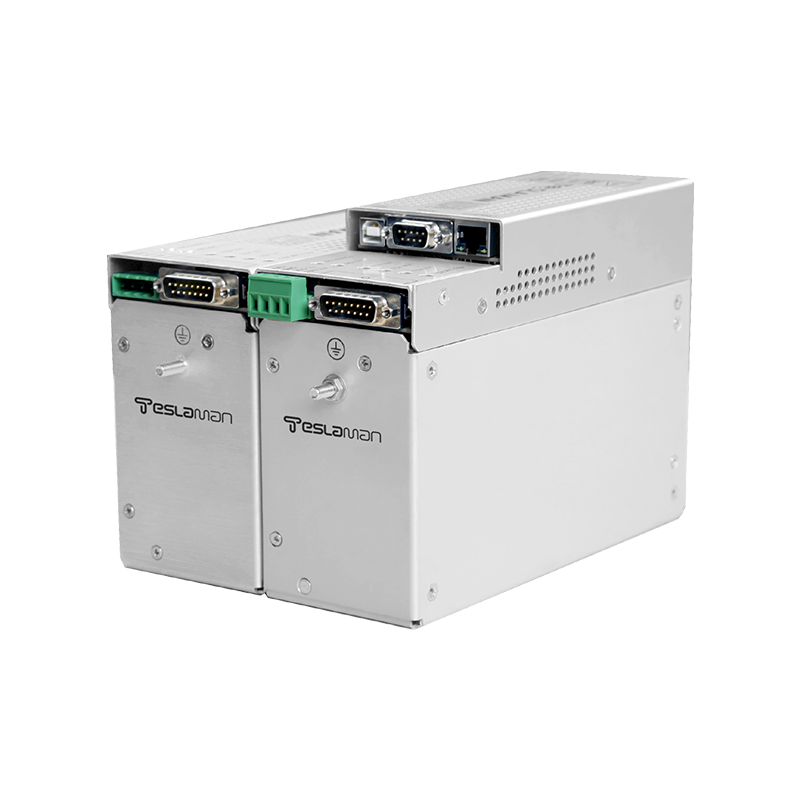
High-Voltage Source for Capillary Electrophoresis and Micellar Electrokinetic Chromatography
Capillary Electrophoresis (CE) and its variant Micellar Electrokinetic Chromatography (MEKC) are powerful analytical separation techniques used extensively in pharmaceutical, biomedical, and environmental analysis. The sole driving force for the migration and separation of analytes within the fused silica capillary is the applied high-voltage electric field, typically ranging from 5 kV to 30 kV across capillaries of 20 to 100 cm in length. The high-voltage power supply is, therefore, not merely a component but the core engine of the separation process, and its characteristics fundamentally dictate resolution, efficiency, speed, and reproducibility.
The principle of separation relies on the differential migration of charged species (for CE) or the differential partitioning between a moving micellar phase and the aqueous buffer (for MEKC) under the influence of the electric field. The field strength, defined as voltage per unit capillary length, must be exceptionally stable. Any drift or noise in the output voltage directly translates into variations in electroosmotic flow (EOF) velocity and analyte mobility, causing peak broadening, retention time shifts, and degraded quantitative accuracy. High-performance CE power supplies exhibit long-term stability better than 0.1% and ripple noise less than 0.01% of the set voltage. This is achieved through precision voltage references, low-temperature-coefficient resistor networks for feedback, and advanced regulation circuitry that compensates for load changes as buffer composition or capillary temperature varies during a run.
Safety is a paramount, non-negotiable design criterion due to the operator's proximity to the high-voltage electrodes. The supply must feature a current compliance limit, usually adjustable from 1 to 300 microamperes, to protect both the capillary from catastrophic overheating due to a break or buffer depletion and the operator from excessive current exposure. Fast-acting current monitoring circuits are standard, capable of cutting off the voltage within microseconds if the preset limit is exceeded. The high-voltage output is typically enabled through a software interlock combined with a physical safety cover switch on the instrument. Additionally, the design often includes a passive or active discharge circuit that safely drains the stored energy from the capillary and electrodes when the voltage is turned off or in case of a fault, preventing any residual shock hazard.
Modern CE systems require sophisticated voltage programming capabilities beyond simple constant voltage application. Techniques like field-amplified sample stacking, sweeping in MEKC, or capillary isoelectric focusing (CIEF) require precise temporal control of the voltage profile. This necessitates programmable supplies capable of outputting sequences of different voltages, or even linear or step gradients, with precise timing and smooth transitions to avoid current surges. For automated systems with multiple capillaries (array CE) or for hyphenated techniques like CE-MS, the power supply must provide multiple independent high-voltage outputs, each with its own control and monitoring, to simultaneously drive separation and, for example, provide the electrospray ionization voltage at the MS interface.
The thermal effects induced by Joule heating present a significant challenge. The current passing through the resistive buffer inside the capillary generates heat, which, if not managed, creates a radial temperature gradient, leading to viscosity differences across the capillary diameter and subsequent band broadening. While active capillary cooling is used, the power supply contributes to management by offering constant power or constant current modes alongside constant voltage. In constant current mode, the voltage automatically adjusts to maintain a set current, providing more uniform heat generation during a run as buffer conductivity changes. Advanced instruments integrate temperature feedback from the capillary cartridge to the power supply's control algorithm, allowing for dynamic voltage adjustment to maintain a constant field strength despite changing thermal conditions. This intricate relationship between voltage, current, field strength, and thermal management underscores the role of the high-voltage source as the critical, intelligent actuator at the heart of achieving high-resolution, robust, and reliable separations in capillary electrophoresis.