High-Voltage Switching for Selected Reaction Monitoring in Proton Analysis
In advanced mass spectrometry-based proteomics and metabolomics, Selected Reaction Monitoring (SRM) or Multiple Reaction Monitoring (MRM) is a gold-standard technique for the precise, sensitive quantification of target molecules. When coupled with proton-transfer-reaction (PTR) or other proton-based ionization sources, the process involves selecting a precursor ion (often a protonated molecule, [M+H]+) in a first mass analyzer, fragmenting it in a collision cell, and then monitoring a specific product ion in a second analyzer. The speed and specificity of this technique can be dramatically enhanced through the strategic use of high-voltage switching, particularly in the ion path between the ionization source and the first mass filter.
The core idea is to employ a fast, high-voltage switch or pulsed power supply on an ion gate or lens element located after the ionization region. In a continuous ion beam from a PTR source, many different [M+H]+ ions are present simultaneously. For traditional SRM, the first quadrupole mass filter is set to transmit only the m/z of the precursor of interest, rejecting all others. This constant transmission and rejection process can limit the overall duty cycle when rapidly cycling between many different target compounds. An alternative or complementary approach is to use a pulsed high-voltage ion gate. When the gate is open (at a ground or transmitting potential), ions flow. When it is closed (by applying a high repelling voltage, e.g., +100V), the ion beam is completely blocked.
The switching strategy synchronizes this gate with the timing of the mass spectrometer's scan cycle. Just before the first quadrupole is set to transmit the desired precursor m/z, the gate is opened briefly, allowing a packet of ions to enter. Once the packet is inside, the gate closes, and the quadrupole then filters that isolated packet. This pulsed injection has several benefits. First, it reduces the space charge in the ion guides and the quadrupole itself by only introducing ions when they are needed, improving transmission efficiency and mass resolution. Second, it can be used to perform time-of-flight discrimination upstream of the quadrupole, adding an additional dimension of selectivity. Third, and most importantly for speed, it allows for extremely fast switching between different target ions without waiting for the quadrupole's RF/DC settings to fully settle after a large mass jump. The quadrupole can be pre-set to the next mass, and only when its filters are stable is the next ion packet admitted by the gate.
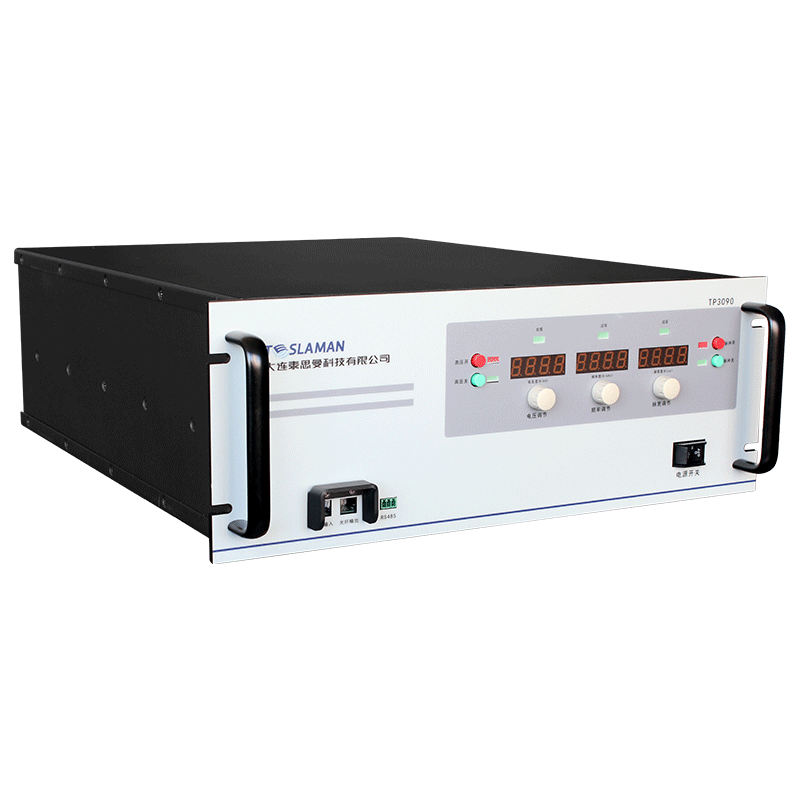
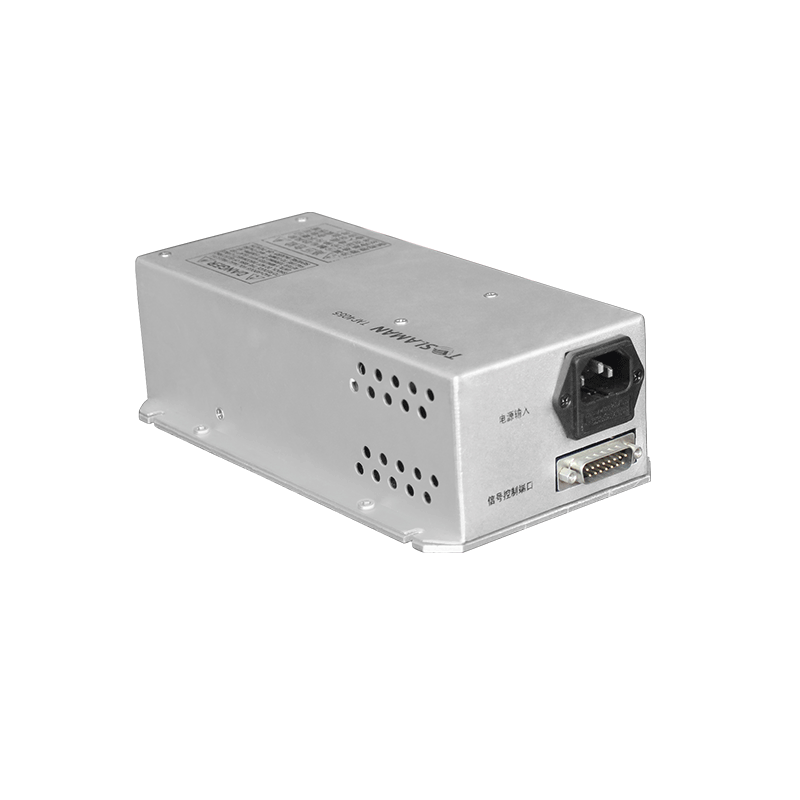
The high-voltage switch driving the ion gate must meet demanding specifications. The transition from blocking voltage to transmitting voltage must be extremely fast, with rise and fall times in the microsecond range or better, to create sharp ion packets. The transition must also be clean, with minimal ringing or overshoot, as any transient potentials can deflect ions and cause signal loss or mass shift. The switch must have a low output capacitance to enable these fast transitions. Typically, this is achieved using fast HV MOSFETs or stack of transistors in a dedicated driver circuit. The switching control signal must be synchronized with sub-microsecond precision to the master clock of the mass spectrometer's data system.
This concept can be extended to more complex ion manipulation. For instance, in a system with a linear ion trap before the collision cell, a pulsed high-voltage supply can be used on the exit lens of the trap to eject ion packets in a controlled manner into the collision cell. By controlling the ejection pulse height and duration, the number of ions (the charge packet) sent for fragmentation can be regulated, improving quantitative reproducibility and preventing overfilling of the collision cell. Similarly, pulsed voltages can be applied to steering lenses just after the collision cell to guide specific product ion packets toward the second analyzer with optimal timing.
The integration of such fast high-voltage switching transforms the ion path from a static conduit into a dynamically gated highway. It enables a form of time-multiplexing that drastically increases the number of compounds that can be monitored per unit time without sacrificing sensitivity—a critical metric in high-throughput screening applications. The power supply design for these switches prioritizes speed, stability, and seamless digital integration over raw power output, representing a specialized niche within high-voltage engineering that is essential for pushing the limits of analytical chemistry.