Dynamic Fatigue Recovery High-Voltage Strategy for Microchannel Plates
Microchannel plates (MCPs) are photon and particle detectors that provide high gain via secondary electron multiplication within millions of microscopic glass channels. A well-known limitation is gain fatigue—a gradual, often irreversible decrease in gain with integrated extracted charge due to changes in the channel wall's secondary emission properties. A dynamic high-voltage strategy aims not just to operate the MCP, but to actively manage and potentially reverse the fatigue process, extending the detector's usable life and maintaining stable performance.
The fatigue mechanism is complex, involving depletion of lead from the lead-silicate glass surface, carbonization from hydrocarbon contamination under electron bombardment, and the formation of stable, non-emissive compounds. Traditional operation applies a constant high DC bias (1-2 kV) across the MCP. The dynamic recovery strategy introduces intentional variations in this bias voltage, both in magnitude and polarity, during operation or during dedicated recovery cycles, to alter the physical and chemical state of the channel walls.
One approach is periodic high-voltage conditioning pulses. During normal operation, the MCP is biased at its nominal gain voltage. At programmed intervals, or when a gain drop is detected by monitoring the output current for a fixed input stimulus, the system injects a series of high-voltage recovery pulses. These pulses are significantly higher than the operating voltage, often 20-50% above nominal, and are applied for very short durations (microseconds to milliseconds). The theory is that these high-field pulses induce field emission from microscopic protrusions or contaminants on the channel wall, literally blasting them away in a controlled micro-discharge. They may also cause slight Joule heating, redistributing lead ions toward the surface. The recovery pulse supply must be capable of delivering these very high, short-duration pulses with precise control over their number, amplitude, and width, while being protected from the resulting current spikes.
Another strategy involves polarity reversal. For certain types of MCPs and contaminants, applying a reverse bias (making the output side positive relative to the input) for a controlled period can be beneficial. This reverse field attracts positive ions (if any are present) or electrons from the opposite end of the channel, potentially cleaning the surface or neutralizing trapped charge that inhibits secondary emission. Implementing this requires a bipolar high-voltage supply capable of cleanly switching polarity without creating a dead time that would miss detection events. The switching must be fast and the reverse voltage level carefully controlled to avoid causing arcs or permanent damage.
The most sophisticated systems combine monitoring with adaptive recovery. They continuously track the MCP's gain by using a very weak, stable calibration source (like a faint LED). When the gain drifts outside a set window, the controller automatically initiates a tailored recovery sequence. This sequence might first apply a series of high-voltage conditioning pulses, then a period of reverse bias, followed by a return to nominal voltage with a slow ramp-up to re-condition the channels gently. The algorithm is based on a learned or pre-programmed model of the MCP's response to these electrical stimuli.
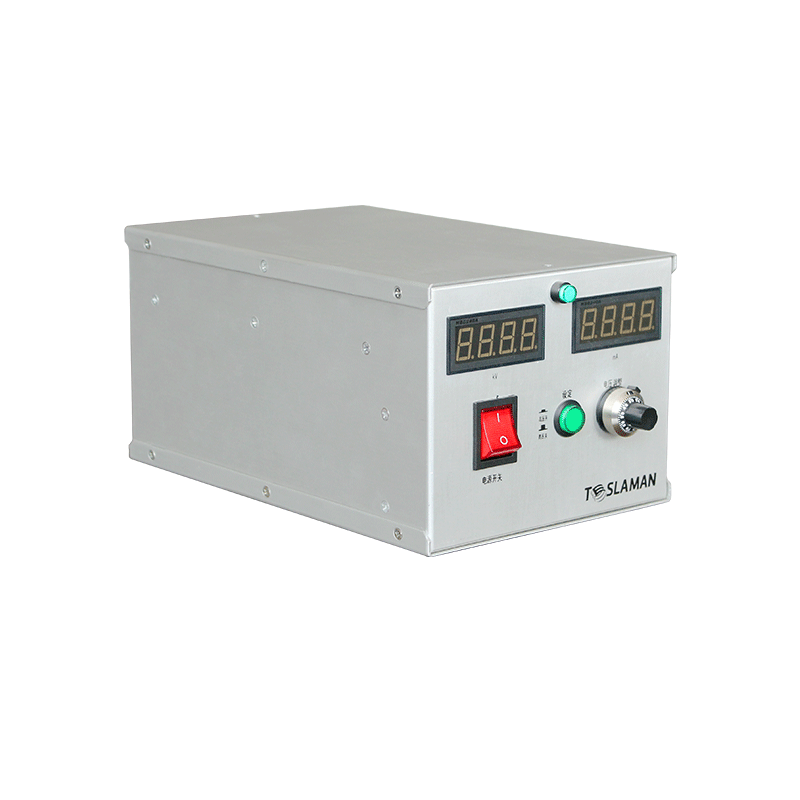
Designing the power supply for this application is uniquely challenging. It must be a highly programmable, multi-mode instrument. In normal detection mode, it provides a stable, low-noise DC bias. On command, it must seamlessly transition to a high-current pulse generator or a bipolar output. The output stage must be robust enough to withstand the occasional micro-arcs that are an intentional part of some recovery processes. Critical protection features include fast current limiting, arc energy limitation, and temperature monitoring of the MCP assembly itself, as some recovery methods generate heat.
Integration with the detection electronics is also key. The recovery pulses will generate large output signals that must be gated out from the data acquisition system to avoid saturation or false triggers. The control system must therefore coordinate the high-voltage recovery sequences with blanking signals for the downstream amplifiers and digitizers. By proactively managing the micro-environment within each channel, this dynamic high-voltage strategy can significantly prolong the operational life of expensive MCP detectors in applications ranging from space-based telescopes to ultrafast photon science, where detector replacement is impossible or prohibitively costly, making reliability the paramount concern.