High-Voltage Narrow-Pulse Excitation for Air-Coupled Ultrasonic Testing
Air-coupled ultrasonic testing is a rapidly evolving non-destructive evaluation technique that offers the significant advantage of being completely non-contact, making it ideal for inspecting materials that are hot, fragile, coated, or otherwise unsuitable for coupling with water or gels. The core challenge lies in the immense acoustic impedance mismatch between air and most solid materials, which results in over 99.9% of the sound energy being reflected at the interface. To overcome this and generate a usable ultrasonic signal within the test piece, the transmitting transducer must produce an extremely high-intensity acoustic pulse in air. This is achieved through high-voltage, narrow-pulse excitation of specialized capacitive or piezoelectric composite transducers.
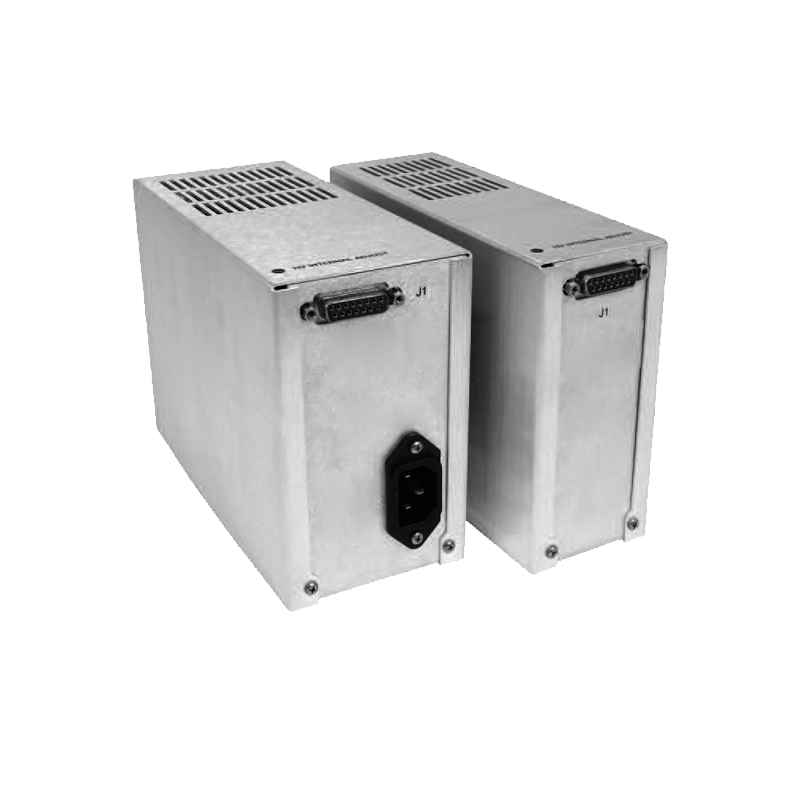
The transducer, often a piezoelectric composite with a matching layer optimized for air, acts as a capacitor. To generate a powerful ultrasonic wave, a large amount of electrical energy must be deposited into this capacitive element in an extremely short time and then rapidly disconnected, allowing the transducer to ring down at its natural frequency. This is the domain of the high-voltage narrow-pulse generator. The typical requirements are for pulses with amplitudes ranging from 200 volts to over 2000 volts, with pulse widths (full width at half maximum) between 50 nanoseconds and 200 nanoseconds, and rise times on the order of 10-30 nanoseconds.
Generating such pulses demands a specific circuit topology. A common approach uses a transmission line pulser or a avalanche transistor-based circuit. In a classic design, a length of coaxial cable is charged to the high voltage. A fast high-voltage switch, such as a stack of avalanche transistors, a thyratron, or a specially driven MOSFET, is then triggered. This switch effectively connects the charged cable to the transducer for the time it takes an electrical wave to travel down the cable and back (the electrical length of the cable defines the pulse width). This delivers a rectangular electrical pulse of precise duration to the transducer. The switch must have extremely low inductance and be able to handle high peak currents, often exceeding 50 amperes, to quickly charge the transducer's inherent capacitance.
The quality of the resulting acoustic pulse is directly tied to the electrical pulse characteristics. A fast rise time is crucial as it determines the high-frequency content of the excitation. A broader bandwidth acoustic pulse is better able to couple energy across the impedance mismatch and provides better resolution for detecting thin layers or small flaws. Conversely, excessive ringing in the electrical pulse, caused by imperfect impedance matching or parasitic circuit elements, leads to a prolonged acoustic output that reduces time resolution and can mask echoes from near-surface features.
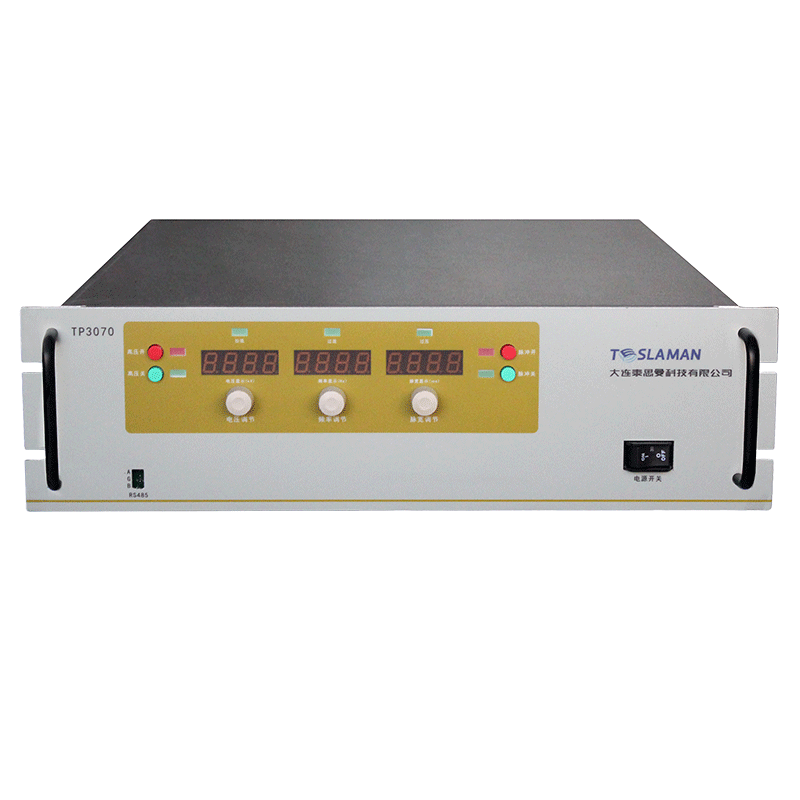
Therefore, the pulser design includes careful impedance matching networks and damping resistors to shape the pulse. The high-voltage power supply that charges the pulse-forming network must itself be stable and low-noise, as any noise on the charging voltage can modulate the pulse amplitude from shot to shot, degrading the signal-to-noise ratio of the averaged received signals. For systems that employ pulse-echo mode with a single transducer or pitch-catch mode with separate transmitter and receiver, the repetition rate of these pulses can be high (kHz range), requiring the charging supply to have sufficient power and the switch to have a high duty-cycle capability.
In practice, the received signals after transmission through or reflection from a material are exceedingly weak, often in the microvolt range. This necessitates sophisticated signal averaging. The timing jitter of the high-voltage pulse trigger relative to the data acquisition system must be phenomenally low, typically in the picosecond range, to allow for coherent averaging of thousands of pulses without smearing the subtle ultrasonic echoes. This integration of ultra-fast high-voltage switching, precision timing, and sensitive low-noise reception defines the state of the art in air-coupled ultrasonics. It enables the inspection of composite aerospace structures, lightweight honeycomb panels, ceramic coatings, and even food products, providing a valuable tool for quality control and in-service inspection where traditional liquid-coupled methods are impossible or undesirable.