High-Voltage Isolation Techniques for Ultra-Low Temperature Ion Trap Systems
The field of quantum information processing and precision spectroscopy using trapped ions has advanced rapidly, with a strong push towards increasing the number of qubits and improving coherence times. A key enabling technology for these systems is the ability to trap and manipulate atomic ions using precisely controlled radiofrequency and static electric fields in an ultra-high vacuum environment. To minimize motional heating from electric field noise, many advanced traps are now operated at cryogenic temperatures, often below 4 Kelvin, inside dilution refrigerators. Integrating the necessary high-voltage electrodes for ion trapping and control into this ultra-low temperature regime presents a profound electrical engineering challenge, centered on the development of reliable high-voltage isolation and feedthrough technologies that function from room temperature down to millikelvin levels.
The core requirement is to deliver multiple static DC voltages, ranging from a few volts to several hundred volts, to microscopic electrodes fabricated on the surface of a trap chip or within a macroscopic trap structure housed in the coldest stage of the refrigerator. These voltages create the static potentials that define the trapping zones and compensate for stray electric fields. The primary obstacle is thermal conduction. Standard coaxial cables and connectors, if run directly from room temperature to the trap, would act as excellent heat leaks, overwhelming the cooling power of the refrigerator and making millikelvin operation impossible. Therefore, all wiring must be thermally anchored at intermediate temperature stages and must be extremely thin to minimize conductive heat load.
This creates a severe conflict with high-voltage requirements. Thin wires (e.g., phosphor bronze or constantan with diameters of 50 to 100 micrometers) have limited dielectric insulation. At cryogenic temperatures, the breakdown strength of many common insulating materials (like polyimide) can change, and trapped gases can condense, creating new conduction paths. The primary isolation technique, therefore, relies on physical separation and the use of vacuum as the ultimate insulator. Wires are run through the vacuum space of the refrigerator, spaced apart from each other and from grounded radiation shields. They are supported by low-thermal-conductivity, high-resistivity ceramic standoffs (e.g., sapphire or alumina) at each thermal anchor point. The design of these standoffs must prevent surface tracking across the ceramic, which can be a significant risk in the high-vacuum, low-temperature environment where surface contamination layers behave differently.
Another critical technique involves filtering and attenuation at multiple stages. Even if the DC voltage is clean, any high-frequency noise coupled onto these lines will heat the ions. Therefore, each electrode line incorporates low-pass filters physically located at the different temperature stages (e.g., 50K, 4K, 700mK). These filters are typically π or T networks made from surface-mount resistors and ceramic capacitors carefully selected for cryogenic performance. They present a significant design challenge for high-voltage lines, as the filter components themselves must withstand the full DC voltage without leakage or breakdown at low temperature. Specialized, high-voltage ceramic capacitors with known cryogenic characteristics are essential.
The feedthrough from the room-temperature electronics into the vacuum chamber of the refrigerator is the first critical barrier. Commercial cryogenic feedthroughs rated for high voltage are available but must be chosen with care. They often use ceramic-to-metal seals and may have multiple isolated pins. The voltage rating between pins and from pins to the feedthrough body must comfortably exceed the intended operating voltage, with a large safety margin for condensation events during cooldown.
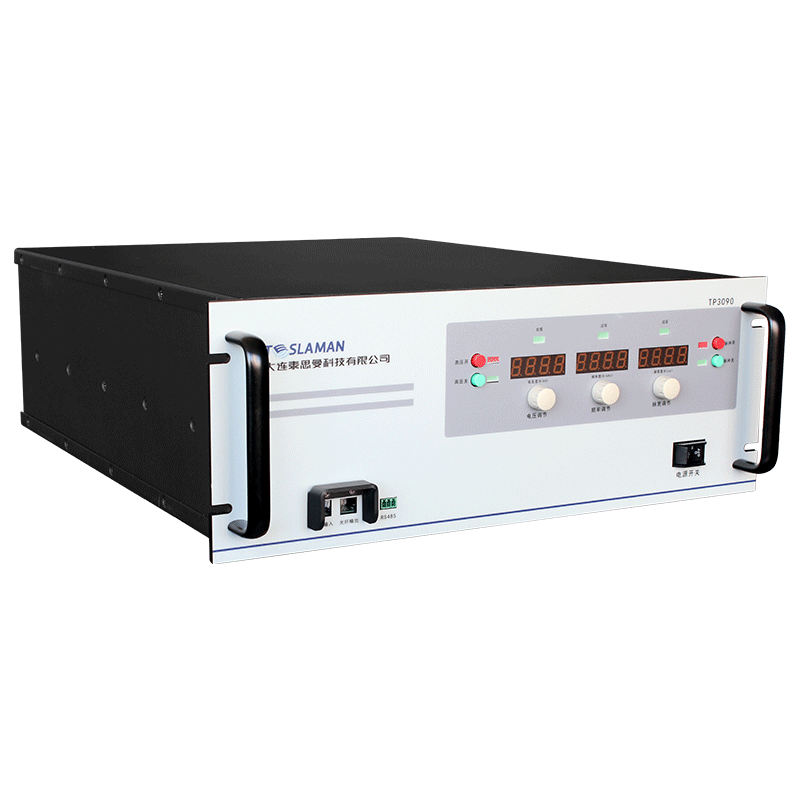
From a systems perspective, the high-voltage sources themselves are located at room temperature. They are typically multichannel, digitally programmable instruments with microvolt resolution and low noise. However, their performance is only as good as the transmission line that carries their output to the ion. The long, thin, filtered lines act as complex RC networks, limiting bandwidth and requiring careful settling time management when voltages are changed for ion transport operations. Advanced control software must account for these delays.
Safety and reliability are paramount. A short circuit or arcing event inside the cryostat can release enough energy to rapidly heat the trap, possibly destroying the quantum state of the ions or damaging the delicate trap structures. Therefore, high-voltage channels are often current-limited at the source to a few microamperes. Continuous monitoring of leakage current on each line can serve as an early warning for developing shorts or contamination.
In essence, the high-voltage isolation technology for ultra-low temperature ion traps is a masterpiece of compromise. It balances the conflicting demands of electrical conductivity, thermal insulation, mechanical robustness, and signal integrity. Successful implementation is invisible in the final experiment—it manifests as long ion coherence times, low motional heating rates, and the stable, repeatable operation of the quantum processor. It is a foundational, though often overlooked, engineering discipline that directly enables the cutting-edge performance of modern trapped-ion quantum computers and clocks.