High-Voltage Excitation for Laser-Induced Fluorescence Sorting of Plastics
Laser-Induced Fluorescence (LIF) spectroscopy is emerging as a powerful technique for identifying and sorting polymers in complex recycling streams, overcoming the limitations of traditional density or triboelectric methods. Many polymers contain intrinsic fluorophores, or can be tagged with trace fluorescent markers, which emit characteristic spectral signatures when illuminated by a high-energy laser. The efficiency of this fluorescence, particularly the separation of the weak fluorescence signal from the intense laser excitation light, often requires the use of a pulsed high-voltage excitation source synchronized with a gated detector. This high-voltage subsystem is not merely a support component; it is integral to the signal-to-noise performance and sorting speed of the system.
The fundamental challenge in LIF sorting is the Stokes shift—the difference in wavelength between the absorbed excitation light and the emitted fluorescence. For many polymers, this shift is small, placing the faint fluorescence signal spectrally close to the strong laser line. Optical filters are used, but their rejection of the scattered laser light is never perfect. To achieve the sensitivity required to detect trace markers or differentiate plastics with subtle spectral differences, a time-resolved approach is employed.
A pulsed laser, typically a Q-switched solid-state laser operating in the ultraviolet to visible spectrum, is used as the excitation source. Each laser pulse, lasting nanoseconds, is extremely bright but very brief. The fluorescence emission decays exponentially with a characteristic lifetime, which is also in the nanosecond regime. To capture this fleeting signal, the detector must be activated only during this brief emission window and deactivated during the laser pulse and the initial moments of scattered light. This is the role of the high-voltage pulsed gating circuit.
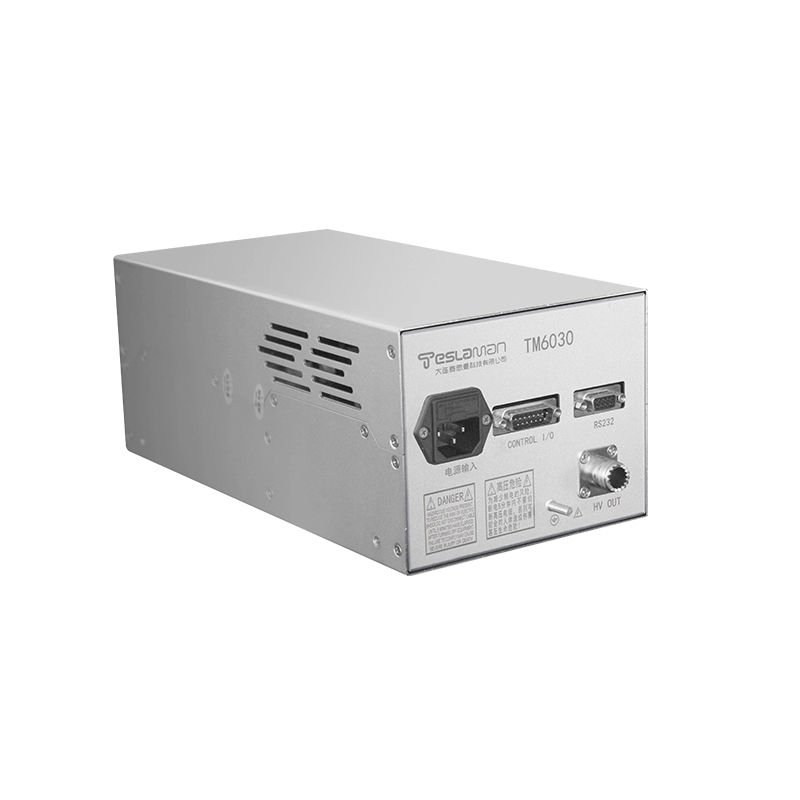
The detector, often a photomultiplier tube or an intensified CCD camera, requires a high-voltage bias to operate. For gated detection, a fast high-voltage pulse is applied to the photocathode or one of the dynodes, switching the detector from an off state (high negative bias on the gating electrode, blocking electrons) to an on state (lower bias, allowing electrons to pass) for a precisely timed window. This gate pulse must be extremely fast, with rise and fall times of a few nanoseconds or less, and perfectly synchronized with the laser pulse and the data acquisition system.
The generation of such pulses presents significant high-voltage engineering challenges. The amplitude of the gate pulse is typically in the range of 50V to 200V for PMTs, but for intensifiers, it can exceed 1000V. The pulse width is variable, often from 5 to 50 nanoseconds. The switch must handle the high capacitance of the gated element and deliver the necessary current to achieve the required slew rate. Specialized topologies, such as Marx generators or avalanche transistor stacks, are used to achieve this. The pulse must be free of overshoot and ringing, as any instability during the gate window will modulate the detector gain and corrupt the fluorescence intensity measurement.
Furthermore, for high-throughput sorting of plastics on a conveyor belt moving at several meters per second, this LIF excitation and detection must be repeated thousands of times per second. The high-voltage pulser must operate at high repetition rates, requiring efficient cooling and robust components. The timing jitter between the laser trigger and the detector gate must be exceptionally low, typically below 500 picoseconds, to ensure that the detection window consistently captures the same portion of the fluorescence decay. This requires a master clock with extremely stable timing references.
Once the fluorescence signal is acquired and processed, a decision is made within microseconds. If the polymer is a target for removal (e.g., PVC from a PET stream), a high-voltage pulse is sent to an air jet solenoid or a mechanical actuator, physically ejecting the particle from the stream. This actuation pulse, typically hundreds of volts at high peak current, must also be precisely timed based on the conveyor speed and the position of the object, adding another layer of high-voltage synchronization.
The LIF sorting system, therefore, is a complex orchestration of multiple high-voltage subsystems: one for the laser, one for the gated detector, and one for the ejection actuators. The performance of the entire sorter hinges on the precision, stability, and reliability of these pulsed power components. As the demand for high-purity recycling streams to meet the requirements of a circular economy grows, the sophistication and adoption of this high-voltage driven LIF technology will continue to accelerate.