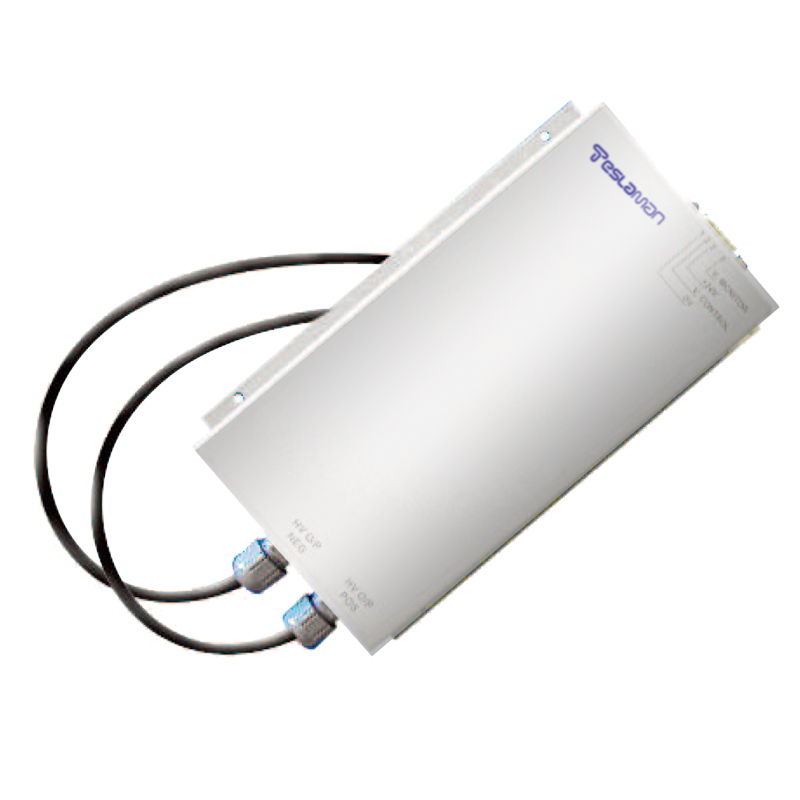
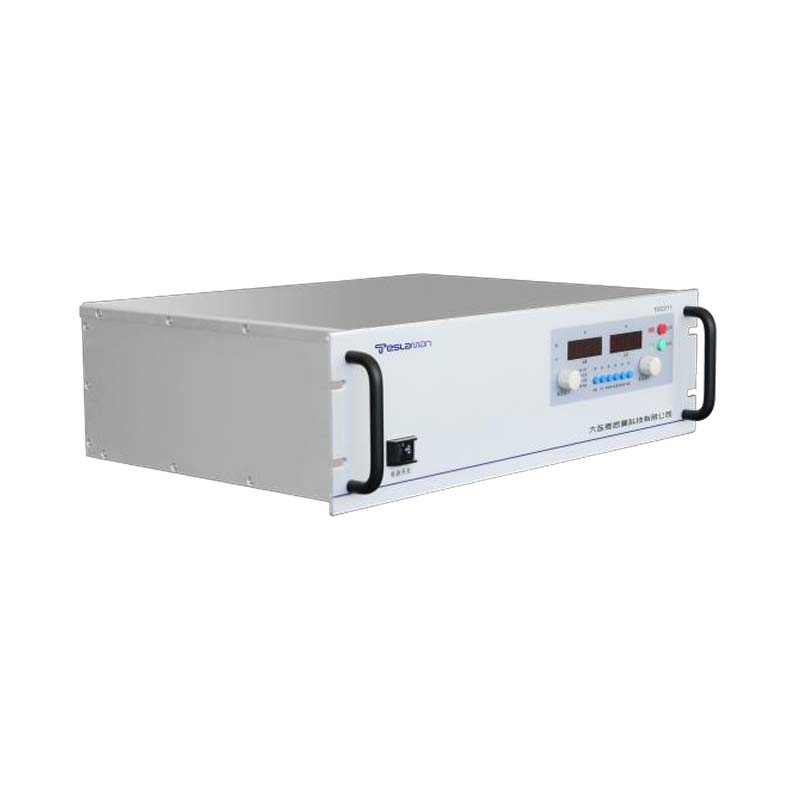
Development of Fault Prediction and Health Management Intelligent System for Particle Accelerator High Voltage Power Supply
Particle accelerators are complex scientific instruments that require high reliability and availability for research and applications. The high voltage power supplies that drive accelerator components are critical subsystems whose failures can cause significant downtime and repair costs. Intelligent fault prediction and health management systems for these power supplies can improve reliability, reduce unplanned downtime, and optimize maintenance activities.
High voltage power supplies in particle accelerators serve various functions including beam acceleration, focusing, and deflection. These supplies operate at voltages from kilovolts to megavolts with precise regulation requirements. The operating environment includes high radiation levels, magnetic fields, and thermal cycling. These stresses can degrade components over time, eventually leading to failures.
Traditional maintenance approaches for power supplies include scheduled preventive maintenance and reactive repair after failures. Scheduled maintenance replaces components at fixed intervals regardless of their actual condition, potentially wasting useful component life or missing degradation that occurs between maintenance periods. Reactive repair addresses failures after they occur, causing unplanned downtime.
Fault prediction and health management represents a more sophisticated approach that monitors the actual condition of the power supply and predicts impending failures. This enables maintenance to be performed when needed, neither too early nor too late. The approach requires sensors to measure relevant parameters, algorithms to analyze the data, and integration with maintenance planning systems.
Sensors for power supply health monitoring include voltage and current sensors at various points in the power circuit, temperature sensors on critical components, and vibration sensors on components with mechanical parts such as fans or transformers. Additional sensors may measure partial discharge activity, which can indicate insulation degradation, or capacitor equivalent series resistance, which increases as capacitors age.
Data acquisition systems collect the sensor data and transmit it to analysis systems. The sampling rate must be sufficient to capture the relevant phenomena. Some degradation mechanisms progress slowly and can be monitored with low frequency sampling. Others, such as partial discharge events, require high frequency sampling to capture the transient signals. The data acquisition system must handle both types of monitoring.
Signal processing extracts features from the raw sensor data that indicate the health state of components. Temperature trends can indicate degradation of thermal interfaces or cooling systems. Voltage and current ripple can indicate capacitor degradation or control system issues. Partial discharge patterns can indicate insulation weaknesses. The feature extraction algorithms must be tuned to the specific power supply design and failure modes.
Machine learning algorithms can identify patterns in the health monitoring data that precede failures. Training data from previous failures or from accelerated aging tests enables the algorithms to learn the signatures of impending failures. The algorithms can then detect similar patterns in operational data and issue alerts before failures occur. Various machine learning approaches including neural networks, support vector machines, and ensemble methods have been applied to fault prediction.
Health indices provide a quantitative measure of component or system health. A health index of one indicates perfect health, while zero indicates failure. The health index can be based on multiple parameters combined using weighted averaging or more sophisticated fusion algorithms. Tracking the health index over time reveals degradation trends and enables prediction of remaining useful life.
Remaining useful life prediction estimates how long a component or system can continue operating before failure. This prediction enables maintenance planning that accounts for the actual condition of the equipment. The prediction accuracy depends on the quality of the health monitoring data and the validity of the degradation models. Uncertainty quantification provides confidence intervals on the predictions.
Fault diagnosis identifies the specific component or subsystem that is degrading when the health monitoring detects an anomaly. This enables targeted maintenance that addresses the actual problem. Diagnostic algorithms may use the pattern of sensor readings to localize the fault. Model-based diagnosis compares the observed behavior with predictions from a system model to identify discrepancies.
Integration with accelerator control systems enables the health management system to influence operation. If a power supply shows signs of degradation, the control system might reduce its stress by limiting the operating parameters or scheduling maintenance during the next available period. The integration requires communication interfaces and protocols between the health management system and the control system.
The implementation of fault prediction and health management requires investment in sensors, data acquisition, analysis systems, and integration with existing systems. The benefits include reduced unplanned downtime, optimized maintenance, extended component life, and improved safety. The economic value depends on the cost of downtime, the cost of maintenance, and the effectiveness of the health management system in preventing failures.