High-Voltage Waveform Design for Ion Mobility Separation in Mass Spectrometry
Ion mobility spectrometry (IMS), particularly when coupled with mass spectrometry (IM-MS), adds an additional dimension of separation based on the size, shape, and charge of gas-phase ions. This technique is invaluable for analyzing complex mixtures, separating isomers, and elucidating molecular structure. A critical enabling technology is the generation of precise, high-voltage asymmetric or traveling waveforms applied to the electrodes of the ion mobility drift cell. The design of these waveforms is a specialized field of high-voltage engineering, as the waveform's amplitude, frequency, shape, and stability directly determine the resolving power and transmission efficiency of the mobility separation.
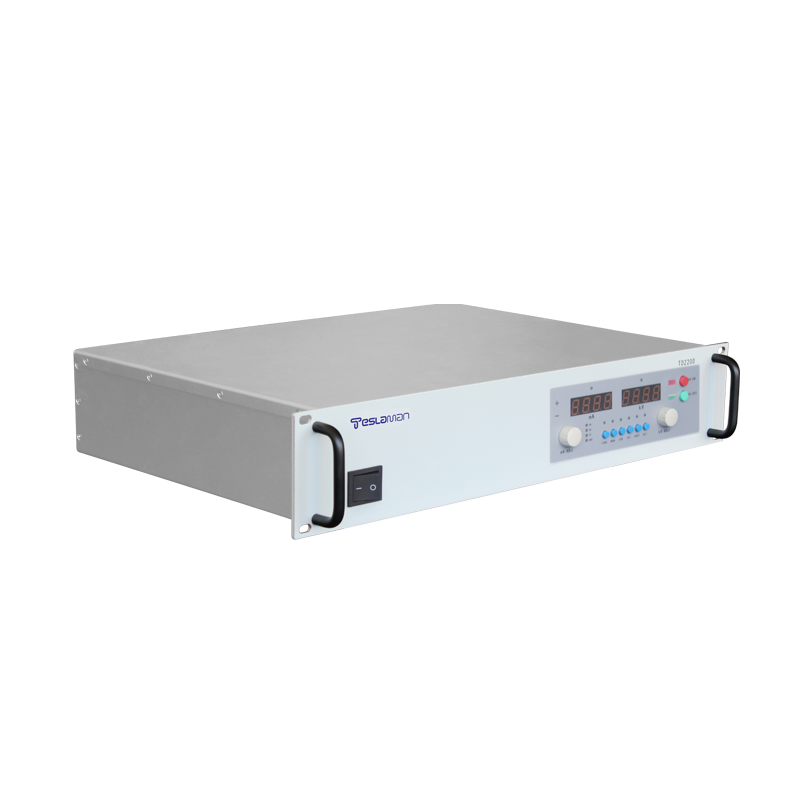
Several IMS variants exist, but two prominent examples illustrate the central role of waveform design. In Drift Tube Ion Mobility Spectrometry (DTIMS), a constant, uniform electric field is applied along the length of the gas-filled tube. Ions are injected in a short pulse and drift under this field against a counter-flow of buffer gas. Smaller, more compact ions undergo fewer collisions and drift faster than larger, more extended ions. The resolving power here is proportional to the square root of the drift voltage. Therefore, for high-resolution DTIMS, drift tubes are operated at high voltages, often 10-20 kV, supplied by an ultra-stable DC power supply with exceptionally low ripple. Any fluctuation in the drift voltage directly broadens the arrival time distribution and reduces resolution.
In Field Asymmetric Waveform Ion Mobility Spectrometry (FAIMS), the separation principle is different. Ions are carried by a gas flow between two closely spaced electrodes. A high-voltage asymmetric waveform, V(t), is applied across this gap. This waveform consists of a short-duration, high-amplitude positive component and a longer-duration, lower-amplitude negative component. The integral of the voltage over one period is zero. However, because the ion mobility at high electric fields differs from that at low fields, ions experience a net drift toward one of the electrodes over many cycles. By applying a small DC compensation voltage, a specific ion species can be balanced and transmitted.
The design of this FAIMS waveform is extraordinarily demanding. The peak-to-peak amplitude can be several kilovolts, and the frequency is typically in the megahertz range. The waveform must have extremely fast rise and fall times (tens of nanoseconds) to maintain the correct field ratio. It must be precisely balanced; any DC offset will act as an unwanted compensation voltage, shifting the transmission window. The waveform generator must drive the capacitive load of the FAIMS electrodes with high slew rates, requiring high-current output stages. The purity of the waveform shape is also critical. Deviations from the ideal square or bisinusoidal shape will alter the ion trajectory and degrade the orthogonality of the separation.
Advanced waveform design has moved beyond simple asymmetric square waves. Researchers are exploring multi-harmonic waveforms, which are synthesized by combining a fundamental high-frequency sine wave with its harmonics (e.g., a 2 MHz fundamental plus a 4 MHz component with specific amplitude and phase). This allows for fine-tuning of the field waveform shape to optimize separation for specific classes of ions. The synthesis of these multi-kV, high-frequency composite signals requires specialized RF power amplifiers with wide bandwidth and linearity, coupled with high-Q resonant impedance matching networks to efficiently deliver power to the reactive load.
Furthermore, modern IM-MS systems often integrate multiple mobility devices in series or parallel. This requires multiple independent, synchronized high-voltage waveform generators. The synchronization, typically via a master clock with picosecond precision, ensures that ions are transferred between stages without loss. The control of these high-voltage waveforms is deeply integrated into the instrument's software, allowing the user to define complex separation protocols that vary waveform parameters as a function of acquisition time.
The relentless pursuit of higher resolution and faster analysis in IM-MS is therefore, to a significant extent, a pursuit of better high-voltage waveform technology. Each incremental improvement in waveform stability, amplitude, and fidelity translates directly into the ability to separate previously indistinguishable isomers, to characterize complex protein conformations, and to analyze biological samples with greater depth and confidence. This makes the high-voltage power supply and waveform generator co-equal partners with the mass analyzer in defining the performance frontier of modern analytical mass spectrometry.