High-Voltage Printing of Multi-Material Gradient Structures via Electron Beam
The advent of electron beam additive manufacturing has opened new frontiers in fabricating components with spatially varying compositions and properties, known as multi-material or functionally graded structures. This capability is transformative for industries such as aerospace and biomedical, where a single part may require a tough, ductile core for fracture resistance and a hard, wear-resistant surface, with a smooth transition between them. The precise control required to achieve this lies not just in the feedstock delivery, but fundamentally in the dynamic, real-time manipulation of the electron beam's high-voltage characteristics.
In a conventional electron beam melting process, a single powder is spread and melted. For multi-material printing, multiple hoppers or a sophisticated powder deposition system are used to lay down different materials layer by layer or even within a single layer. However, the interface between dissimilar materials, such as a titanium alloy and a stainless steel, is a region of extreme metallurgical complexity. Direct melting of one material onto another can lead to the formation of brittle intermetallic phases, thermal expansion mismatch, and poor bonding. The electron beam, through its high-voltage control, becomes the tool to manage this interface.
The accelerating voltage, V, determines the electron penetration depth. A higher voltage beam penetrates deeper, creating a larger and deeper melt pool. A lower voltage beam delivers its energy more superficially. In a gradient structure, this becomes a powerful control knob. Consider printing a transition from a base of Ti-6Al-4V to a top layer of Inconel 718. Instead of simply depositing the Inconel layer and melting it with the same parameters used for titanium, a high-voltage strategy is employed. The first layer of Inconel powder is deposited. The beam is then programmed to operate at a relatively high voltage but with reduced current. This creates a deep, penetrating beam that melts through the Inconel powder layer and a significant portion of the underlying titanium, creating a large, intermixed melt pool. Upon solidification, this zone has a composition that is a blend of the two, graded from titanium-rich at the bottom to nickel-rich at the top.
The subsequent layers of Inconel are then melted with progressively lower voltages and optimized currents. The lower voltage restricts the melt pool depth, preventing excessive remelting and mixing of the already graded zone. This creates a sharper transition to the pure Inconel composition. This process, repeated layer by layer with a predetermined voltage and current schedule, builds up a controlled compositional gradient, avoiding a sharp, brittle interface.
Furthermore, high-voltage control enables in-situ alloying. If pure elemental powders (e.g., titanium and aluminum) are deposited in adjacent or layered patterns, the beam can be used to melt and mix them. The voltage is chosen to create a melt pool of sufficient size and temperature to ensure complete homogenization of the elements into the desired alloy phase. This allows for the creation of custom alloys that are not available as pre-alloyed powder.
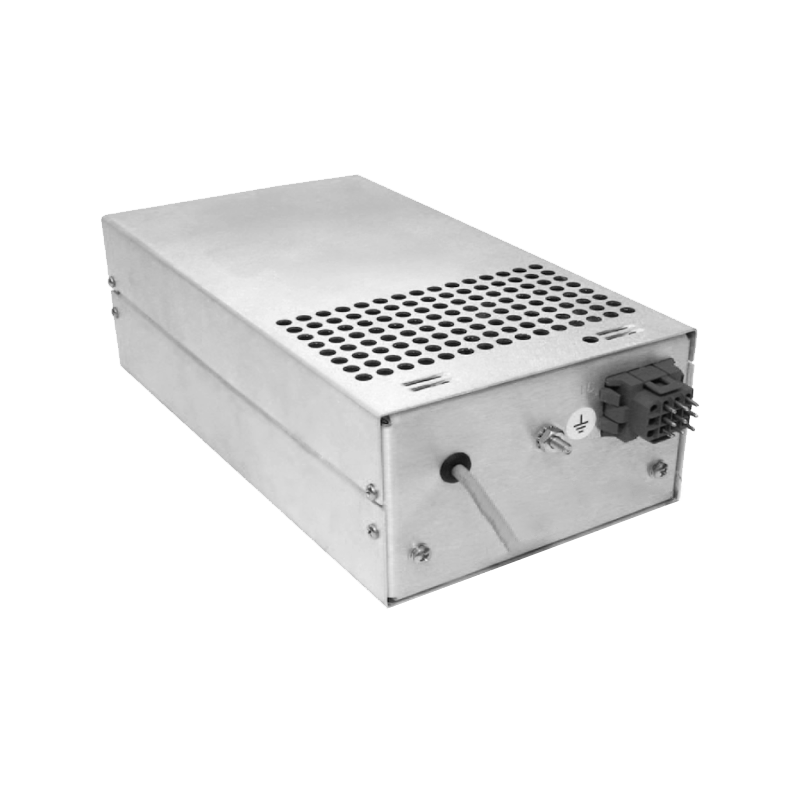
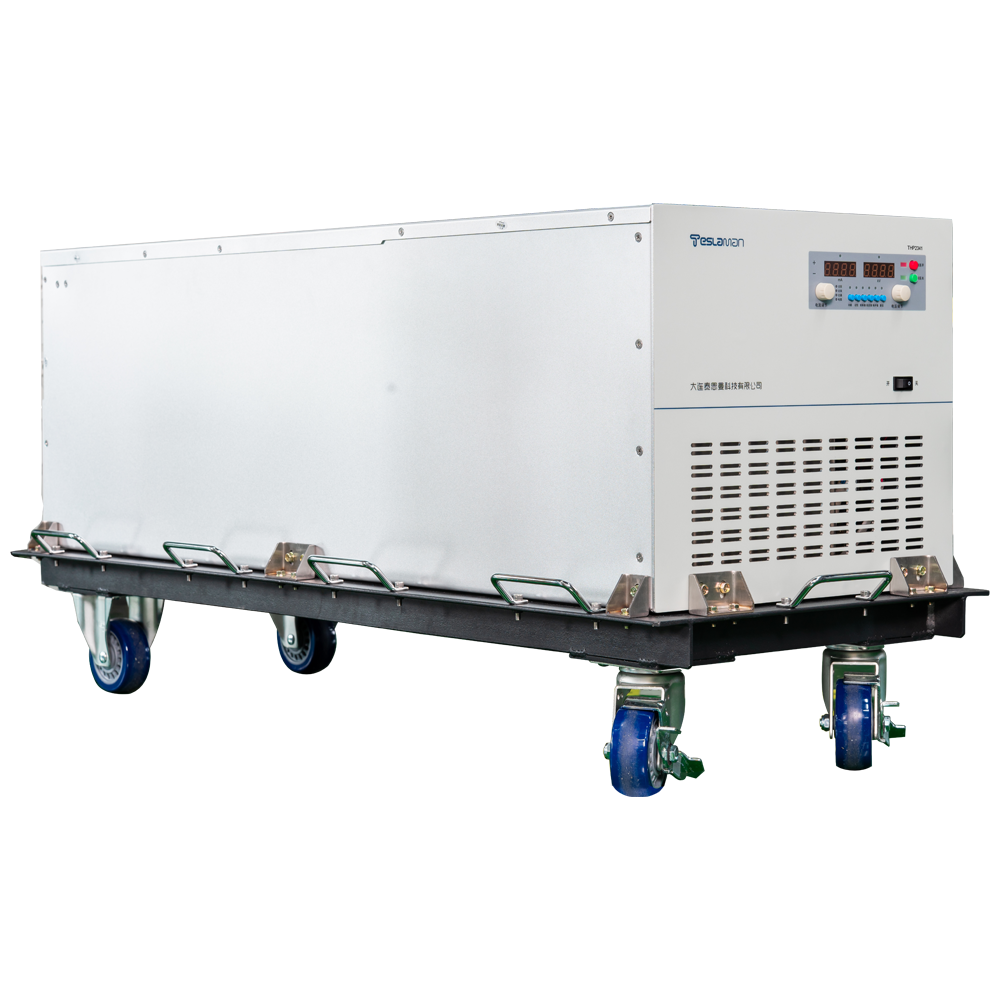
The requirements on the high-voltage power supply for this application are extreme. It must be capable of rapid, precise, and repeatable voltage changes between layers or even between scan vectors within a single layer. The settling time after a voltage change must be negligible. The stability during a melt vector must be absolute; any ripple or noise in the voltage will translate into fluctuations in melt pool depth and energy density, leading to inconsistent composition or porosity. The supply must also interface seamlessly with the beam deflection and focus controls, as the focus settings (lens currents) are also functions of the accelerating voltage to maintain a constant spot size.
This high-voltage controlled printing of multi-material gradients is a paradigm shift. It moves additive manufacturing from simply replicating a shape to engineering the material itself. The ability to create parts with tailored properties that transition smoothly from one region to another, avoiding weak interfaces, is the key to unlocking new performance limits in high-temperature structures, wear-resistant components, and biocompatible implants. The high-voltage power supply, in this context, is not just a power source but the primary instrument for metallurgical design at the point of manufacture.