High-Voltage Gradients for Micellar Electrokinetic Chromatography in Capillary Electrophoresis
Capillary electrophoresis is a powerful analytical separation technique that exploits differences in the electrophoretic mobility of charged species in a narrow capillary under a high electric field. Micellar electrokinetic chromatography extends this capability to neutral analytes by adding a surfactant, such as sodium dodecyl sulfate, to the running buffer at a concentration above its critical micelle concentration. These charged micelles act as a pseudostationary phase, partitioning neutral analytes based on their hydrophobicity. The separation is driven by a high DC voltage, typically 15 to 30 kilovolts, applied across the capillary. The precision, stability, and programmability of this high-voltage gradient are the primary determinants of separation efficiency, resolution, and reproducibility in MEKC.
The fundamental setup is simple: a fused silica capillary filled with buffer containing micelles, with its ends immersed in buffer reservoirs connected to a high-voltage power supply via platinum electrodes. One end is at high voltage, the other at ground (or a lower potential). The applied electric field generates an electroosmotic flow that pumps the bulk solution towards the detector, while charged micelles migrate electrophoretically, usually opposite to the EOF. Neutral analytes partition in and out of the micelles, spending different times in the faster-moving micellar phase versus the slower-moving aqueous phase, thus separating. The high-voltage supply is the sole driver of both the EOF and the electrophoretic migration.
The first and most obvious requirement for the high-voltage supply is exceptional stability and low ripple. The electroosmotic velocity is directly proportional to the electric field strength. Any fluctuation in the applied voltage causes a corresponding fluctuation in the EOF, leading to variability in migration time. For reproducible peak identification and quantification, migration time reproducibility of better than 0.1% relative standard deviation is often required. This demands a power supply with output voltage regulation of 0.01% or better, and ripple of less than 0.1% peak-to-peak. Achieving this at 30 kilovolts and at the low current levels typical of CE (microamperes) requires careful design of the feedback control loop and extensive output filtering.
However, the true sophistication in MEKC comes from the use of programmed voltage gradients. A constant voltage run is the simplest mode, but it is often not optimal. Voltage programming involves changing the applied voltage during the separation. This can be used for several purposes. A common technique is to start with a low voltage to allow for slow, high-resolution separation of early-eluting compounds, and then ramp to a higher voltage to speed up the elution of later, more strongly retained compounds. This voltage gradient reduces total analysis time without sacrificing resolution. Implementing this requires a power supply capable of executing a programmed voltage ramp with precise control over the slope and with no overshoot or instability during the transition.
Another advanced technique is the use of a field-amplified sample stacking step, which is a form of in-capillary preconcentration. This involves creating a zone of low conductivity (high electric field) at the capillary inlet, often by injecting the sample in a low-conductivity buffer. A short, high-voltage pulse is applied to drive the analytes rapidly to the boundary with the high-conductivity running buffer, where they slow down and stack into a narrow zone. This pulse must be precisely timed and have a fast rise time to achieve the stacking effect without causing excessive Joule heating or bubble formation. The power supply must therefore be capable of a fast step response and have programmable pulse duration.
Furthermore, in some MEKC methods for chiral separations or complex mixtures, a polarity switching technique is used. The voltage polarity may be reversed for a short period to manipulate the direction of EOF or to flush the capillary. This requires a high-voltage supply with a bipolar output capability or a separate, high-voltage switching matrix that can reverse the connections to the electrodes. The switching must be fast and completely avoid any momentary arcing or open-circuit condition that could damage the delicate electronics.
Temperature control is intimately linked to high-voltage operation. The power dissipated in the capillary (Joule heating) is proportional to the square of the voltage and the buffer conductivity. This heating can cause temperature gradients across the capillary, leading to band broadening and changes in migration time. Modern instruments use active capillary cooling. The high-voltage supply often includes a feed of the measured current to the system controller, which can then adjust the cooling fan speed or Peltier cooler power to maintain a constant capillary temperature. In some advanced setups, the supply's voltage is automatically adjusted to keep the power dissipation constant, a mode known as constant power operation. This requires the supply to have a control loop that dynamically adjusts the output voltage based on the measured current.
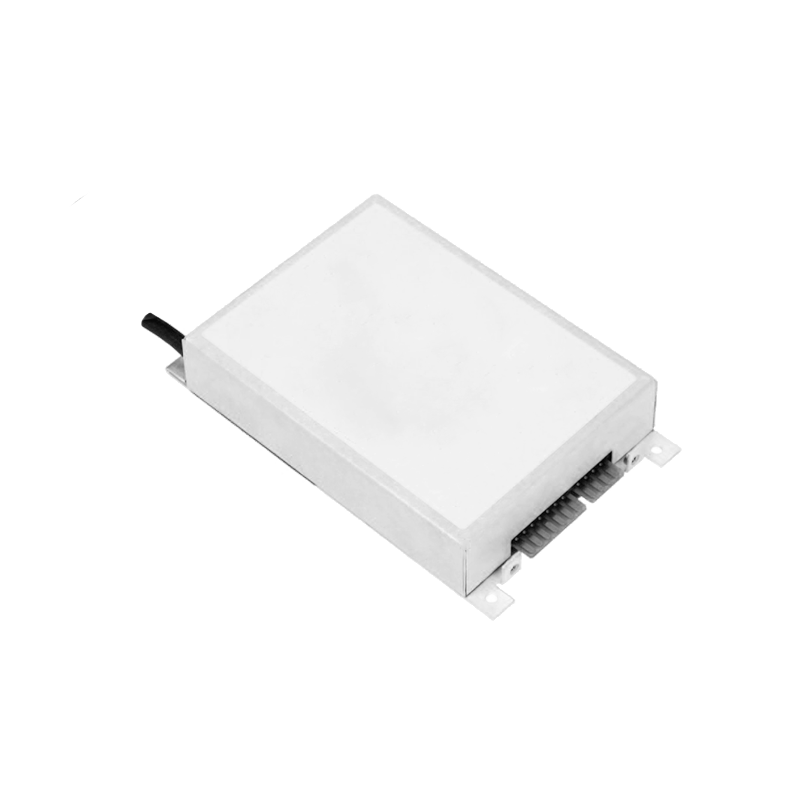
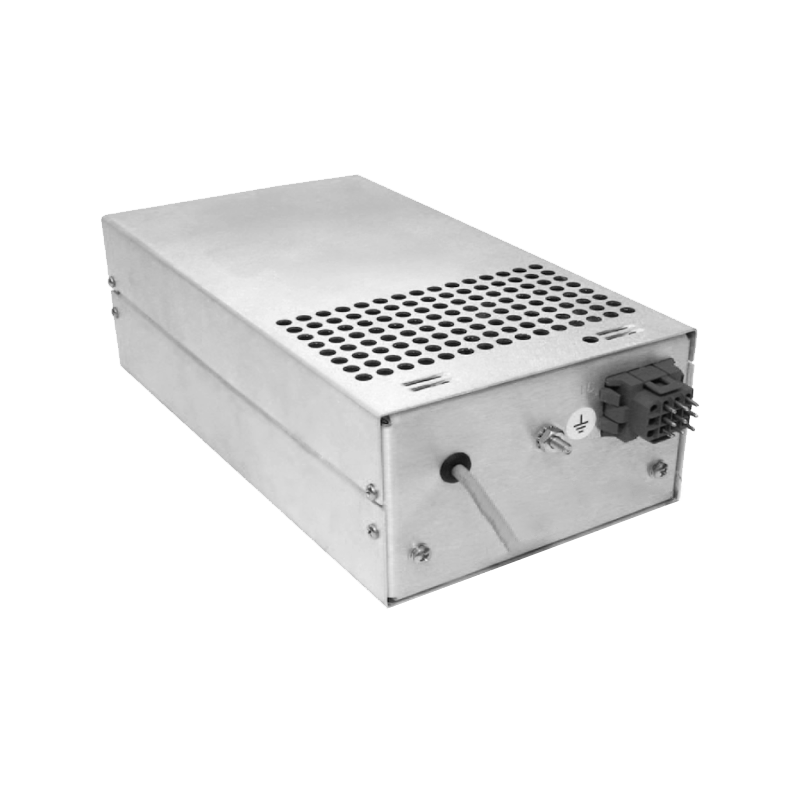
In practice, the high-voltage gradient system for MEKC is a finely tuned instrument. It must deliver kilovolts with the stability of a laboratory voltage standard, yet be capable of dynamic, programmed changes. Its performance determines whether a complex mixture of neutral pharmaceuticals, natural products, or environmental contaminants can be resolved into sharp, quantifiable peaks. The marriage of high-voltage engineering with micellar chemistry has created one of the most versatile and powerful separation techniques available to the analytical chemist.