High-Voltage Plasma Diagnostics for Reactive Magnetron Sputtering Processes
Reactive magnetron sputtering is a widely used technique for depositing compound thin films such as oxides, nitrides, and carbides. The process involves sputtering a metallic target in an atmosphere containing a reactive gas. The properties of the resulting film are highly dependent on the plasma conditions, which can be notoriously unstable due to the hysteresis effect caused by target poisoning. To achieve repeatable, high-quality coatings, real-time monitoring of the plasma is essential, and the high-voltage power supply driving the discharge itself becomes a primary source of diagnostic data. This is not merely about measuring voltage and current; it is about interpreting the subtle electrical signatures of the plasma to understand and control the reactive process.
The plasma in a magnetron discharge is a complex electrical load. Its impedance is determined by the gas composition, pressure, magnetic field strength, and the state of the target surface. In reactive sputtering, as the partial pressure of the reactive gas increases, the target surface begins to form a compound layer. This layer has a different secondary electron emission coefficient than the pure metal. Consequently, the discharge voltage at a constant current will shift. This voltage change is a powerful, real-time indicator of the target's chemical state.
For example, consider the reactive sputtering of titanium in an argon/nitrogen mixture to form titanium nitride. When sputtering a clean titanium target in pure argon, the discharge voltage at a given current might be around -500V. As nitrogen is introduced and the target begins to form a nitride layer on its surface (the poisoned state), the secondary electron emission increases, and the required voltage to maintain the same current drops significantly, perhaps to -400V. This voltage drop is the primary signature of the transition from metallic to poisoned mode.
However, the DC voltage alone tells only part of the story. The fluctuations in the voltage and current, known as the discharge noise spectrum, contain a wealth of information. In the transition zone between metallic and poisoned modes, the plasma can become unstable, oscillating between the two states. These oscillations produce characteristic frequencies in the electrical signal. By performing a Fast Fourier Transform (FFT) on the real-time voltage and current waveforms from the high-voltage power supply, one can detect these instabilities before they become visible in the process. This allows for a control system to make micro-adjustments to the reactive gas flow or the target power to stabilize the process at a desired operating point within the transition zone.
Furthermore, advanced power supplies for reactive sputtering are often pulsed DC or mid-frequency AC units. The pulse shape itself becomes a diagnostic tool. Monitoring the rise and fall times of the voltage pulses, and the current spikes during the pulse on-time, provides insight into the plasma's response. For instance, a slower-than-expected voltage recovery after a pulse might indicate an accumulation of charge on a poisoned target surface, signaling the onset of arcing conditions. The power supply's arc detection circuits, which are designed to quench micro-arcs, also generate valuable data. The frequency and energy of these arc events are a direct measure of process stability and can be used to predict when a target needs cleaning or replacement.
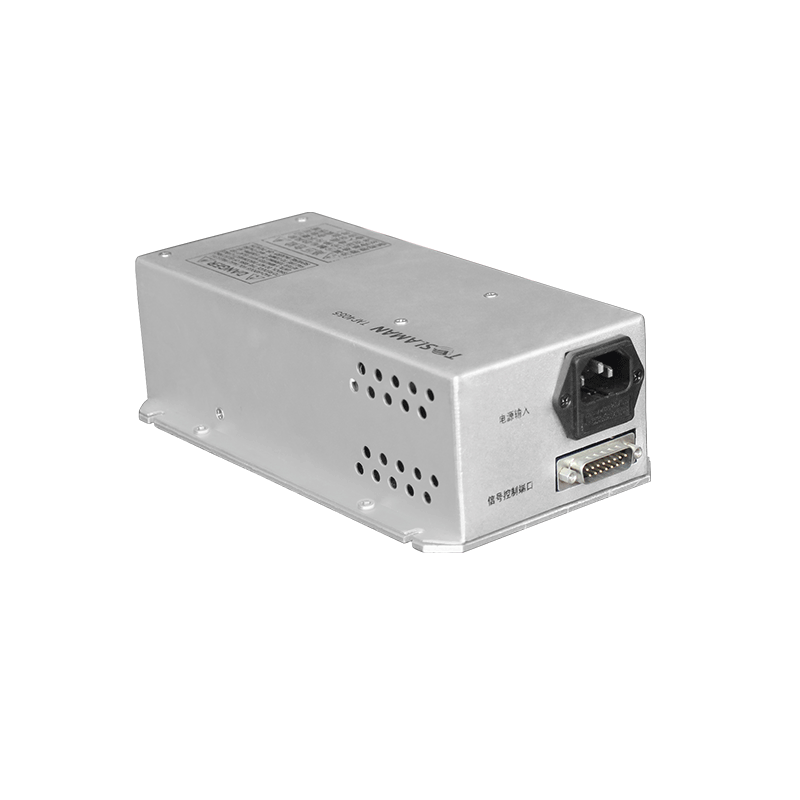
The integration of these diagnostic capabilities requires a high-voltage power supply with sophisticated sensing and data processing capabilities. It must sample voltage and current at megahertz rates, perform real-time spectral analysis, and communicate this data to a central process controller. This transforms the power supply from a simple energy source into an intelligent plasma sensor. By closing the loop between these electrical diagnostics and the control of reactive gas flow and power, it becomes possible to deposit compound films with precise stoichiometry and structure, even in the inherently unstable transition zone, maximizing deposition rate while maintaining film quality. This synergy between power delivery and plasma diagnostics is the cornerstone of modern, high-precision reactive sputtering.