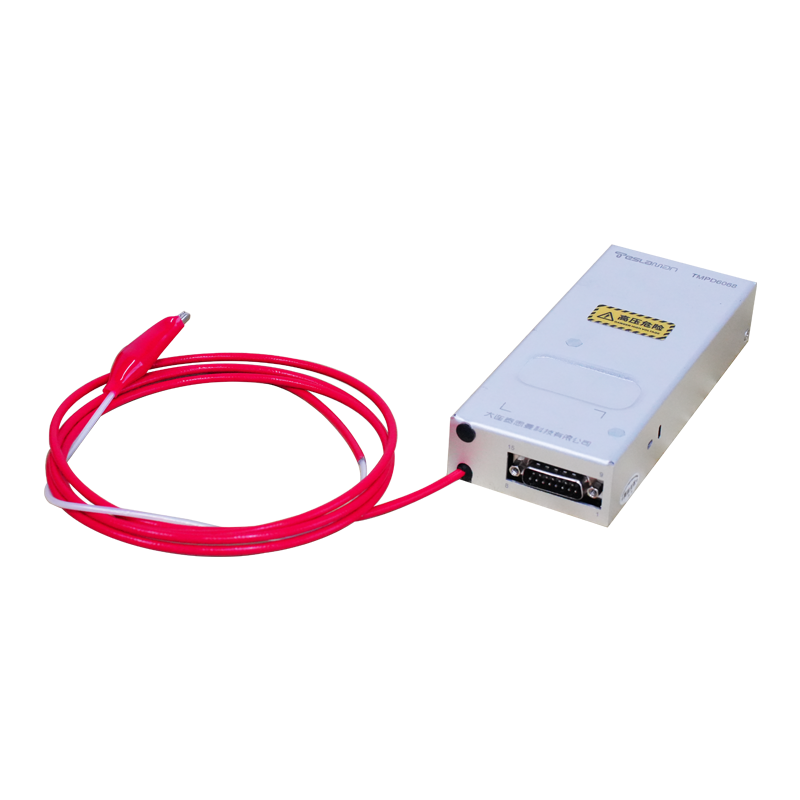
Self-Recovering Fault-Tolerant Design for PPM-Level High-Voltage References
In the world of precision high-voltage instrumentation, the voltage reference is the bedrock upon which all measurement accuracy rests. Applications such as mass spectrometry, electron beam lithography, and precision ion optics demand output stability and accuracy at the parts-per-million level. A drift of even a few PPM in the high-voltage output can shift a mass peak, blur a lithographic feature, or alter an ion beam's trajectory. However, electronic components are subject to aging, temperature fluctuations, and the occasional, unavoidable radiation strike or transient overvoltage. Designing a high-voltage reference that not only maintains PPM-level accuracy but can also detect and recover from internal faults without user intervention is a pinnacle of power supply engineering. This is the domain of self-recovering, fault-tolerant designs.
The foundation of such a system is redundancy and comparison. A single, ultra-stable voltage reference, no matter how well constructed, is a single point of failure. A fault-tolerant design employs multiple independent reference elements. These could be multiple zener diodes, each with its own temperature stabilization and buffer amplifier, all operating simultaneously. The outputs of these references are continuously compared, often by a high-resolution analog-to-digital converter and a microcontroller. Under normal operation, all outputs agree within a tight tolerance. If one reference begins to drift due to age or a momentary overload, its output will deviate from the consensus of the other references. The system detects this discrepancy and flags it as a fault.
However, detection is only the first step. Self-recovery requires an actuation mechanism. In a multi-reference system, the controller can automatically switch the output of the main high-voltage regulator to a different, healthy reference channel. This switchover must be seamless, causing no glitch or transient on the high-voltage output. This is achieved by having the redundant reference channels pre-warmed and active, and using a precision analog multiplexer with break-before-make switching to connect the chosen reference to the main regulator's error amplifier. The switching time is critical; it must be fast enough to prevent the output from drifting outside specifications, but slow enough to avoid injecting switching noise.
Another layer of fault tolerance involves component-level self-healing. Some high-voltage designs incorporate current-limiting resistors in series with critical components like voltage divider resistors. If a divider resistor suffers a momentary dielectric breakdown due to a voltage spike, the current-limiting resistor prevents a catastrophic short circuit. The energy in the spike may be dissipated, and the resistor may self-heal, returning to normal operation. The control system, detecting a temporary deviation followed by a return to normal, can log the event as a warning but continue operation without interrupting the process.
Temperature control is another area where fault tolerance is applied. The reference elements are typically housed in a miniature, oven-controlled enclosure. This oven has its own temperature sensor and heater control loop. A fault-tolerant design may include a redundant temperature sensor. If the primary sensor fails, the controller can switch to the backup and adjust the heater duty cycle accordingly. Similarly, if the main heater fails, a secondary, lower-power heater might be activated to maintain the reference at a slightly lower but still stable temperature, allowing the system to continue operating, perhaps at reduced accuracy, until maintenance can be performed.
The ultimate expression of self-recovery is the ability to recalibrate in-situ. Some systems include an internal, ultra-stable transportable reference, such as a Josephson junction array or a very high-quality zener, that can be switched in to calibrate the main references periodically. If a drift is detected, the system can automatically adjust the gain or offset of the main reference channel's buffer amplifier to bring it back into alignment with the internal standard. This self-calibration can be performed during a scheduled idle period or even during a brief pause in the host instrument's operation.
The communication interface plays a vital role. A truly intelligent fault-tolerant supply does not just hide its faults; it reports them. It provides a detailed log of all detected anomalies, switchovers, and self-recovery events to the system controller. This allows the user or maintenance technician to understand the health of the power supply and to plan for replacement of aging components before a failure occurs. It transforms the power supply from a black box into a transparent, communicative component of the larger instrument.
In practice, the design of such a supply is a masterclass in analog and digital engineering. It requires components with known long-term drift characteristics, meticulous layout to prevent thermal and electrical coupling between redundant channels, and firmware that can distinguish between a transient glitch and a permanent failure. The result is a power supply that can operate for years in a critical application, maintaining PPM-level accuracy without any human intervention, and gracefully recovering from the minor, inevitable faults that would cripple a conventional design. This level of reliability is not a luxury but a necessity for the most demanding scientific and industrial instruments, where unscheduled downtime is measured in lost discoveries or scrapped production.