High-Voltage Excitation Techniques for Acoustic Emission Detection of Micro-Cracks in Pharmaceutical Ampoule Containers
The detection of micro-cracks in pharmaceutical ampoule bottles represents a critical quality control challenge in the pharmaceutical manufacturing industry.Ampoules,used extensively for containing sterile injectable solutions,must maintain absolute integrity throughout their service life.The presence of micro-cracks,often invisible to visual inspection,can lead to contamination,compromised sterility,and potential patient safety risks.Acoustic emission testing has emerged as a powerful non-destructive evaluation technique for detecting these subsurface defects,and the application of high-voltage excitation significantly enhances the sensitivity and reliability of this detection method.
Acoustic emission technology operates on the principle that when a material undergoes stress,internal discontinuities such as micro-cracks generate transient elastic waves.These waves propagate through the material and can be detected by piezoelectric sensors positioned on the surface.However,micro-cracks in glass ampoules produce extremely weak acoustic signals that are often masked by environmental noise and background vibrations.The integration of high-voltage excitation systems provides a solution by inducing controlled stress cycles that trigger crack propagation and enhance signal generation.
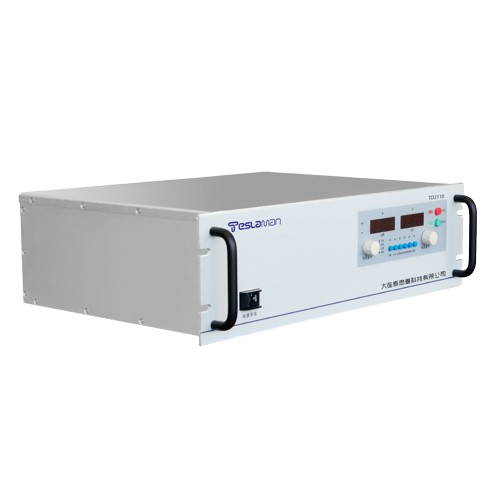
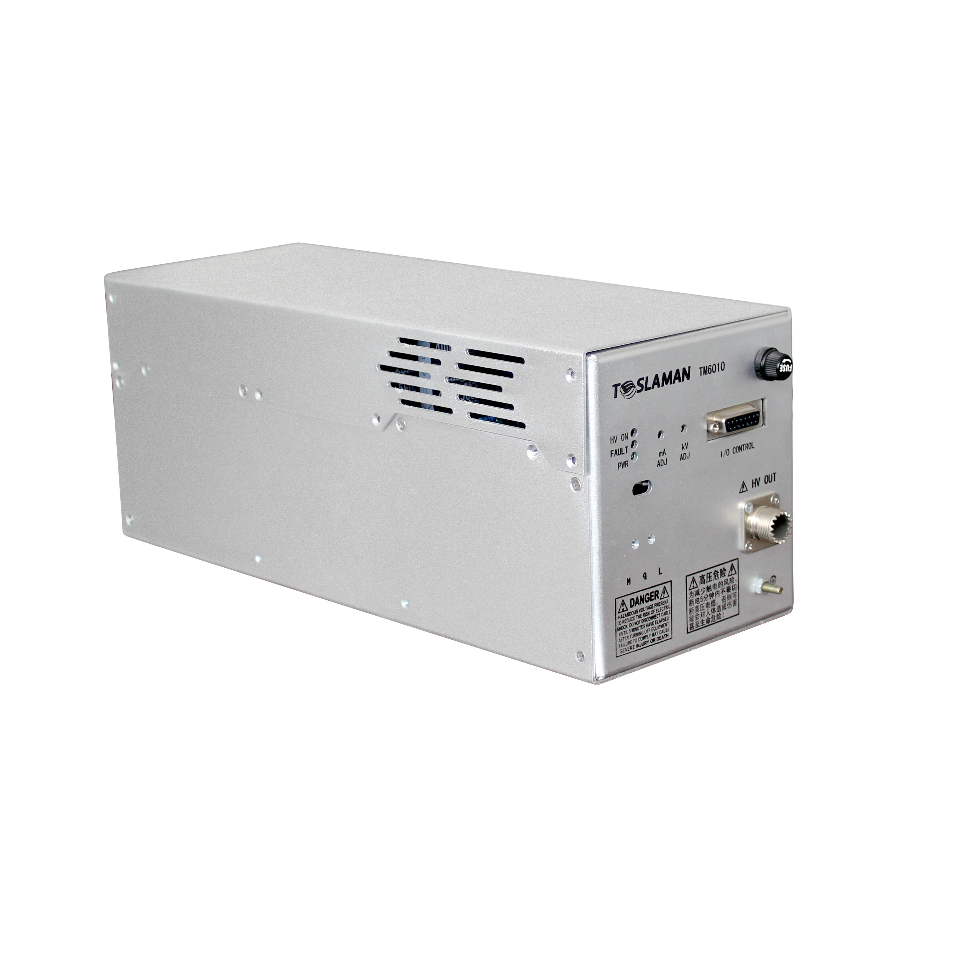
The high-voltage excitation approach employs capacitor discharge circuits capable of delivering rapid voltage pulses to piezoelectric transducers attached to the ampoule.Systems typically operate at voltage levels ranging from one kilovolt to fifteen kilovolts,with pulse durations in the microsecond range.This rapid discharge creates a sharp mechanical impulse that propagates through the glass container.The interaction between this impulse and existing micro-cracks generates distinctive acoustic emission signatures that differ significantly from those produced by intact material.
The science behind this technique involves the stress concentration phenomenon at crack tips.When a mechanical wave encounters a micro-crack,the stress field at the crack tip is amplified,leading to localized deformation and frictional sliding along crack surfaces.This friction and deformation generate acoustic emissions that are characteristic of the crack geometry and orientation.The high-voltage induced excitation ensures that even dormant cracks are activated and produce detectable signals.
Signal processing algorithms analyze the acoustic emission data to distinguish between genuine crack-related signals and false positives from environmental sources.Key parameters include peak amplitude,rise time,hit duration,and frequency content.Micro-cracks typically produce signals with specific frequency signatures in the range of one hundred kilohertz to one megahertz,while environmental noise tends to occupy lower frequency bands.Advanced filtering techniques and neural network-based classification systems improve detection accuracy.
The practical implementation requires careful consideration of test setup parameters.Proper sensor placement is essential,with multiple sensors positioned to enable triangulation of emission sources.The coupling medium between sensors and the ampoule surface must provide consistent acoustic transmission.Test sequences typically involve multiple excitation cycles to ensure reproducibility and to capture crack growth behavior under repeated loading.
Quality assurance protocols in pharmaceutical manufacturing benefit from this technology by enabling one hundred percent inspection of ampoule batches rather than statistical sampling.This approach significantly reduces the risk of defective products reaching patients.The technique is particularly valuable for ampoules containing expensive or critical medications where any contamination risk is unacceptable.
Research continues to advance the sensitivity of acoustic emission detection systems.Developments in sensor technology,including the use of fiber optic interferometric sensors,promise even greater detection thresholds.Additionally,integration with automated inspection lines enables high-speed testing without disrupting production flow.The combination of high-voltage excitation and advanced signal processing establishes this method as a cornerstone of pharmaceutical container integrity verification.
The economic implications of implementing acoustic emission testing are substantial.While initial equipment investment is significant,the cost of product recalls due to contaminated ampoules far exceeds the cost of comprehensive inspection.Furthermore,maintaining product quality reputation is invaluable in the pharmaceutical industry where patient trust is paramount.
In conclusion,high-voltage excitation acoustic emission testing provides a reliable,non-destructive method for detecting micro-cracks in pharmaceutical ampoule containers.The technique leverages fundamental principles of fracture mechanics and wave propagation to identify defects that would otherwise escape detection.As manufacturing quality standards continue to tighten,this technology will play an increasingly important role in ensuring pharmaceutical product safety.