High-Voltage Field Design Considerations for Mass Spectrometer Ion Mobility Spectroscopy Systems
Ion mobility spectroscopy has become an increasingly important analytical technique for rapid separation and detection of chemical species,particularly in security screening,environmental monitoring,and pharmaceutical applications.When integrated with mass spectrometry,the technique provides additional dimension of separation that significantly enhances analytical capability.High-voltage field design within ion mobility cells directly determines separation efficiency,resolution,and sensitivity,making optimized high-voltage systems essential for high-performance instruments.
Ion mobility spectroscopy separates ions based on their mobility through a buffer gas under the influence of an electric field.Ions experience forces from the electric field while undergoing collisions with gas molecules that provide drag.The balance between these opposing forces results in a characteristic drift velocity proportional to the electric field strength and inversely proportional to the gas number density.
The fundamental relationship between ion mobility and physical properties provides the analytical basis for the technique.Ion mobility depends on the ion collision cross-section,which relates to the three-dimensional structure of the ion.Mobility therefore reflects molecular size,shape,and charge state,enabling separation of species with different structures even when they have identical mass.
High-voltage design for ion mobility cells must satisfy multiple requirements that are partially conflicting in some cases.The electric field must be sufficiently uniform to prevent field distortions that degrade separation quality.The field strength must be high enough to achieve acceptable drift velocities while remaining low enough to prevent field-induced dissociation or excessive heating.The voltage must be highly stable to ensure reproducible mobility measurements.
Field uniformity in ion mobility cells is typically achieved through carefully designed electrode geometries.Ring electrode arrays,with carefully calculated spacing and aperture sizes,create approximately uniform fields along the drift region.Planar geometry cells with parallel plate electrodes offer simpler construction but require precise electrode spacing and alignment.
Drift field strengths in practical systems typically range from one hundred volts per centimeter to five hundred volts per centimeter,with some specialized systems operating at higher fields.The choice of field strength involves tradeoffs between resolution and analysis time,higher fields providing faster analysis but potentially reducing resolution.
The voltage waveform applied to the ion mobility cell depends on the specific operational mode.Continuous field operation applies a constant voltage throughout the drift region,with ions detected continuously as they reach the detector end.Pulsed field operation introduces ions in packets and monitors their arrival time distribution at the detector.
Trapped ion mobility spectroscopy represents an advanced mode where ions are held in a region of the cell by fields while they undergo mobility-based separation.This approach provides longer separation times and therefore potentially higher resolution.Trapped ion mobility requires sophisticated high-voltage waveforms that create both trapping and separating fields.
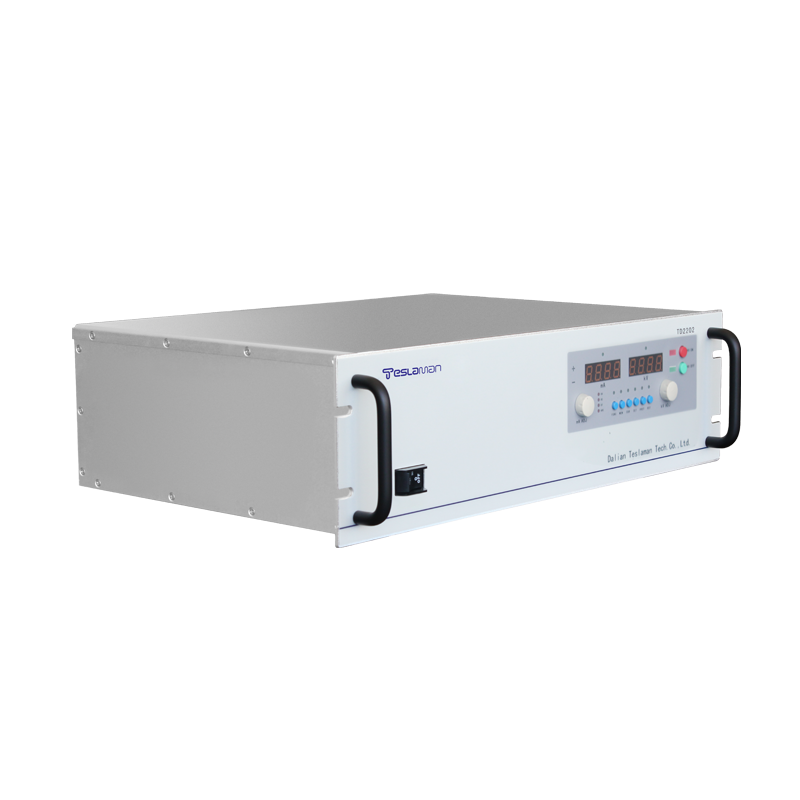
High-voltage power supplies for ion mobility systems must exhibit exceptional stability,with voltage ripple and drift well below one part in ten thousand.Short-term stability affects measurement precision,while long-term stability ensures reproducible results over extended analytical sequences.Digital control systems with precision reference voltages and feedback loops achieve the required stability.
Safety considerations in high-voltage ion mobility systems require careful attention.Personnel must be protected from electrical shock through interlocks and grounding systems.Equipment must be designed to prevent arc-over that could damage components or create safety hazards.
The integration of ion mobility with mass spectrometry creates powerful analytical platforms that leverage the strengths of both techniques.Ion mobility provides gas-phase separation based on structure,while mass spectrometry provides mass-to-charge determination.Together they enable separation and identification of complex mixtures that would challenge either technique alone.
Applications in proteomics benefit particularly from ion mobility separation.Complex peptide mixtures from digested proteins generate numerous species with similar masses but different structures.Ion mobility separates these species,enabling more complete characterization of protein samples.Collision-induced dissociation following ion mobility separation provides structural information that aids peptide identification.
Security applications exploit the rapid analysis capability of ion mobility systems.Explosives and narcotics detection at checkpoints utilizes the technique ability to detect trace amounts of target compounds with minimal sample preparation.Field-portable instruments enable screening in diverse locations.
Environmental monitoring applications include identification and quantification of airborne contaminants,water pollutants,and soil contaminants.Rapid screening capabilities support environmental remediation efforts and compliance monitoring.
Future developments in ion mobility technology will likely include higher field strength operation that extends separation to smaller size differences,improved ion sources that increase sensitivity,and advanced data analysis methods that extract more information from mobility measurements.Integration with additional separation techniques will continue to expand analytical capabilities.
In summary,high-voltage field design is fundamental to ion mobility spectroscopy performance.Optimized field uniformity,stability,and appropriate field strength enable efficient separation of chemical species based on their mobility.The continued advancement of high-voltage technology directly supports improvements in analytical capability across diverse application areas.