High Voltage Linearity for Channel Electron Multiplier Count Rate Extension
Channel electron multipliers represent one of the most sensitive single-particle detection devices available today, capable of detecting individual electrons or ions with high gain and fast response times. These devices find extensive applications in mass spectrometry, space physics research, and various analytical instruments where single-particle sensitivity is required. The count rate capability of channel electron multipliers is fundamentally limited by the dead time associated with each detection event, during which the device cannot respond to subsequent particles. High voltage power supply linearity plays a crucial role in extending the effective count rate range by maintaining consistent gain across varying count rates and minimizing dead time effects. The design of high voltage power supplies for channel electron multipliers requires careful consideration of pulse characteristics, stability requirements, and the unique operating conditions of these detectors.
The operating principle of channel electron multipliers involves the multiplication of electron avalanches through a series of secondary electron emissions along a curved channel. When a particle enters the channel and strikes the wall, it releases secondary electrons that are accelerated by the applied electric field toward the opposite wall, where they release more secondary electrons. This process repeats along the length of the channel, resulting in gain factors typically ranging from ten to the seventh power to ten to the eighth power. The high voltage applied to the channel determines the electron energy and thus the secondary emission yield, directly affecting the overall gain. For count rate extension applications, the high voltage must be maintained with exceptional stability to ensure consistent gain across the entire operating range. Typical operating voltages range from 1.5 to 3.5 kilovolts, depending on the specific channel geometry and desired gain characteristics.
The count rate limitation in channel electron multipliers arises from several physical mechanisms. The dead time associated with each detection event includes the time required for the electron avalanche to propagate through the channel and the time needed for the channel to recover its electric field after the large current pulse. At high count rates, these dead times can overlap, causing pulse pile-up and reduced effective gain. Additionally, space charge effects from the large electron clouds can distort the electric field within the channel, affecting the gain for subsequent detections. High voltage power supply linearity becomes critical in mitigating these effects by maintaining consistent electric field strength and rapid recovery of the channel potential after each detection event. The power supply must respond quickly to the large current pulses while maintaining stable voltage during the intervals between detections.
High voltage power supply design for channel electron multiplier count rate extension presents several unique challenges. The load presented by the channel electron multiplier is highly dynamic, with large current pulses superimposed on a very small DC bias current. The power supply must maintain stable DC output while providing the transient current capability needed during detection events. The output impedance of the power supply directly affects the voltage sag during current pulses, with lower impedance providing better voltage regulation and reduced dead time. However, achieving very low output impedance at the high frequencies associated with detection events requires careful design of the output stage and feedback loops. The power supply must also filter the high-frequency components of the detection pulses to prevent them from propagating back through the power supply and causing instability.
The topology of high voltage power supplies for channel electron multiplier applications typically employs a high-voltage DC-DC converter followed by a low-output-impedance linear regulator stage. The DC-DC converter provides the basic high voltage generation with good efficiency, while the linear stage provides the necessary output impedance reduction and filtering. Advanced designs may employ multiple parallel converter stages with interleaved switching to reduce output ripple and improve transient response. The use of wide-bandgap semiconductor devices in the switching stages enables higher switching frequencies, reducing the size of passive components and improving the power density. Digital control algorithms actively compensate for line voltage variations, load changes, and temperature effects to maintain optimal performance across varying operating conditions.
Voltage stability and linearity represent critical performance parameters for channel electron multiplier power supplies. The gain of the multiplier depends exponentially on the applied voltage, making voltage stability paramount for consistent detection efficiency. Typical requirements call for voltage stability better than ten parts per million over the operating temperature range and long-term drift less than fifty parts per million per thousand hours. The linearity of the power supply output across the expected count rate range is equally important, as gain variations with count rate would introduce systematic errors in measurements. Modern power supplies employ sophisticated feedback control with multiple loops to optimize both DC regulation and transient response. The control bandwidth must be sufficient to respond to the high-frequency components of detection pulses while maintaining excellent DC stability.
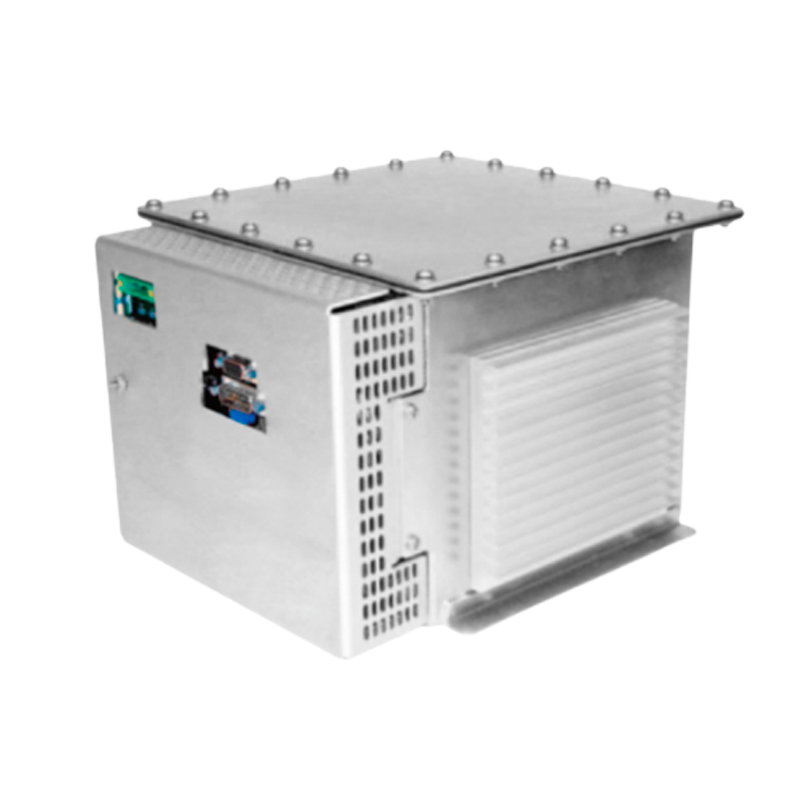
The thermal design of high voltage power supplies for channel electron multiplier applications requires careful consideration of the precision requirements and space constraints. The power supply must often be integrated into compact detector assemblies with limited space for cooling systems. The presence of high voltage potentials complicates thermal management, as traditional cooling methods must be implemented without compromising electrical insulation. Many systems employ forced-air cooling with carefully designed airflow paths and strategically placed heat sinks. The thermal design must ensure stable operation over a wide range of ambient temperatures while maintaining the precision voltage regulation required for consistent detector gain. Temperature gradients within the power supply can cause drift in output voltage and other parameters, making thermal management a critical aspect of overall system design.
Noise and ripple characteristics of the high voltage power supply directly impact the performance of channel electron multipliers. Excessive ripple can cause gain modulation and increased noise in the detector output. The power supply must achieve extremely low ripple levels, typically below ten millivolts peak-to-peak at the output. This requires careful design of filtering stages, including multi-stage LC filters and active filtering circuits. The switching noise from the power conversion stages must be effectively attenuated to prevent interference with the extremely small signals from the detector. Additionally, the power supply must not introduce phase noise that could affect the timing resolution of detection events. The use of linear post-regulation stages and careful grounding and shielding practices helps achieve the necessary noise performance.
Protection and safety systems are integral components of high voltage power supplies for channel electron multiplier applications. The high voltages involved create electrical hazards that require multiple layers of protection. Overcurrent protection prevents damage from fault conditions such as detector short circuits or power supply component failures. Overvoltage protection guards against insulation failure and component degradation. Interlock systems ensure that high voltage cannot be applied unless all safety conditions are met, including proper detector installation, cooling system operation, and enclosure integrity. These protection systems must be designed for high reliability and fast response to prevent equipment damage while avoiding nuisance trips that would interrupt measurements.
The integration of high voltage power supplies with modern channel electron multiplier systems requires sophisticated control and monitoring capabilities. Digital communication interfaces enable remote monitoring and control of power supply parameters, integration with detector control systems, and data logging for quality assurance and research documentation. Advanced diagnostic capabilities help predict maintenance needs and optimize system performance. The ability to store and retrieve operating parameters supports detector calibration and ensures reproducibility of measurements. Modern power supplies often include built-in self-test functions that verify critical components and subsystems before high voltage is applied, reducing the risk of unexpected failures during critical measurements.
Emerging applications in high-energy physics, space exploration, and advanced analytical instrumentation continue to drive innovation in high voltage power supply technology for channel electron multiplier count rate extension. The development of new detector designs with higher intrinsic gain demands improved voltage stability and faster response capabilities. Increasingly demanding scientific applications require better count rate linearity and lower noise floors, driving requirements for reduced output impedance and improved filtering. The trend toward miniaturized detector systems creates demand for compact, low-power high voltage solutions. These evolving requirements ensure continued development of advanced high voltage power supply technology specifically tailored to the unique needs of channel electron multiplier count rate extension applications.