Correlation Between Energy Resolution and Beam Quality of Wide Range Ion Implantation High Voltage Power Supply
Ion implantation is a critical process in semiconductor manufacturing for introducing dopants into silicon wafers with precise control of concentration and depth profile. Wide range ion implanters must handle a broad spectrum of implant energies and species to support diverse device requirements. The high voltage power supply that accelerates the ions determines the implantation energy and directly affects the beam quality. Energy resolution, which defines the precision of the implantation energy, is closely correlated with beam quality parameters including energy spread, angular divergence, and current stability. Understanding this correlation is essential for optimizing implanter performance.
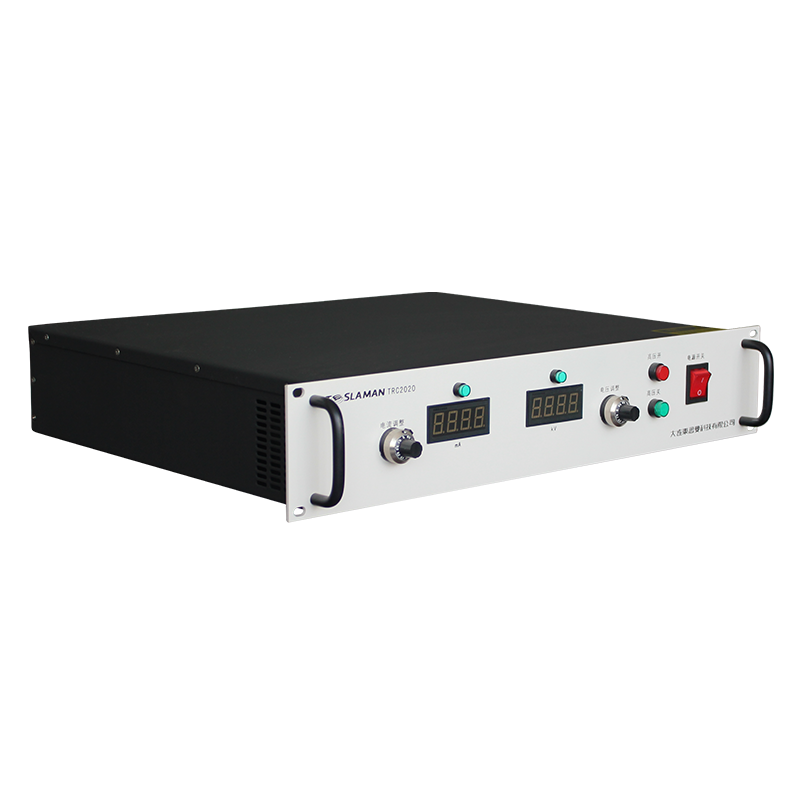
The electrical requirements for ion implantation power supplies depend on the implant energy range and beam current requirements. Wide range implanters may operate from kilovolts to megavolts, with beam currents from microamperes to milliamperes depending on the implant dose rate. The power supply must provide precise voltage control across this wide range while maintaining stability and low ripple. The energy resolution requirement determines the allowable voltage variation and ripple amplitude.
Ion implantation fundamentals involve acceleration of ions in an electric field. Ions generated in the source are extracted and accelerated by the high voltage potential. The implantation energy equals the product of the ion charge state and the acceleration voltage. The depth profile of the implanted dopants depends on the ion energy, with higher energies resulting in deeper penetration. Precise control of the implantation energy is essential for achieving the desired dopant profile.
Energy resolution defines the precision of the implantation energy. The energy resolution is typically specified as the full width at half maximum of the energy distribution. The energy spread arises from several sources including the power supply voltage ripple, the ion source energy spread, and the beam transport effects. The power supply contribution to energy spread must be minimized to achieve high energy resolution. The energy resolution directly affects the sharpness of the implanted profile.
Voltage ripple contributes directly to energy spread. The ripple on the power supply output causes time-varying acceleration voltage. Ions accelerated during different phases of the ripple receive different energies. The energy spread contribution equals the charge state times the ripple amplitude. Low ripple power supply design is essential for high energy resolution. The ripple specification must be derived from the energy resolution requirement.
Voltage stability affects the implantation dose uniformity. Drift in the power supply voltage causes changes in the implantation energy during the implant. This can result in non-uniform depth profiles across the wafer. The voltage stability must be maintained throughout the implant duration. Temperature compensation and feedback control help maintain stability. The stability requirement depends on the implant duration and the acceptable energy variation.
Beam optics are affected by the power supply characteristics. The acceleration voltage determines the beam velocity and the focusing properties of the electrostatic lenses. Voltage variations cause changes in the beam trajectory and focus. The beam envelope must remain stable to achieve uniform implantation across the wafer. The power supply must provide stable voltage to maintain consistent beam optics.
Beam current stability depends on the power supply performance. The extracted beam current from the ion source depends on the extraction voltage. Variations in the extraction voltage cause variations in the beam current. The implant dose depends on the integrated beam current, making current stability important for dose control. The power supply for the extraction system must provide stable voltage for consistent beam current.
Charge state distribution is affected by the acceleration voltage. For multiply charged ions, the charge state distribution in the beam depends on the ionization conditions and the acceleration field. Variations in the acceleration voltage can affect the charge state fractions. The power supply must provide stable voltage to maintain consistent charge state distribution. This is particularly important for implants using multiply charged species.
Energy contamination can occur from charge exchange processes. Ions can capture or lose electrons during transport, changing their charge state and energy. The power supply voltage determines the energy of ions in different charge states. Energy contamination can cause unwanted peaks in the implant profile. The power supply design must minimize voltage variations that could exacerbate energy contamination effects.
Beam scanning requires coordination with power supply performance. Electrostatic scanning systems deflect the beam to cover the wafer surface. The scanning waveforms must be coordinated with the power supply characteristics. Voltage variations during scanning can cause dose non-uniformity. The scanning frequency and the power supply response time must be compatible. The coordination between scanning and power supply affects the implant uniformity.
Measurement and monitoring verify energy resolution and beam quality. Energy analyzers can measure the energy distribution of the beam. Beam profile monitors measure the spatial distribution and divergence. Current monitors measure the beam current stability. The measurement data provides feedback for optimizing the power supply and beam transport settings. Regular monitoring ensures that performance is maintained over time.
Process control requires understanding the correlation between parameters. The energy resolution, beam quality, and implant profile are interrelated. Process optimization requires balancing these parameters for the specific implant requirements. Advanced process control can use models of the correlation to predict and optimize implant outcomes. The power supply design and operation must support the process control requirements.
Future implantation requirements will demand even better energy resolution. Advanced device structures require sharper dopant profiles with less energy spread. New implant techniques may require different power supply characteristics. The power supply technology must continue to advance to meet these requirements. Research into low-ripple, high-stability power supplies will support the continued advancement of ion implantation technology.