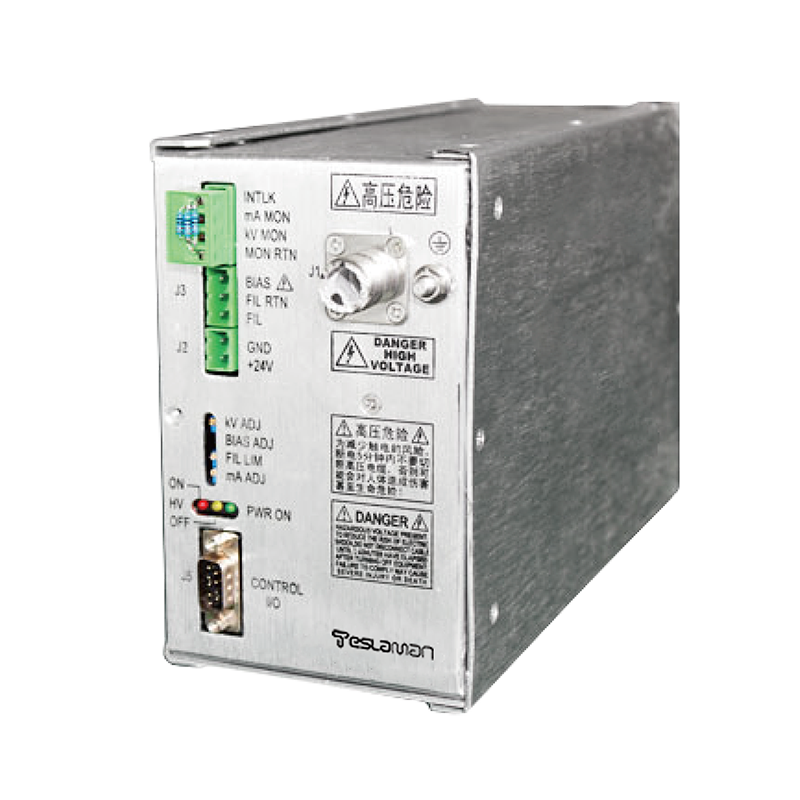
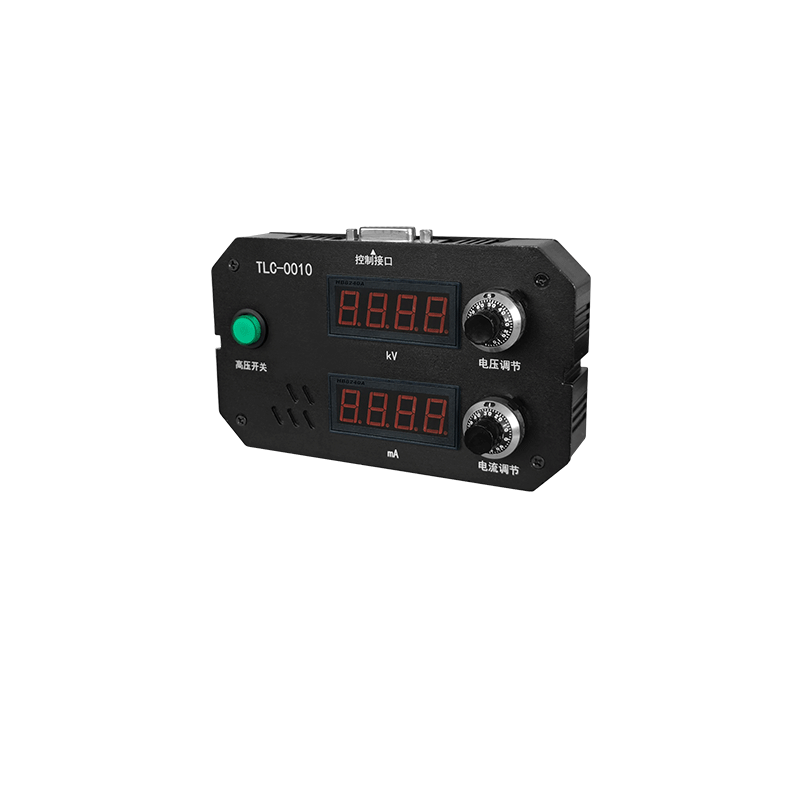
Flexible Interface of High Voltage Power Supply for Dielectric Elastomer Soft Robot Drive
Dielectric elastomer actuators represent a promising technology for soft robotics, enabling compliant and adaptable motion. These actuators operate on the principle of electrostatic pressure induced by high voltage across a deformable dielectric film. The high voltage power supply must interface with the flexible actuator structure while accommodating movement and deformation. Understanding the interface requirements enables development of effective power delivery systems for dielectric elastomer soft robots.
Dielectric elastomer actuator operation involves electrostatic Maxwell stress. A thin elastomer film is sandwiched between compliant electrodes. Application of high voltage creates electrostatic pressure between the electrodes. The pressure causes the film to compress in thickness and expand in area. The deformation produces mechanical work. The actuator converts electrical energy directly to mechanical motion.
Voltage requirements for dielectric elastomer actuators are substantial. The electric field must be high enough to generate useful stress. Typical operating voltages range from hundreds to thousands of volts. The film thickness determines the required voltage for a given field. Thinner films require lower voltage but may have reliability issues. The power supply must provide appropriate voltage levels.
Current requirements are typically modest due to the capacitive nature of the actuator. The actuator draws current during charging and discharging. The current depends on the voltage change rate and capacitance. Higher actuation speeds require higher current capability. The power supply must provide sufficient current for the desired dynamics. Current limiting protects the actuator from damage.
Flexibility requirements for the interface are unique to soft robotics. The actuator undergoes significant deformation during operation. Rigid connections would constrain the motion and cause stress concentrations. The interface must accommodate stretching and bending. The electrical connection must maintain continuity during deformation. The mechanical interface must not impede actuator motion.
Compliant electrode materials enable flexible electrical connections. Carbon-based materials such as carbon grease or carbon nanotubes provide conductivity with flexibility. Metal thin films can be deposited on elastomer substrates. Conductive elastomers combine conductivity with stretchability. The electrode material must maintain conductivity during deformation. The connection between the power supply and electrode must be reliable.
Connector design for flexible interfaces requires innovative approaches. Stretchable connectors use serpentine patterns to accommodate elongation. Soft conductive materials bridge between rigid and flexible regions. Magnetic connectors allow easy attachment and detachment. The connector must maintain electrical contact during movement. The design must balance flexibility with connection reliability.
Wire management in soft robotic systems presents challenges. Conventional wires are stiff and can constrain motion. Stretchable wires use conductive elastomers or woven structures. Coiled wires can extend and contract with movement. The wire routing must not impede actuator operation. The wire management system must be designed for the specific robot kinematics.
Voltage regulation for dielectric elastomer actuators affects performance. Stable voltage maintains constant actuator position. Voltage control enables precise position modulation. The regulation must account for actuator capacitance changes during deformation. Fast voltage response enables dynamic actuation. The power supply must provide appropriate regulation characteristics.
Safety considerations for high voltage in soft robots are important. The high voltage presents shock hazards to users. Insulation must protect against accidental contact. The flexible insulation must maintain integrity during deformation. Current limiting prevents hazardous current levels. Safety interlocks may be required for user protection.
Energy efficiency considerations affect power supply design. Dielectric elastomer actuators are inherently capacitive loads. Energy is stored in the electric field during charging. Energy recovery during discharge can improve efficiency. Resonant drive circuits enable energy recovery. The power supply design affects overall system efficiency.
Control interface requirements for soft robots are demanding. Multiple actuators may require independent control. Coordinated control enables complex motions. Sensor feedback supports closed-loop control. The control system must integrate with the power supply. The interface between control and power systems must be designed for the application.
Environmental protection for the interface may be required. Moisture can affect electrode conductivity. Temperature affects elastomer properties. Mechanical protection prevents damage during operation. The interface design must account for the operating environment. Proper protection ensures reliable operation over the system lifetime.