Independent and Synchronous Control of High Voltage Power Supply for Multiple Evaporation Sources in Winding Vacuum Coating Machine
Winding vacuum coating machines enable continuous deposition on flexible substrates. Multiple evaporation sources deposit different materials or increase the deposition rate. Each evaporation source requires a high voltage power supply for electron beam heating. The control of multiple power supplies must balance independent operation with synchronous coordination. Understanding the control requirements enables optimization of multi-source coating systems.
Winding vacuum coating fundamentals involve continuous web processing. The flexible substrate unwinds from a supply roll. The web passes through deposition zones. The coated web winds onto a take-up roll. The process runs continuously for high throughput. The coating uniformity depends on the process control.
Electron beam evaporation provides high-rate deposition. An electron beam heats the evaporation material. The heated material evaporates and deposits on the substrate. The evaporation rate depends on the beam power. The beam is generated by an electron gun with high voltage acceleration. The power supply controls the beam power.
Multiple evaporation sources serve several purposes. Different materials can be deposited simultaneously. Co-deposition can create alloy or compound films. Multiple sources can increase the total deposition rate. Multiple sources can improve the coating uniformity. The source configuration depends on the application.
Independent control requirements arise from several needs. Each source may have different materials with different evaporation characteristics. Each source may require different power levels. Individual control enables optimization for each material. Independent control provides flexibility for different processes. The independence must be maintained when needed.
Synchronous control requirements arise from coordination needs. The sources must be coordinated for co-deposition. The power levels must track each other for consistent composition. The timing must be synchronized for layered structures. The synchronous operation ensures consistent product. The synchronization must be maintained throughout the process.
Control system architecture must support both modes. Individual controllers provide independent operation. A master controller provides coordination. The architecture must enable switching between modes. The communication between controllers must be fast. The architecture must be reliable for production.
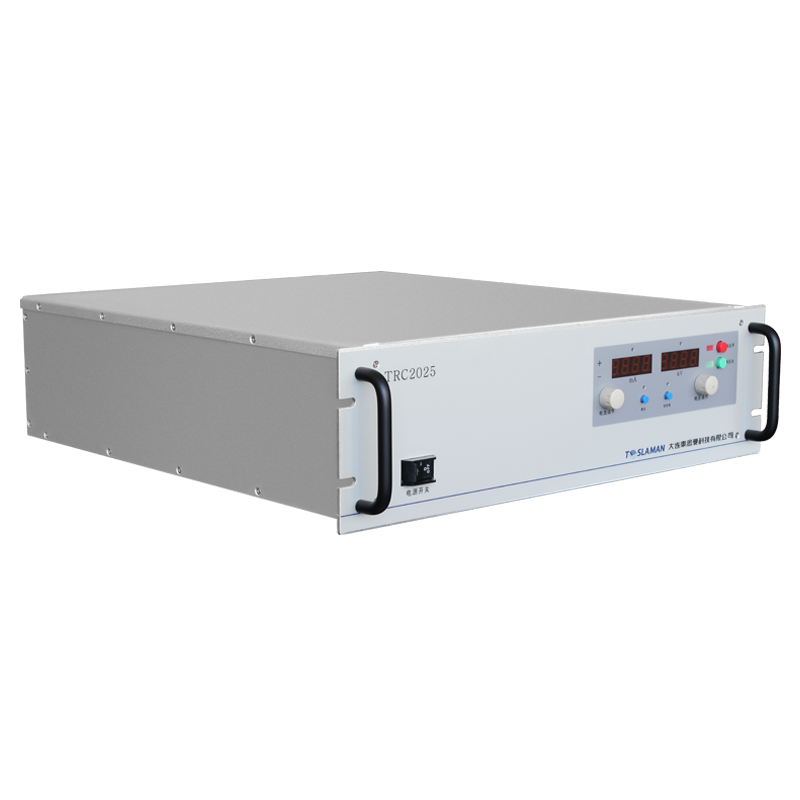
Power supply design for multiple sources requires consideration. Each power supply must have isolated output. The supplies must not interfere with each other. The supplies must have consistent characteristics. The supplies must respond to control commands. The design must support the control requirements.
Calibration of multiple power supplies ensures consistency. The power-to-rate relationship must be calibrated for each source. The calibration must account for material differences. The calibration must be maintained over time. The calibration data enable accurate control. The calibration procedure must be practical for production.
Process monitoring enables closed-loop control. Deposition rate monitors measure the evaporation rate. Thickness monitors measure the accumulated coating. The monitoring enables feedback control. The monitoring must cover all sources. The monitoring data support process optimization.
Co-deposition control requires precise ratio control. The ratio of materials determines the film composition. The ratio must be maintained throughout the process. The ratio control must respond to disturbances. The ratio accuracy affects the film properties. The ratio control must be precise for consistent composition.
Layered structure control requires timing coordination. The layers must have precise thickness. The transition between layers must be sharp. The timing must be coordinated between sources. The timing accuracy affects the interface quality. The timing control must be precise for quality structures.
Uniformity control across the web width requires source distribution. Multiple sources can span the web width. The power distribution affects the uniformity. The uniformity must be characterized and optimized. The uniformity control affects the product quality. The uniformity must be maintained across the web.
Troubleshooting multi-source systems requires systematic approach. Source imbalance can cause composition variations. Timing errors can cause interface problems. Power supply drift can cause rate variations. The diagnosis must identify the specific problem. The correction must address the root cause.
Maintenance of multi-source systems requires coordination. Source cleaning must be scheduled appropriately. Power supply calibration must be maintained. Spare parts must be available for all sources. The maintenance must minimize downtime. The maintenance program must be comprehensive.