Compensation Method for Gain Saturation Effect of Continuous Channel Electron Multiplier High Voltage Power Supply
Continuous channel electron multipliers provide high gain for particle and photon detection. The gain depends on the applied high voltage and the channel characteristics. At high count rates, the gain can saturate due to space charge effects. Compensation methods maintain consistent gain under varying count rates. Understanding the saturation mechanisms enables development of effective compensation approaches.
Continuous channel electron multiplier operation involves curved channel geometry. Electrons enter the channel and strike the wall. Secondary emission releases additional electrons. The curved geometry prevents ion feedback. The electrons multiply along the channel. The output current indicates the input flux.
Gain characteristics depend on the applied voltage. Higher voltage provides higher gain. The gain increases exponentially with voltage. Typical gains range from thousands to millions. The gain must be stable for quantitative measurements. The voltage must be controlled precisely.
Gain saturation mechanisms involve space charge effects. At high output currents, the electron density in the channel increases. The space charge reduces the electric field. The reduced field lowers the secondary emission yield. The gain decreases from the low-rate value. The saturation limits the maximum count rate.
Count rate effects on gain are significant. At low count rates, the gain is constant. As the count rate increases, the gain decreases. The decrease is approximately linear at moderate rates. At very high rates, the gain decreases rapidly. The count rate capability depends on the multiplier design.
Compensation principles involve adjusting the voltage. The voltage can be increased to compensate for gain loss. The compensation must track the count rate. The compensation must be applied in real time. The compensation must not overshoot or oscillate. The compensation must be stable.
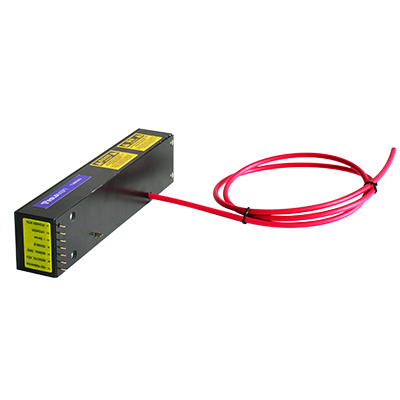
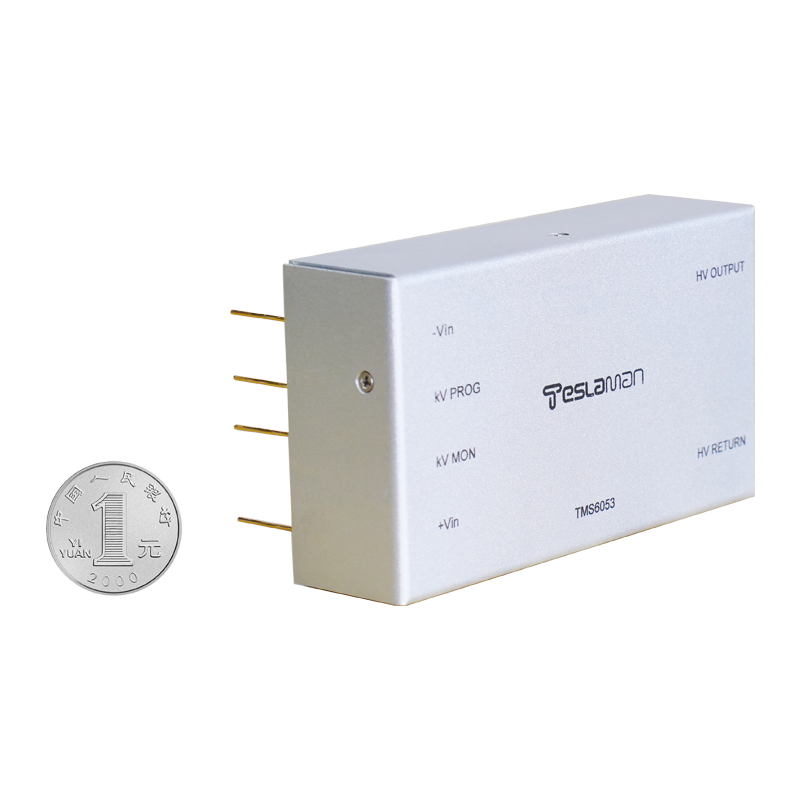
High voltage power supply requirements for compensation are demanding. The supply must have fast response. The voltage adjustment must be precise. The supply must be stable under varying load. The supply must not introduce noise. The supply must support the compensation algorithm.
Control system architecture for compensation requires integration. The count rate must be measured. The compensation voltage must be calculated. The voltage must be applied to the multiplier. The control must be fast enough for the count rate variations. The architecture must support real-time compensation.
Count rate measurement provides the compensation input. The output current indicates the count rate. The measurement must be fast and accurate. The measurement bandwidth must exceed the count rate variations. The measurement must be linear. The measurement must not introduce delay.
Compensation algorithms calculate the voltage adjustment. The algorithm relates count rate to the required voltage. The algorithm can be based on the saturation model. The algorithm can be learned from calibration data. The algorithm must be accurate for all conditions. The algorithm must be practical for implementation.
Feedback control can implement the compensation. The output gain is compared to the desired value. The voltage is adjusted to maintain the gain. The feedback must be stable. The feedback bandwidth must be adequate. The feedback must handle the nonlinearity.
Feedforward control can provide faster response. The count rate is measured directly. The voltage is adjusted based on the count rate. The feedforward can be faster than feedback. The feedforward requires accurate modeling. The combination of feedforward and feedback can be optimal.
Calibration of the compensation system ensures accuracy. The gain versus count rate must be characterized. The voltage versus gain must be characterized. The calibration must cover the operating range. The calibration must be maintained over time. The calibration data enable accurate compensation.
Validation of compensation effectiveness requires testing. The gain stability is tested at various count rates. The transient response is tested with step changes. The long-term stability is tested over time. The testing must be comprehensive. The validation must confirm the compensation approach.