Performance Requirements of High Voltage Power Supply for Electrostatic Accelerator Simulating Micrometeorite Impact
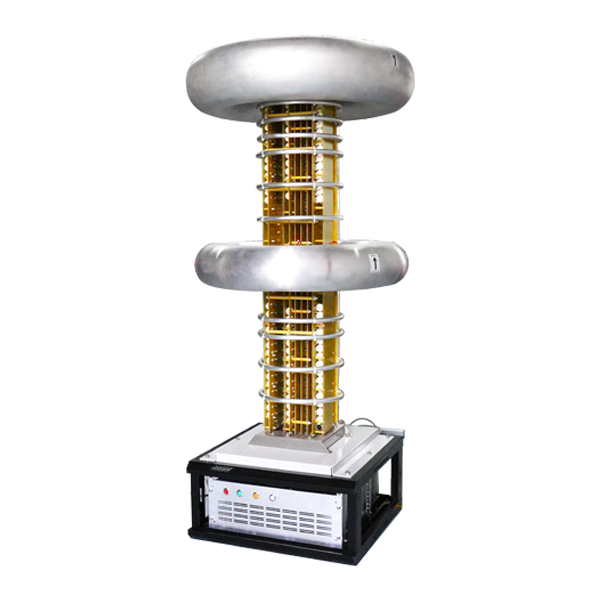
Spacecraft and satellites face constant bombardment by micrometeorites and orbital debris during their operational lifetime. Understanding the effects of hypervelocity impacts on spacecraft materials and structures is essential for designing vehicles that can survive in the space environment. Ground-based simulation facilities use electrostatic accelerators to propel small particles to velocities representative of micrometeorite impacts. The high voltage power supply is a critical component of these accelerators, determining the particle energy and velocity that can be achieved.
Micrometeorites in the space environment have unique characteristics that must be replicated in ground simulations. Particle sizes typically range from micrometers to millimeters, with masses from micrograms to milligrams. Impact velocities range from several kilometers per second to tens of kilometers per second, depending on the orbital environment. The particles may have various compositions, including silicates, metals, and organic compounds. The impact angle and target conditions also affect the damage produced.
Electrostatic accelerators operate on the principle of charged particle acceleration by electric fields. Particles are first charged, either through contact charging, field emission, or ionization processes. The charged particles are then accelerated through a potential difference, gaining kinetic energy equal to the product of their charge and the accelerating voltage. The final velocity depends on the charge-to-mass ratio of the particle and the accelerating voltage. Higher voltages enable higher velocities for particles of a given charge state.
The velocity requirements for micrometeorite simulation are demanding. To achieve velocities of several kilometers per second, accelerating voltages of hundreds of kilovolts to megavolts are typically required. The exact voltage depends on the particle mass and charge state. Lighter particles or particles with higher charge states achieve higher velocities at a given voltage. The accelerator must be capable of producing the required voltage while maintaining the stability and precision needed for controlled experiments.
Voltage stability is critical for consistent particle acceleration. Fluctuations in the accelerating voltage cause variations in particle velocity, which can affect the consistency of impact experiments. The stability requirement depends on the acceptable velocity spread for the intended experiments. For precise measurements of impact effects, velocity variations should typically be limited to a few percent. This translates to voltage stability requirements in the same range.
Voltage ripple and noise affect the instantaneous acceleration experienced by particles. High-frequency ripple can cause velocity variations between particles accelerated at different phases of the ripple waveform. Low-frequency ripple or drift causes systematic variations over longer time scales. The power supply design must minimize both types of variation through appropriate filtering and regulation circuits.
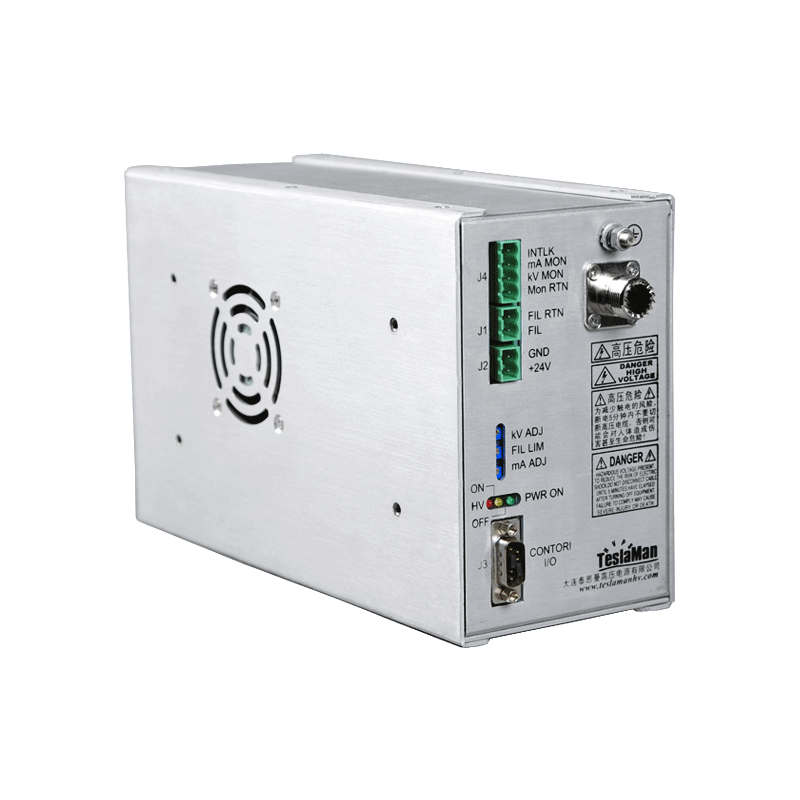
The current capability of the power supply depends on the particle flux requirements. Higher particle fluxes require higher beam currents, which in turn require higher current capability from the power supply. However, the currents involved are typically quite small, measured in microamperes or less. The primary design challenge is achieving high voltage rather than high current. Nevertheless, the power supply must be capable of supplying the required current while maintaining voltage stability under varying load conditions.
The response time of the power supply affects the ability to control the acceleration process. Fast voltage changes may be needed to adjust the particle velocity between shots or to terminate acceleration in response to detected conditions. The power supply must be capable of responding to control commands within the required time frame. The energy stored in the accelerator structure and power supply filtering affects the response time and must be considered in the system design.
Reliability and uptime are important for experimental facilities. The power supply must operate reliably over extended periods with minimal maintenance. High voltage components are subject to stress from electrical fields, thermal cycling, and environmental factors. Robust design with appropriate safety margins ensures reliable operation. Diagnostic capabilities enable early detection of developing problems before they cause failures.
Safety considerations are paramount in high voltage accelerator facilities. Voltages in the hundreds of kilovolts to megavolt range are lethal to humans and can cause severe damage to equipment. Interlock systems prevent access to high voltage areas while the system is energized. Grounding systems ensure that stored energy is safely dissipated before maintenance access. Emergency shutdown systems can quickly de-energize the system in case of detected hazards. Safety systems must be designed with the same rigor as the operational systems.