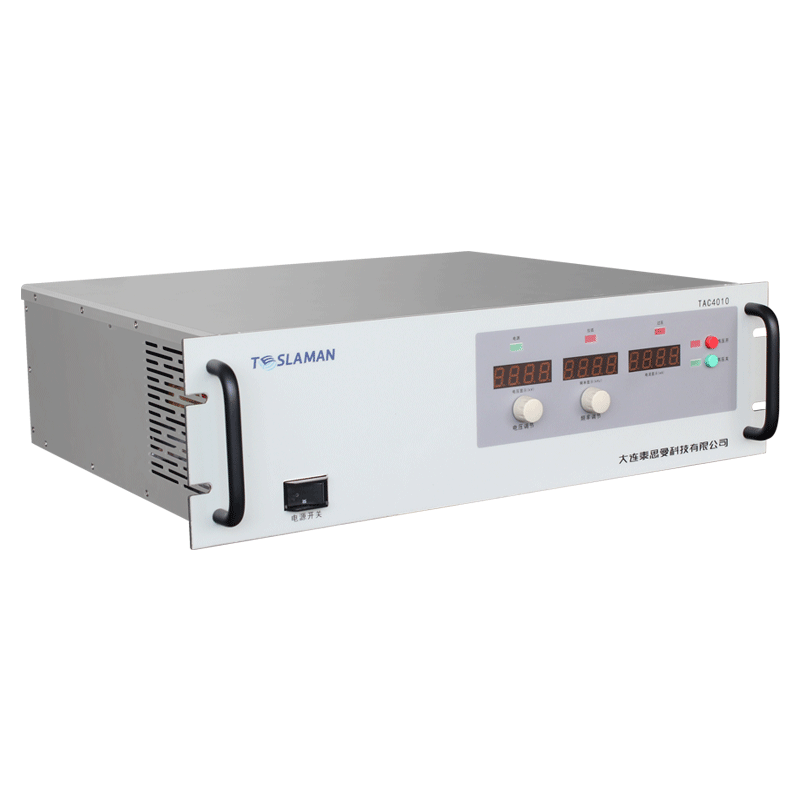
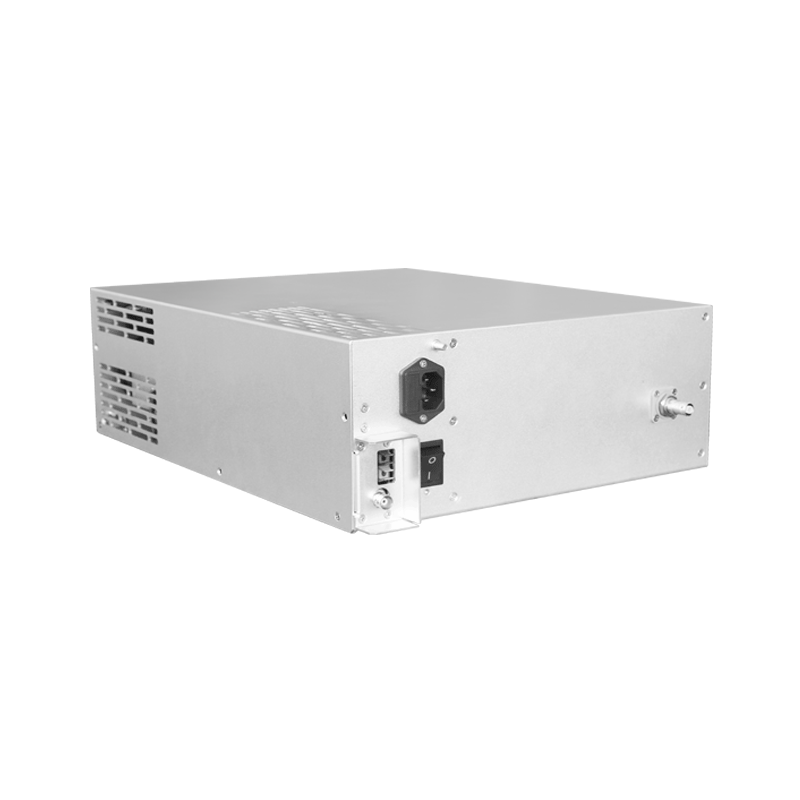
Frequency and Waveform Selection of High Voltage Power Supply for Printed Matter Static Elimination Bar
Static electricity accumulation on printed materials creates numerous problems in printing and packaging operations. Sheets with static charge tend to stick together, causing misfeeds and jams in automated equipment. Static charges attract dust and debris that mar print quality. In extreme cases, static discharge can ignite flammable vapors or damage sensitive electronic components. Static elimination bars, powered by high voltage supplies, neutralize static charges through ion generation. The frequency and waveform of the applied voltage significantly affect the elimination efficiency.
The mechanism of static elimination involves generating ions that neutralize the static charge on the material surface. High voltage applied to sharp emitter points creates a corona discharge that ionizes the surrounding air. Positive and negative ions are produced in the ionization region. These ions migrate under the influence of the electric field and air currents to reach the charged surface. When ions of opposite polarity reach the charged surface, they neutralize the static charge, eliminating the static problem.
The choice between DC and AC operation involves trade-offs that affect performance in different applications. DC power supplies apply constant polarity voltage to the emitters, generating ions of one polarity continuously. For neutralizing charges of known polarity, DC operation can be efficient. However, most practical applications involve charges of unknown or varying polarity, making AC operation more versatile. AC power supplies alternate the polarity of the applied voltage, generating both positive and negative ions in sequence.
Frequency selection for AC operation affects several aspects of static elimination performance. At low frequencies, the ion generation alternates slowly, producing bursts of ions of each polarity. The ions have time to migrate away from the emitter before the polarity reverses. At higher frequencies, the polarity reverses more rapidly, creating a more continuous ion output. The optimal frequency depends on factors including the distance from the emitter to the charged surface, the air velocity, and the charge density on the material.
Very low frequencies, typically below 50 Hz, may result in incomplete neutralization of charges of both polarities. During the positive half-cycle, negative ions are attracted to the emitter while positive ions migrate toward the charged surface. If the charged surface has negative static, the positive ions neutralize it. During the negative half-cycle, the opposite occurs. However, if the half-cycle duration is too long, the ion generation may not be balanced, leading to residual charge of one polarity.
Higher frequencies, typically in the range of several hundred to several thousand Hz, provide more balanced ion output. The rapid polarity reversal ensures that both positive and negative ions are generated in roughly equal quantities. The ions are emitted in a more continuous stream, improving the uniformity of neutralization across the material surface. However, very high frequencies may reduce the ion generation efficiency due to the limited time for corona development during each half-cycle.
The waveform shape also influences static elimination performance. Sinusoidal waveforms, commonly produced by transformer-based power supplies, provide smooth voltage transitions that minimize electromagnetic interference. Square waveforms, typically produced by switching power supplies, provide rapid voltage transitions that may enhance ion generation but generate more electromagnetic noise. Pulsed waveforms with controlled pulse width and repetition rate offer additional flexibility for optimizing performance.
Pulse width modulation techniques enable precise control of the ion generation process. By varying the pulse width, the relative quantities of positive and negative ions can be adjusted to compensate for asymmetric charging conditions. The pulse amplitude determines the corona intensity and thus the ion generation rate. The pulse frequency determines the overall ion output rate. These parameters can be optimized for specific materials and operating conditions.
The interaction between the power supply and the static elimination bar must be considered in system design. The bar presents a capacitive load to the power supply, with capacitance determined by the geometry and number of emitter points. The power supply must be capable of driving this capacitive load at the required frequency without excessive voltage droop or distortion. The cable connecting the power supply to the bar also affects the high-frequency performance and should be kept as short as practical.
Environmental factors influence the static elimination performance and should be considered when selecting frequency and waveform. Humidity affects the conductivity of air and the mobility of ions. Higher humidity generally improves static elimination but may require adjustment of operating parameters. Temperature affects the ion generation process and the material properties. Air velocity affects the transport of ions from the emitter to the charged surface. The power supply settings may need to be adjusted to compensate for these environmental variations in critical applications.