High Voltage Power Supply Configuration for Electrostatic Sensor in Wind Turbine Blade Crack Monitoring
Wind turbine blades are critical components that experience significant mechanical stress during operation. Cracks and other structural defects can develop over time, potentially leading to catastrophic failure if not detected early. Electrostatic sensors offer a non-contact method for monitoring blade health by detecting changes in the electric field patterns around the blade surface. The high voltage power supply that biases the electrostatic sensors plays a crucial role in the sensitivity and reliability of the monitoring system.
The principle of electrostatic sensing for structural monitoring involves measuring the electric field distribution around the monitored structure. A high voltage electrode creates an electric field that extends into the surrounding space. Changes in the structure, such as cracks or delamination, alter the dielectric properties and geometry, modifying the electric field pattern. Electrostatic sensors detect these changes, providing indication of structural defects. The sensitivity of this method depends on the electric field strength, which is determined by the applied voltage.
Wind turbine blades present unique challenges for structural monitoring. The blades are large, typically tens of meters in length, requiring monitoring coverage over extensive areas. The blades rotate during operation, creating a dynamic monitoring environment. The outdoor environment subjects the monitoring system to temperature variations, moisture, and contamination. The monitoring system must operate reliably for extended periods with minimal maintenance, as access to the blades is difficult and expensive.
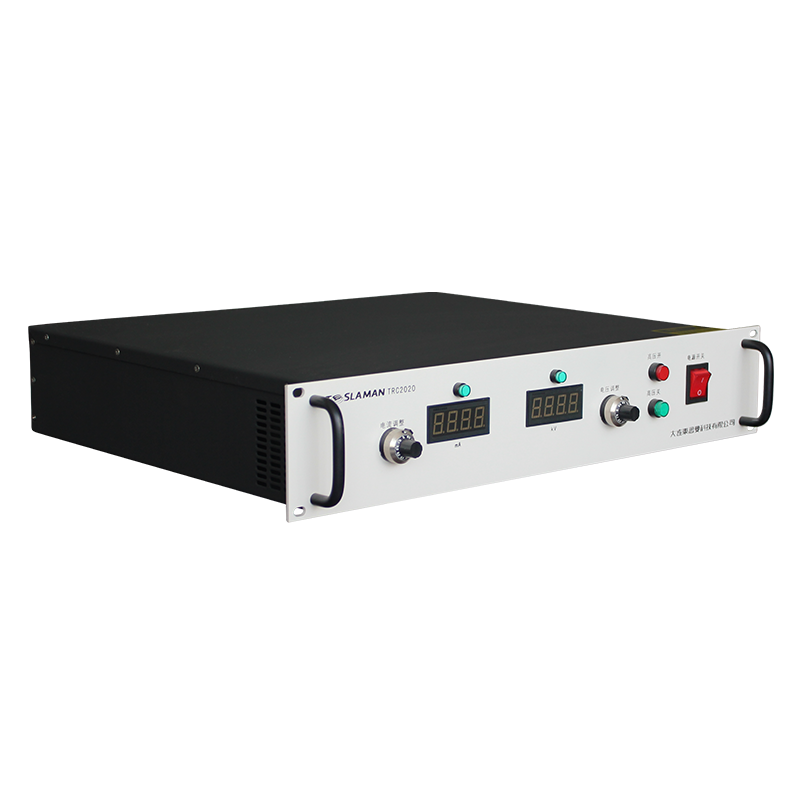
The high voltage power supply for electrostatic sensors must meet several requirements specific to wind turbine applications. The output voltage must be sufficient to create electric fields of adequate strength for defect detection. The voltage must be stable to provide consistent sensor response. The power supply must operate reliably in the harsh environment of a wind turbine nacelle or hub. The power consumption must be low enough to be supplied from the turbine power system without significant impact on overall efficiency.
Voltage level selection involves trade-offs between sensitivity and practical considerations. Higher voltages create stronger electric fields, improving the sensitivity to small defects. However, higher voltages require more robust insulation and present greater safety hazards. The voltage must be high enough to overcome environmental noise and provide adequate signal-to-noise ratio for reliable detection. Typical operating voltages for electrostatic monitoring systems range from several kilovolts to tens of kilovolts.
The power supply topology must accommodate the specific requirements of electrostatic sensors. The sensor presents a primarily capacitive load, drawing minimal current under steady-state conditions. The power supply must maintain stable voltage despite temperature variations and environmental changes. Low ripple and noise are essential to avoid interference with the sensitive measurement circuits. Compact and efficient designs are preferred for integration into the wind turbine structure.
Environmental protection is critical for power supplies operating in wind turbine environments. The power supply must withstand temperature extremes, humidity, vibration, and electromagnetic interference from the turbine generator and power electronics. Conformal coating of circuit boards protects against moisture and contamination. Rugged enclosures provide mechanical protection and additional environmental sealing. Thermal design ensures reliable operation across the expected temperature range.
The sensor electrode configuration affects the power supply requirements. Multiple sensor electrodes may be distributed along the blade to provide comprehensive monitoring coverage. The power supply may need to drive multiple electrodes simultaneously or sequentially, depending on the monitoring strategy. The electrode capacitance and the cable capacitance between the power supply and electrodes determine the total capacitive load. The power supply must be designed to drive this load with adequate bandwidth for the required measurement speed.
Signal conditioning circuits interface between the electrostatic sensors and the data acquisition system. These circuits amplify the small signals from the sensors and filter out noise and interference. The signal conditioning must be designed to operate in the presence of the high voltage bias, requiring appropriate isolation and protection. The signal bandwidth must accommodate the frequency content of interest, which depends on the blade rotation speed and the expected defect signatures.
Data processing algorithms extract defect indicators from the sensor signals. Pattern recognition techniques compare the measured electric field distribution with reference patterns from the healthy blade. Anomaly detection algorithms identify deviations that may indicate developing defects. Trend analysis tracks changes over time to detect gradual degradation. The algorithms must be robust to environmental variations and operational changes while maintaining sensitivity to actual defects.
Integration with the wind turbine control system enables automated monitoring and alarm generation. The monitoring system communicates with the turbine supervisory control and data acquisition system, providing real-time status and alerts. The integration enables condition-based maintenance scheduling, reducing costs compared to time-based maintenance. The monitoring data also supports operational decisions such as reducing power output when defects are detected to prevent further damage.