High Voltage Power Supply System for Electrostatic Tomography of Internal Defects in Ancient Building Wooden Structures
Ancient wooden structures represent invaluable cultural heritage that requires careful preservation. Internal defects such as rot, insect damage, and cracks can compromise structural integrity while remaining hidden from visual inspection. Electrostatic tomography offers a non-destructive method for imaging internal defects in wooden structures by measuring the electric field distribution around the structure. The high voltage power supply system is a critical component that enables the electrostatic measurements necessary for tomographic reconstruction.
The principle of electrostatic tomography involves applying high voltage to electrodes placed around the object of interest and measuring the resulting electric field. The electric field distribution depends on the dielectric properties of the materials within the measurement volume. Defects such as voids, rot, or moisture accumulation change the local dielectric properties, creating anomalies in the electric field pattern. By measuring the field from multiple electrode configurations, tomographic reconstruction algorithms can create images of the internal structure.
Wood presents interesting dielectric properties for electrostatic imaging. The dielectric constant of wood depends on its moisture content, density, and species. Healthy wood has characteristic dielectric properties that vary with grain direction due to the anisotropic structure. Defects such as rot increase the moisture content and change the dielectric constant. Voids and cracks create air gaps with lower dielectric constant than the surrounding wood. These differences enable detection of defects through electrostatic measurements.
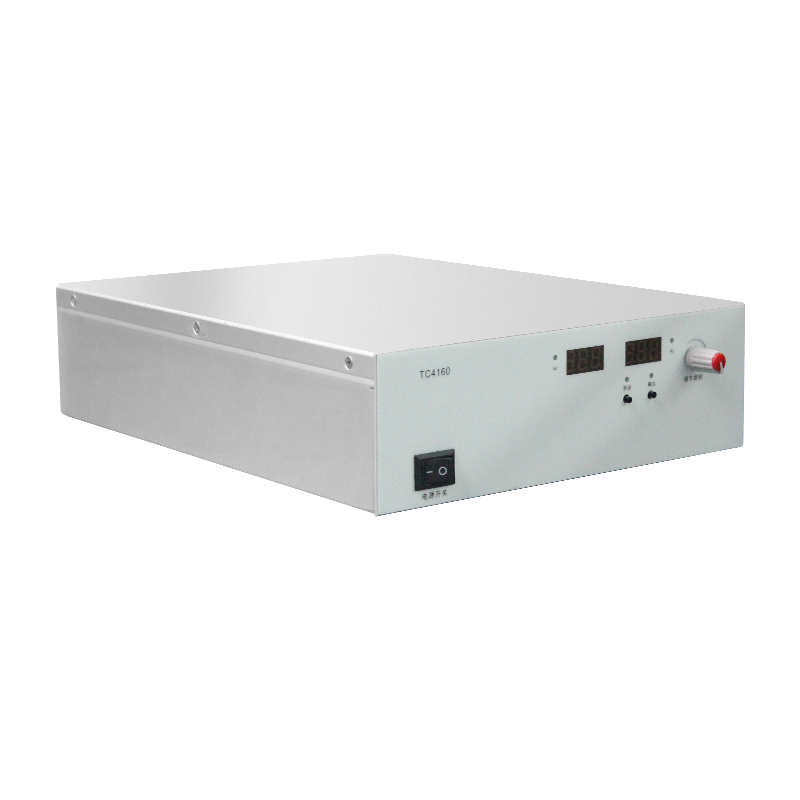
The high voltage power supply for electrostatic tomography must provide stable, controllable voltage for the excitation electrodes. The voltage level must be sufficient to create measurable electric fields through the wooden structure. Typical voltages range from several kilovolts to tens of kilovolts, depending on the size of the structure and the sensitivity of the measurement system. The voltage must be adjustable to optimize the field strength for different measurement configurations and wood conditions.
The power supply must support multiple electrode configurations for tomographic data acquisition. The excitation voltage is applied to different electrodes in sequence while measurements are taken from the remaining electrodes. This requires either multiple independent power supply channels or a switching system to route the voltage to the selected electrode. The switching speed affects the data acquisition time, which is important for practical field applications.
Electrode design for wooden structures must consider the practical constraints of heritage preservation. The electrodes must make good electrical contact with the wood surface without causing damage. Non-invasive electrodes that can be temporarily attached for measurement are preferred over permanently installed electrodes. The electrode size and shape affect the spatial resolution and sensitivity of the measurements. Electrode arrays designed for specific structure geometries optimize the measurement coverage.
The measurement system must detect small changes in the electric field caused by internal defects. The measurement electrodes detect the electric potential or field at various positions around the structure. High-impedance amplifiers measure the small signals while minimizing loading of the electric field. The measurement bandwidth must accommodate the excitation frequency, which may range from DC to several kilohertz depending on the measurement strategy.
Shielding and grounding are critical for accurate electrostatic measurements. Stray electric fields from power lines, equipment, and personnel can interfere with the measurements. Shielding enclosures or guards around the measurement area reduce external interference. Proper grounding provides a stable reference for the measurements. The grounding system must be designed for the specific measurement environment, considering the electrical characteristics of the building and surrounding structures.
Data acquisition and processing systems convert the raw measurements into tomographic images. The data acquisition system records the measurements from all electrode configurations. Reconstruction algorithms, typically based on inverse problem solutions, calculate the dielectric property distribution that best matches the measurements. Image processing techniques enhance the visibility of defects and suppress artifacts. The processing system must be calibrated for the specific wood species and structure geometry.
Field deployment considerations affect the practical utility of electrostatic tomography for heritage preservation. The equipment must be portable for transport to heritage sites. The setup time must be reasonable for practical survey work. The power requirements must be compatible with portable generators or battery operation. The measurement procedure must be non-destructive and safe for operators and the structure. Documentation of the measurement conditions supports comparison of surveys conducted at different times.
Integration with other non-destructive testing methods provides complementary information for comprehensive structural assessment. Ultrasound, ground-penetrating radar, and moisture meters each provide different types of information about the internal condition. Combining electrostatic tomography with these methods improves the accuracy and completeness of defect characterization. Data fusion techniques integrate information from multiple sources to create comprehensive structural health assessments.