Beam Current Density Uniformity of High Voltage Power Supply for Ion Beam Assisted Deposition of Optical Thin Films
Ion beam assisted deposition combines physical vapor deposition with concurrent ion bombardment to produce optical thin films with superior properties. The ion beam provides energy and momentum to the growing film, modifying its structure and properties. The uniformity of the ion beam current density across the substrate is critical for achieving uniform film properties across the optical element. The high voltage power supply that accelerates the ion beam plays a central role in determining the beam uniformity.
Optical thin films require precise control of thickness and refractive index to achieve the desired optical performance. Variations in film thickness or refractive index across the optical element cause variations in the spectral characteristics, degrading the optical performance. For high-performance optical coatings, the thickness uniformity must typically be better than one percent across the substrate. The ion beam assisted deposition process must achieve this uniformity through control of both the vapor flux and the ion flux.
The ion beam is generated by an ion source that ionizes a suitable gas, typically argon or oxygen. The ions are extracted from the source and accelerated by a high voltage applied between the source and the substrate. The ion energy, determined by the acceleration voltage, affects the film properties such as density, stress, and refractive index. The ion current density, determined by the beam current and the beam profile, affects the ion-to-atom arrival ratio and thus the film modification.
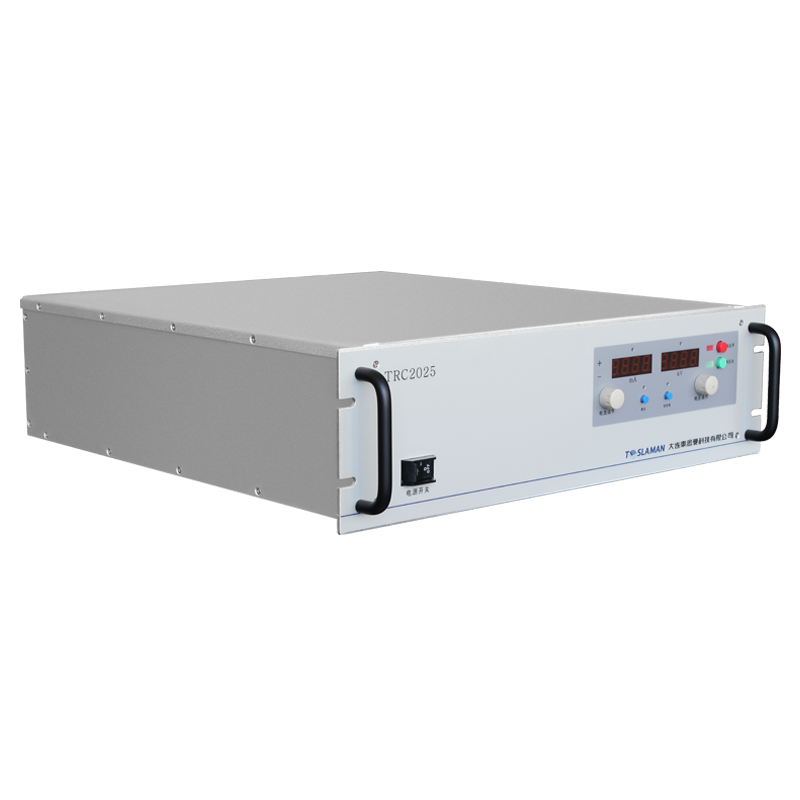
The high voltage power supply provides the acceleration voltage for the ion beam. Typical acceleration voltages range from tens to hundreds of electron volts for low-energy ion bombardment to several kilovolts for higher energy applications. The power supply must maintain stable voltage to ensure consistent ion energy across the substrate. Voltage fluctuations would cause variations in ion energy and thus in the film properties.
Beam current density uniformity depends on several factors related to the ion source and the power supply. The ion source design determines the initial beam profile and the beam divergence. The extraction optics shape the beam as it leaves the source. The acceleration region between the source and the substrate affects the beam trajectory. The power supply characteristics affect the stability of the beam current and the suppression of beam instabilities.
Grid systems in the ion source extract and accelerate the ions. The grid geometry, including the hole pattern and spacing, affects the beam profile. Non-uniformities in the grid system, such as variations in hole size or alignment, can cause non-uniformities in the beam current density. The power supply must provide stable voltage to the grids to maintain consistent extraction and acceleration conditions.
Plasma instabilities in the ion source can cause fluctuations in the beam current. The discharge power supply that sustains the plasma must be stable to minimize these fluctuations. The high voltage power supply must have adequate filtering to suppress any remaining fluctuations. Current regulation in the power supply can maintain constant beam current despite variations in the plasma conditions.
Beam scanning or substrate motion can improve the uniformity by averaging the beam profile over time. Mechanical scanning moves the substrate relative to the beam, ensuring that all areas receive equivalent ion bombardment over time. Electrostatic or magnetic scanning deflects the beam across the substrate. The scanning parameters must be optimized for the specific beam profile and substrate geometry.
In-situ monitoring of the beam current density enables real-time adjustment for uniformity. Faraday cups or other current sensors can measure the beam current at various positions across the substrate. The measurement data can guide adjustment of the ion source parameters or the scanning pattern. Automated feedback control can maintain uniformity despite drift in the ion source characteristics.
Thermal effects can affect the beam uniformity during deposition. Heating of the ion source components can cause thermal expansion that changes the grid alignment. Heating of the substrate can cause outgassing that affects the local plasma conditions. The power supply and cooling systems must manage these thermal effects to maintain stable beam conditions.
Process integration requires coordination between the ion beam system and the vapor deposition source. The ion-to-atom arrival ratio must be controlled precisely to achieve the desired film properties. The timing of the ion beam relative to the vapor deposition affects the film structure. The control system must coordinate all aspects of the deposition process to achieve consistent, high-quality optical coatings.