Power Supply Control for High Voltage Electrospinning Direct Writing of Flexible Electronic Circuit Patterns
Flexible electronics have emerged as a transformative technology for wearable devices, medical sensors, and conformal systems that must adapt to curved or dynamic surfaces. The fabrication of flexible electronic circuits requires patterning of conductive traces on flexible substrates. High voltage electrospinning direct writing offers a promising approach for producing fine conductive patterns without the need for masks or etching processes. The power supply control is critical for achieving the precision and consistency required for electronic circuit fabrication.
Electrospinning is a process that uses high voltage to draw fine fibers from a polymer solution. The electric field between a charged nozzle and a grounded collector creates a jet of solution that stretches and solidifies into a fiber with diameters ranging from nanometers to micrometers. Direct writing extends this process by moving the collector or nozzle to deposit fibers in controlled patterns, enabling fabrication of specific structures rather than random fiber mats.
For flexible electronic circuits, the electrospun fibers must be conductive or must be converted to conductive traces through post-processing. Conductive polymers can be electrospun directly to form conductive fibers. Alternatively, polymer fibers can be coated or plated with metal after deposition to create conductive traces. The fiber diameter, continuity, and placement accuracy determine the electrical characteristics of the resulting circuit.
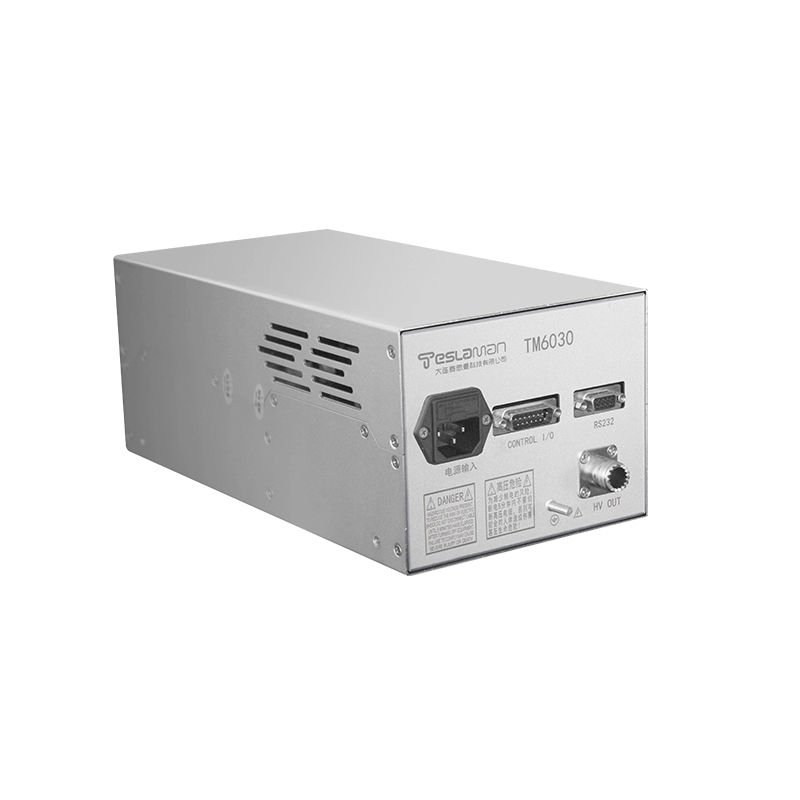
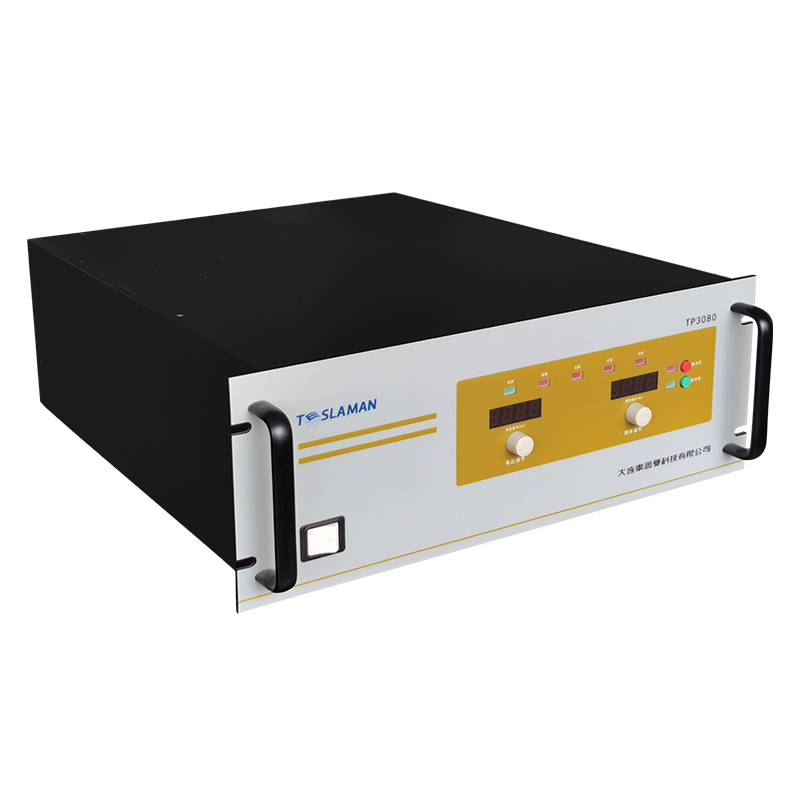
The high voltage power supply provides the electric field that drives the electrospinning process. The voltage level, typically ranging from several kilovolts to tens of kilovolts, determines the electric field strength and the fiber formation characteristics. Higher voltages produce stronger electric fields that can draw finer fibers but may also cause instability in the jet. The power supply must provide stable, controllable voltage for consistent fiber production.
The relationship between voltage and fiber characteristics is complex and nonlinear. The fiber diameter depends on the voltage, the solution properties, the nozzle-to-collector distance, and the environmental conditions. The fiber trajectory is influenced by the electric field distribution, which depends on the geometry of the electrodes and the collector. The power supply control must account for these relationships to achieve the desired fiber characteristics.
Dynamic voltage control enables adjustment of the fiber characteristics during the writing process. As the nozzle moves across the substrate, the nozzle-to-collector distance may change, requiring voltage adjustment to maintain constant electric field strength. Different regions of the pattern may require different fiber characteristics, requiring voltage changes during the writing process. The power supply must respond quickly to voltage commands while maintaining stability.
Current monitoring provides information about the electrospinning process status. The current flowing through the electrospinning jet is related to the charge carried by the fiber and the jet stability. Sudden changes in current can indicate jet instability or breakage. The power supply should include current measurement capability to support process monitoring and control.
Pulsed voltage operation can improve control over the fiber deposition. By applying voltage in pulses, the fiber formation can be started and stopped with precise timing. This enables deposition of discrete fiber segments rather than continuous fibers, providing additional control over the circuit pattern. The pulse parameters, including amplitude, width, and frequency, affect the fiber characteristics.
The power supply must coordinate with the motion control system that moves the nozzle or collector. The voltage must be synchronized with the motion to ensure that fibers are deposited in the correct locations. The coordination must account for the response time of the electrospinning process and the motion system. Delays or timing errors can cause pattern distortion.
Environmental control affects the electrospinning process and the power supply requirements. Temperature and humidity influence the solvent evaporation rate and the fiber solidification. Air currents can deflect the fiber trajectory. The power supply and process parameters must be adjusted for the environmental conditions. Enclosed systems with controlled environment can improve consistency.
Safety considerations are important for high voltage electrospinning systems. The high voltage presents electrical hazards that must be addressed through proper insulation and interlocks. The solvents used in the polymer solutions may be flammable, and the combination of high voltage and flammable vapors requires appropriate safety measures. The system must be designed for safe operation in the intended environment.
Quality control of the deposited patterns requires measurement and inspection. Optical inspection can verify the pattern geometry and fiber continuity. Electrical testing can measure the resistance of conductive traces. Statistical process control can monitor the process parameters and detect deviations from acceptable ranges. The quality control data can guide optimization of the power supply and process parameters.