Power Management Circuit of High Voltage Power Supply for Dielectric Elastomer Energy Harvester
Dielectric elastomer energy harvesters represent an emerging technology for converting mechanical energy into electrical energy using soft, stretchable materials. These devices operate on the principle of variable capacitance, where deformation of the dielectric elastomer changes its capacitance and enables energy conversion. The high voltage power supply plays a crucial role in biasing the harvester and managing the energy transfer cycles. The power management circuit must efficiently handle the high voltage operation while maximizing the harvested energy.
The dielectric elastomer energy harvester consists of a thin elastomer film coated with compliant electrodes on both surfaces. When the film is stretched, the area increases and the thickness decreases, causing the capacitance to increase. When a voltage is applied to the electrodes, the electrostatic attraction between the electrodes causes the film to contract. This coupling between electrical and mechanical energy enables energy harvesting from ambient mechanical motion.
The energy harvesting cycle involves several phases. First, the elastomer is in a stretched state with high capacitance. A bias voltage is applied to charge the elastomer. The elastomer is then allowed to relax, which decreases the capacitance while maintaining the charge. The voltage increases as the capacitance decreases, and the electrical energy increases. The increased energy is then extracted from the elastomer, completing the cycle.
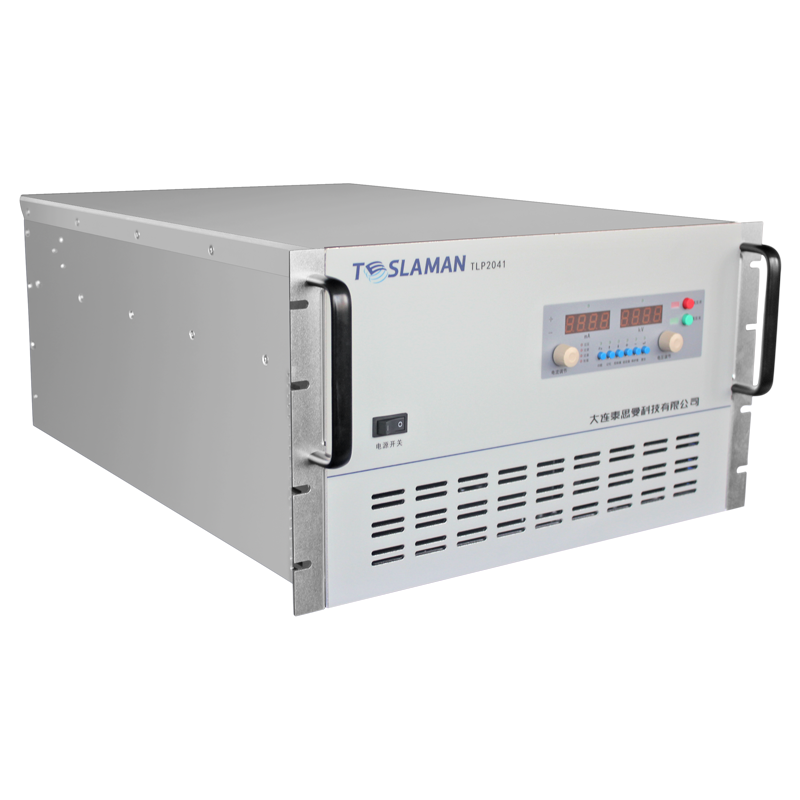
The high voltage power supply must provide the bias voltage for the harvester. Typical operating voltages range from several kilovolts to tens of kilovolts, depending on the elastomer thickness and the desired energy density. The power supply must generate this voltage efficiently from a low-voltage source such as a battery or harvested energy. The power supply must also maintain stable voltage during the harvesting cycle.
The power management circuit must handle the bidirectional energy flow in the harvesting cycle. During the charging phase, energy flows from the power supply to the elastomer. During the harvesting phase, energy flows from the elastomer back to the storage system. The circuit must efficiently convert the high voltage from the harvesting phase to a lower voltage suitable for storage or use.
Energy recovery circuits capture the energy that would otherwise be dissipated during the charging and discharging processes. In a simple implementation, the bias voltage is supplied from a DC source and the harvested energy is dissipated in a load resistor. This approach wastes the energy invested in charging the elastomer. Energy recovery circuits can capture most of the invested energy along with the harvested mechanical energy.
Resonant converter topologies offer advantages for energy recovery in dielectric elastomer harvesters. By operating at the resonant frequency of an LC circuit, energy can be transferred between the elastomer capacitance and an inductor with minimal loss. The resonant approach naturally generates the sinusoidal voltage waveforms that are well-suited to the cyclic operation of the harvester. Multiple resonant circuits can handle different phases of the operating cycle.
The variable capacitance of the dielectric elastomer presents challenges for the power management circuit design. As the elastomer stretches and relaxes, its capacitance changes by a significant factor, affecting the resonant frequency of any LC circuit connected to it. The control system must adapt to this capacitance variation to maintain efficient operation. Alternatively, the circuit topology can be designed to be less sensitive to capacitance variation.
High voltage switching elements are critical components in the power management circuit. The switches must handle voltages ranging from hundreds to thousands of volts while conducting currents that may vary during the cycle. Fast switching speed minimizes energy loss during transitions. Low on-resistance reduces conduction losses. Silicon carbide and gallium nitride devices offer superior performance for high voltage applications.
Control strategies for the power management circuit must synchronize the electrical operations with the mechanical deformation cycle. Sensors can detect the elastomer position and trigger the appropriate electrical operations. Alternatively, the electrical circuit can self-synchronize with the mechanical cycle through appropriate impedance relationships. The control system must manage startup, shutdown, and fault conditions.
Energy storage is required to buffer the harvested energy and provide stable power output. Capacitors can store the harvested energy at high voltage, but the energy density is limited. Batteries can store more energy but require voltage conversion from the high voltage harvesting circuit. The storage system design must balance energy density, efficiency, and cost.
System integration combines the power management circuit with the dielectric elastomer harvester and the load. The integration must minimize parasitic capacitances and inductances that could affect the circuit operation. The packaging must protect the high voltage components while enabling connection to the harvester. The overall system must be practical for the intended application environment.