Mobile Platform of High Voltage Power Supply for Electrostatic Induction Imaging of Archaeological Artifact Internal Structure at Excavation Site
Archaeological excavations uncover artifacts that provide invaluable information about past civilizations. Non-destructive examination of these artifacts can reveal internal structures and hidden features without damaging these irreplaceable objects. Electrostatic induction imaging offers a potential method for examining the internal structure of artifacts at excavation sites. The mobile high voltage power supply platform enables in-field application of this imaging technique.
Archaeological artifacts vary widely in material, size, and condition. Pottery, metal objects, organic materials, and composite structures each present different examination challenges. Traditional imaging methods such as X-ray computed tomography require specialized equipment and may not be practical at excavation sites. A mobile imaging system that can be deployed in the field would enable immediate examination of artifacts in their discovery context.
Electrostatic induction imaging uses electric fields to probe the internal structure of objects. Electrodes apply a high voltage to create an electric field in and around the object. The electric field distribution depends on the dielectric properties of the materials within the object. Variations in material properties, voids, or inclusions create anomalies in the field pattern. Measurement of the field at the object surface enables reconstruction of the internal structure.
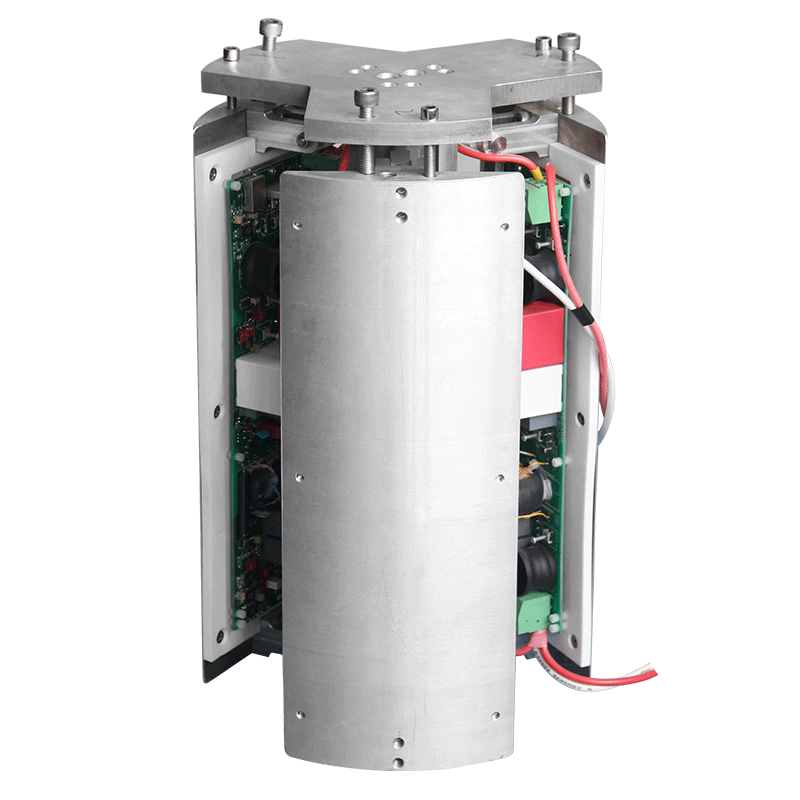
The high voltage power supply generates the electric field for the imaging process. Typical operating voltages range from several kilovolts to tens of kilovolts, depending on the object size and the desired resolution. The power supply must provide stable, controllable voltage for consistent imaging. The output must be adjustable to optimize the field strength for different objects.
The mobile platform must accommodate the diverse conditions encountered at archaeological sites. The site may be remote, with limited access to electrical power. The terrain may be uneven, requiring robust mechanical design. The environment may be dusty, humid, or otherwise challenging for electronic equipment. The platform must be portable enough to transport to the site while providing the necessary functionality.
Power generation for the mobile platform may use batteries, generators, or solar panels, depending on the site conditions and the power requirements. Batteries provide silent operation but have limited capacity. Generators provide continuous power but require fuel and produce noise. Solar panels provide renewable power but depend on sunlight. The power system design must ensure adequate power for the imaging operations.
The electrode configuration for electrostatic imaging affects the field distribution and the imaging capability. Contact electrodes provide direct electrical connection to the object surface. Non-contact electrodes use capacitive coupling to create the field without physical contact. Multiple electrode configurations enable different imaging modes. The electrode system must be adaptable to objects of various shapes and sizes.
Measurement of the electric field at the object surface requires sensitive detection circuits. The field or potential at each measurement point provides data for the image reconstruction. The measurement resolution affects the imaging resolution. The measurement speed affects the time required for each imaging session. The measurement system must operate reliably in the field environment.
Image reconstruction algorithms convert the measurement data into images of the internal structure. The reconstruction problem is typically ill-posed, requiring regularization or other techniques to obtain stable solutions. The algorithms must account for the electrode geometry and the object shape. Real-time reconstruction enables immediate visualization of results during field operations.
Calibration and validation ensure the accuracy of the imaging results. Known test objects with characterized internal structures can verify the imaging capability. Comparison with other imaging methods, such as X-ray CT, can validate the electrostatic imaging results. Regular calibration maintains the accuracy as environmental conditions change.
Operator training and procedure documentation ensure consistent and effective use of the mobile platform. The operators must understand the imaging principles and the equipment operation. Standard procedures for setup, calibration, imaging, and data management ensure reproducible results. Documentation of the imaging conditions supports interpretation of the results.
Data management handles the imaging data and associated metadata. Each imaging session generates data files that must be stored, organized, and backed up. Metadata about the artifact, the site, and the imaging conditions must be recorded. The data management system must support analysis and sharing of the results with researchers and archivists.