Independent Regulation of Multi Needle Electrospinning High Voltage Power Supply and Fiber Diameter Uniformity Control
Electrospinning has emerged as a versatile technique for producing nanofibers with diameters ranging from tens of nanometers to several micrometers. Multi needle electrospinning scales up the process for industrial production by using multiple needles operating simultaneously. The high voltage power supply system must provide independent regulation for each needle to achieve uniform fiber diameters across all production sites. The control of fiber diameter uniformity is essential for consistent product quality.
Electrospinning uses electrostatic forces to draw polymer solutions into fine fibers. A high voltage is applied to a needle or spinneret containing the polymer solution. The electric field creates a Taylor cone at the needle tip, from which a jet emerges and travels toward a grounded collector. As the jet travels, the solvent evaporates and the polymer solidifies into a fiber. The fiber diameter depends on the solution properties, processing parameters, and the electric field conditions.
Multi needle electrospinning addresses the throughput limitation of single needle systems. By operating multiple needles in parallel, the total fiber production rate increases proportionally to the number of needles. However, interactions between needles can affect the electric field distribution and the jet behavior at each needle. Independent regulation of the voltage at each needle enables compensation for these interactions and maintains uniform conditions across all needles.
The electric field at each needle depends on the voltage applied to that needle and the voltages at neighboring needles. In a multi needle array, the field at any given needle is influenced by the fields from adjacent needles. This interaction can cause needles at different positions in the array to experience different effective fields, leading to variations in fiber diameter. Independent voltage adjustment can equalize the effective field at each needle.
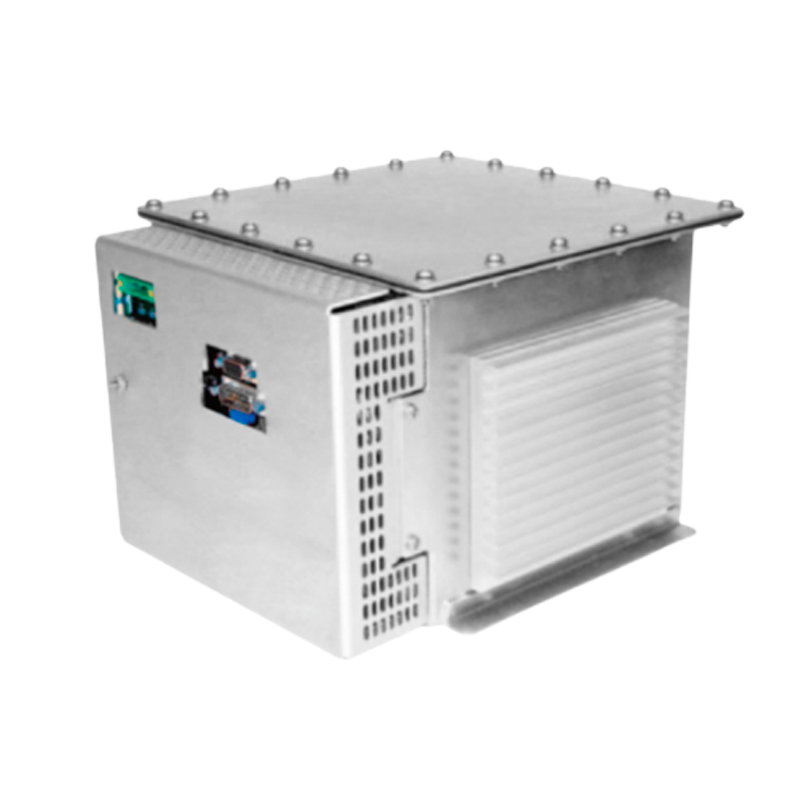
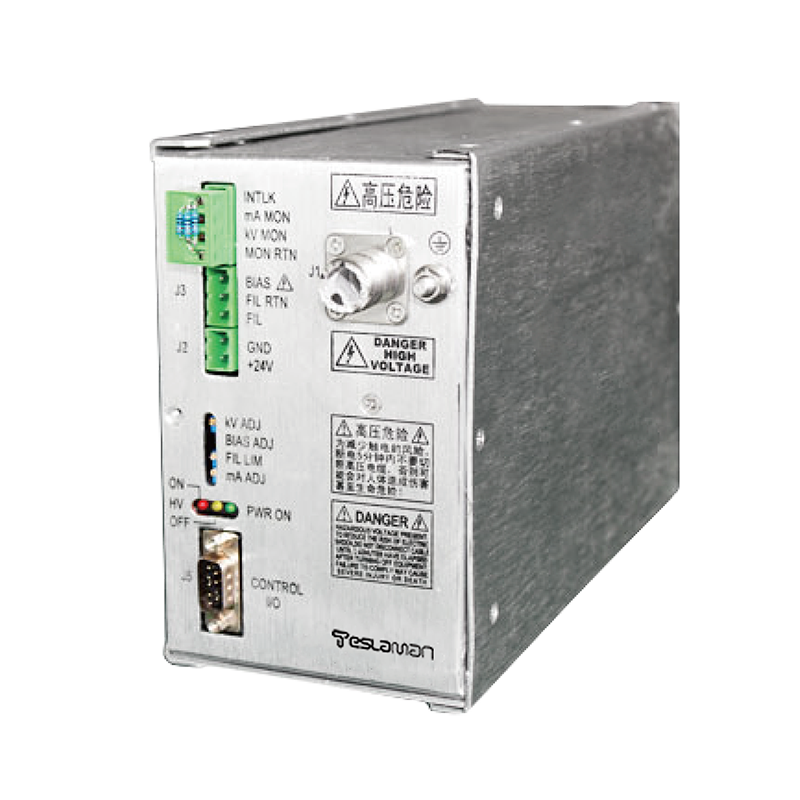
The high voltage power supply system for multi needle electrospinning typically consists of multiple independent channels, each providing adjustable voltage to one needle. The voltage range is typically from several kilovolts to tens of kilovolts. Each channel must provide stable, controllable output with minimal ripple. The channels may share a common power source but have independent regulation circuits.
Independent regulation enables optimization of the voltage at each needle to achieve uniform fiber diameters. Process monitoring measures the fiber diameter from each needle, either directly or through surrogate measures such as jet current or Taylor cone shape. Feedback control adjusts the voltage at each needle based on the measured diameter. This closed loop control maintains uniformity despite variations in needle condition, solution properties, or environmental conditions.
Jet current measurement provides a real time indication of the electrospinning process at each needle. The current carried by the jet is related to the charge density and the mass flow rate, which correlate with the fiber diameter. Monitoring the current at each needle enables detection of process variations. Current feedback can be used for automatic voltage adjustment to maintain consistent operation.
Solution flow rate control complements voltage control for fiber diameter management. The flow rate of polymer solution to each needle affects the fiber diameter, with higher flow rates generally producing larger diameters. Independent flow rate control for each needle, combined with independent voltage control, provides two degrees of freedom for optimizing the process at each needle.
Environmental conditions affect the electrospinning process and fiber diameter. Temperature and humidity influence solvent evaporation and solution viscosity. Air currents can deflect the jets and affect the fiber deposition pattern. Controlling the environmental conditions in the electrospinning chamber helps maintain process stability. When environmental variations are unavoidable, voltage and flow rate adjustments can compensate for their effects.
Needle condition changes over time affect the electrospinning behavior. Polymer residue can accumulate on needle tips, changing the electric field distribution and the jet initiation. Needle wear or damage can also affect the process. Regular cleaning and maintenance maintain consistent needle condition. Voltage adjustment can temporarily compensate for gradual needle degradation between maintenance cycles.
The control system for multi needle electrospinning must handle multiple feedback loops simultaneously. Each needle has its own control loop adjusting voltage based on measured parameters. The control loops may interact through the electric field coupling between needles. Multivariable control techniques can account for these interactions and achieve coordinated optimization across all needles.
Statistical process control monitors the uniformity across needles and detects when the process deviates from acceptable limits. Control charts track the mean and variance of fiber diameters across the needle array. Out of control signals trigger investigation and correction of the underlying cause. This statistical approach ensures that the product consistently meets quality specifications.