Analysis of Influence of Tube Voltage Stability of Industrial CT High Voltage Power Supply on Image Signal to Noise Ratio
Industrial computed tomography has become an indispensable tool for nondestructive inspection of complex components in aerospace, automotive, and manufacturing industries. The technique uses X rays to create cross sectional images of internal structures. The high voltage power supply that drives the X ray tube directly affects the X ray spectrum and intensity. The stability of this power supply significantly influences the image quality, particularly the signal to noise ratio.
Industrial CT systems operate by acquiring X ray projections from multiple angles around the object. Each projection records the X ray attenuation through the object at a particular angle. Reconstruction algorithms process these projections to create a three dimensional volume representation of the object. The quality of the reconstructed image depends on the quality of the projection data, which is affected by the X ray source characteristics.
The X ray tube converts electrical energy into X rays through bremsstrahlung and characteristic radiation. Electrons emitted from a cathode are accelerated by a high voltage toward an anode, where they decelerate and produce X rays. The X ray energy spectrum depends on the tube voltage, with higher voltages producing higher energy X rays. The X ray intensity depends on the tube current and the tube voltage.
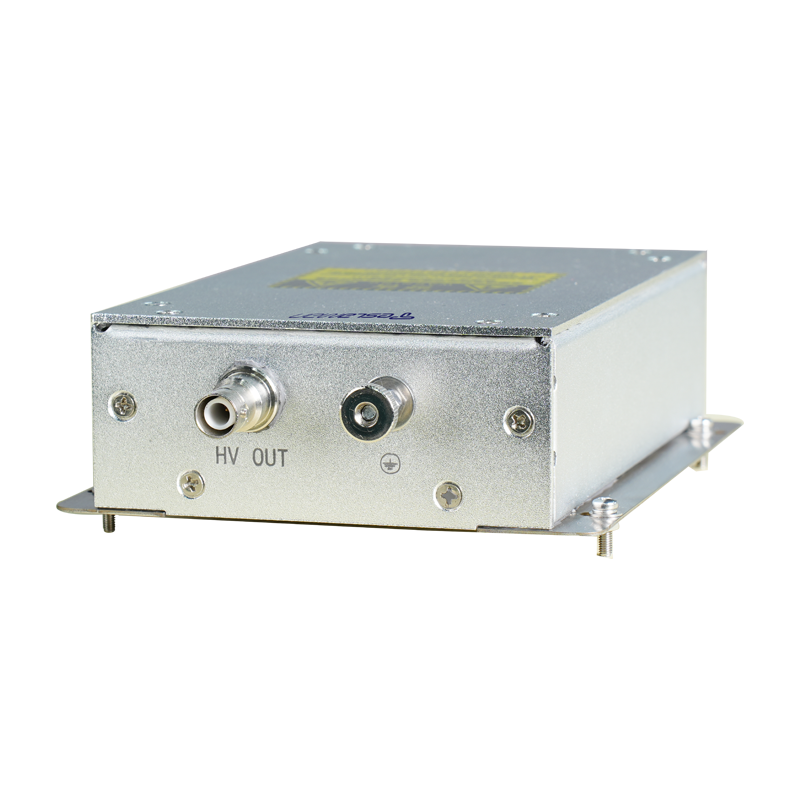
The high voltage power supply for an industrial CT X ray tube typically operates in the range of tens to hundreds of kilovolts, depending on the object size and material. The supply must provide stable output voltage and current for consistent X ray generation. Voltage stability is particularly important because the X ray spectrum and intensity are sensitive to voltage variations.
Signal to noise ratio in CT imaging quantifies the ratio of the signal representing the object structure to the random noise in the image. Higher signal to noise ratio enables detection of smaller features and more accurate measurement of material properties. The noise in CT images arises from several sources, including quantum noise from the random nature of X ray emission, electronic noise in detectors, and artifacts from various sources.
Quantum noise, also called Poisson noise, arises from the statistical variation in the number of X ray photons detected. The noise amplitude is proportional to the square root of the number of photons. The signal to noise ratio is therefore proportional to the square root of the photon count. Increasing the X ray flux improves the signal to noise ratio but increases radiation dose and may require longer acquisition time.
Voltage instability affects the signal to noise ratio through several mechanisms. Voltage variations cause variations in the X ray spectrum, changing the attenuation characteristics of the object. This can cause inconsistencies between projections acquired at different times, leading to artifacts in the reconstruction. Voltage variations also cause intensity variations, which contribute to noise in the projection data.
Short term voltage fluctuations, occurring within a single projection acquisition or between projections in a single scan, cause projection data variations that translate to noise in the reconstructed image. The magnitude of the noise contribution depends on the amplitude of the voltage fluctuations and the sensitivity of the X ray output to voltage changes. The X ray intensity is approximately proportional to the voltage squared, so voltage variations are amplified in the intensity variations.
Long term voltage drift, occurring over the duration of a scan or between scans, can cause systematic errors in the image. If the voltage drifts during a scan, projections acquired at different times have different effective spectra, causing artifacts in the reconstruction. These artifacts may appear as rings or bands in the image, corresponding to the angular positions where the voltage was different.
The power supply specification for voltage stability must be determined based on the image quality requirements. The acceptable voltage variation can be derived from the required signal to noise ratio and the sensitivity analysis of the imaging system. High performance industrial CT systems typically require voltage stability of a fraction of a percent or better to achieve acceptable image quality.
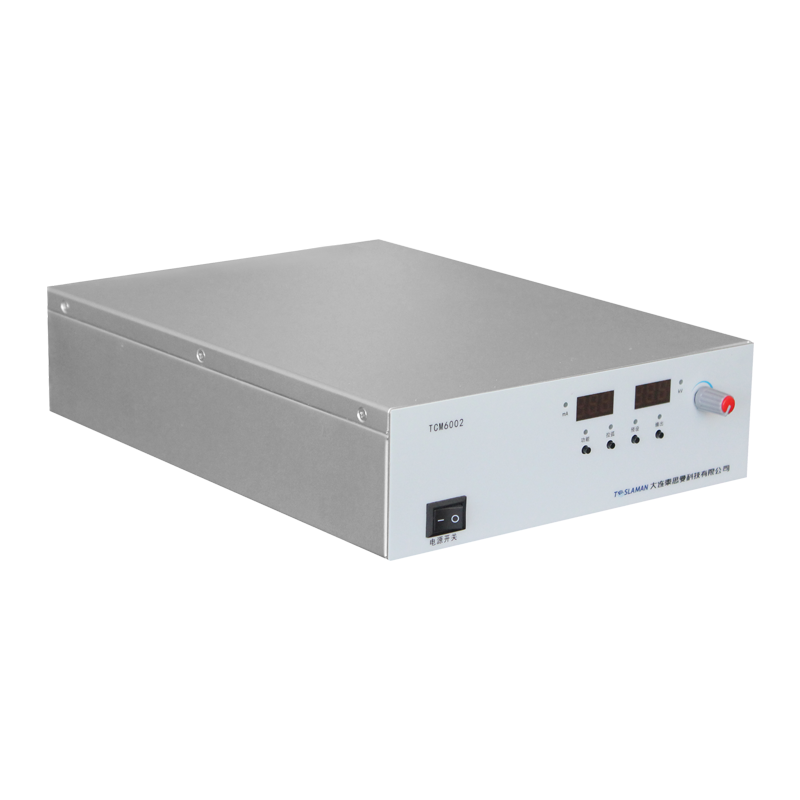
Feedback control in the power supply maintains voltage stability against disturbances such as load variations and input voltage fluctuations. The control loop bandwidth determines how quickly the supply can respond to disturbances. Higher bandwidth enables rejection of higher frequency disturbances but may increase noise from the control loop itself. The optimal bandwidth balances disturbance rejection against control noise.
Temperature stability affects voltage stability through the temperature coefficients of power supply components. Temperature variations cause component parameter changes that affect the output voltage. Thermal management systems maintain stable temperatures to minimize this effect. Temperature controlled environments or active temperature compensation further improve stability.
Monitoring and diagnostic systems track the power supply stability during operation. Voltage and current measurements provide real time indication of the power supply performance. Analysis of the stability data enables detection of degradation trends and prediction of when maintenance will be needed. This proactive approach maintains image quality and prevents unexpected failures.