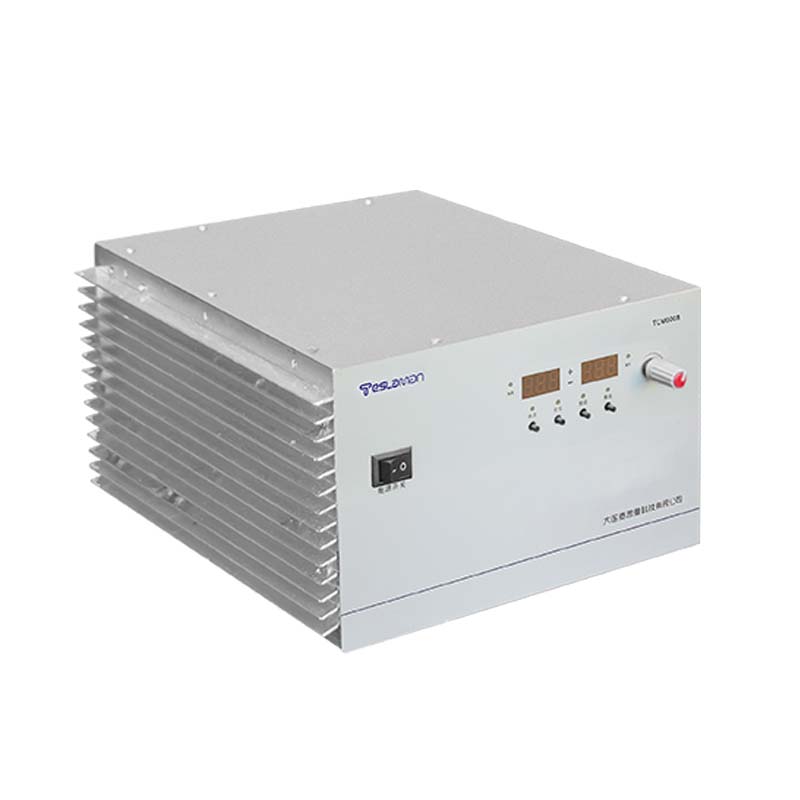
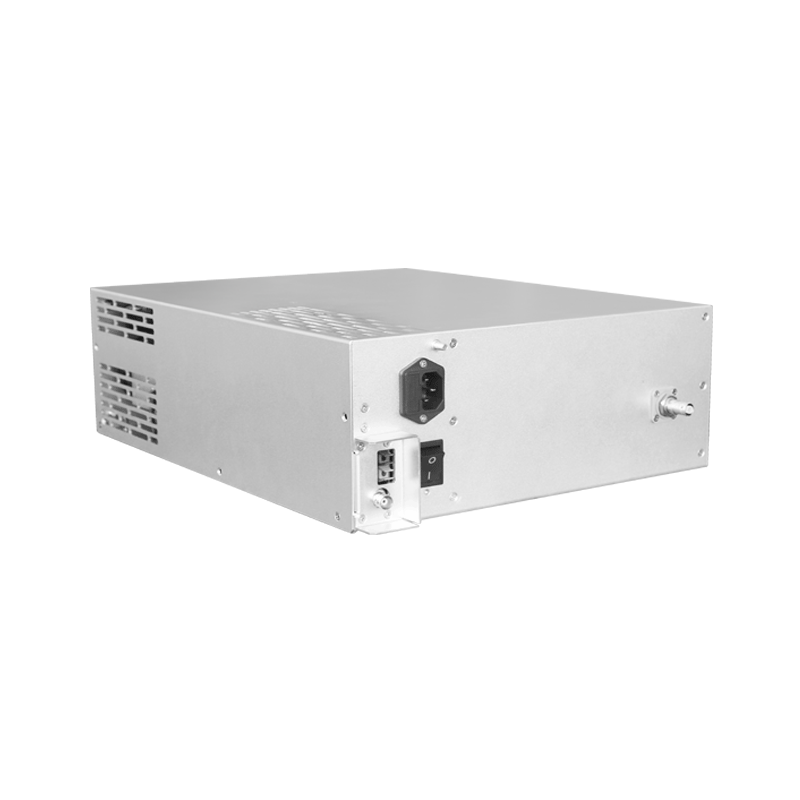
Research on RF Interference Suppression and Grounding Technology of High Voltage Power Supply for Mass Spectrometry Analysis
Mass spectrometry has become an indispensable analytical technique across scientific disciplines, from proteomics to environmental analysis. The high voltage power supplies that bias the ion optics and detectors are critical to achieving the resolution and sensitivity required for modern applications. Radio frequency interference from these power supplies can degrade the mass spectrometer performance, making interference suppression and proper grounding essential aspects of system design.
Mass spectrometers operate by ionizing sample molecules, separating the ions based on their mass to charge ratio, and detecting the separated ions. The separation typically uses electric and magnetic fields, with high voltage supplies providing the potentials for ion acceleration, focusing, and deflection. The detector, often an electron multiplier, requires a high voltage bias for amplification. Any noise or interference on these voltages affects the mass resolution and detection sensitivity.
Radio frequency interference originates from several sources in high voltage power supplies. Switching power supplies, commonly used for their efficiency, generate RF energy at the switching frequency and its harmonics. The fast voltage and current transitions during switching radiate electromagnetic energy that can couple into sensitive analog circuits. Even linear power supplies can generate RF interference through rectification harmonics and control loop oscillations.
The coupling paths for RF interference include conduction through shared power and ground connections, capacitive coupling between adjacent conductors, and inductive coupling through magnetic fields. Each coupling mechanism requires different suppression approaches. Understanding the coupling paths is essential for effective interference mitigation.
Conducted interference travels through the power supply connections into the mass spectrometer circuits. The power supply output leads carry the switching ripple and harmonics into the ion optics and detector. Filtering at the power supply output attenuates this conducted interference. Pi filters using inductors and capacitors provide steep attenuation above the cutoff frequency. The filter components must be selected for low parasitic capacitance and inductance to maintain effectiveness at high frequencies.
Radiated interference propagates through space as electromagnetic waves. The power supply switching circuits act as antennas, radiating energy that can be received by sensitive circuits in the mass spectrometer. Shielding encloses the interference sources, preventing radiation from escaping. The shield must be a continuous conductive enclosure with no gaps that could allow radiation leakage. Seams and openings require special attention to maintain shielding integrity.
Grounding strategy is fundamental to interference control. The ground system provides the reference potential for all circuits and carries return currents. A poorly designed ground system can couple interference between circuits through shared ground impedance. The ground design must minimize this coupling while providing a stable reference for sensitive measurements.
Single point grounding connects all ground returns to a single point, preventing ground loops that can couple interference. This approach works well for low frequency circuits but can be problematic at high frequencies where the ground connections become significant impedances. Multi-point grounding uses multiple connections to a ground plane, providing low impedance at high frequencies but potentially creating ground loops.
Hybrid grounding approaches combine single point and multi-point techniques to address both low and high frequency concerns. Capacitors can provide high frequency multi-point grounding while maintaining single point grounding at low frequencies. The capacitor impedance decreases with frequency, effectively creating multiple ground connections at RF while appearing as open circuits at low frequency.
Ground plane design in printed circuit boards affects the RF performance. Solid ground planes provide low impedance return paths and shielding between layers. Split ground planes can isolate sensitive analog circuits from noisy digital circuits, but the splits must be carefully positioned to prevent return current paths that couple interference. The ground plane should have minimal interruptions from vias and traces.
Cable shielding prevents interference coupling on signal and power cables. Shielded cables have a conductive braid or foil that encloses the signal conductors. The shield must be properly terminated at both ends to provide effective shielding. For low frequency signals, grounding the shield at one end may be sufficient, but for high frequency interference, both ends should be grounded. The shield termination must make low impedance contact with the enclosure ground.
Ferrite components provide loss at high frequencies, converting RF energy to heat. Ferrite beads on cables suppress common mode interference. Ferrite cores on inductors and transformers reduce high frequency ringing. The ferrite material must be selected for the frequency range of concern, as different materials have different impedance characteristics.
Verification of interference suppression requires measurement in the operating environment. Spectrum analyzers measure the RF emissions from the power supply and the interference levels at sensitive points in the mass spectrometer. Near field probes identify specific emission sources. The measurements must meet the requirements for the mass spectrometer sensitivity, which may be more stringent than regulatory emission limits.