Transmit Waveform Control and Optimization of High Voltage Power Supply for Marine Geophysical Exploration
Marine geophysical exploration uses various electromagnetic methods to probe the subsurface structure beneath the ocean floor. These methods require controlled electromagnetic source signals, generated by high voltage power supplies driving current through antennas or electrodes in the seawater. The transmit waveform characteristics directly affect the resolution and depth of investigation. Control and optimization of the transmit waveform is essential for effective marine electromagnetic surveys.
Marine controlled source electromagnetic methods use a towed electric dipole source that transmits electromagnetic signals into the seawater and subsurface. The signals propagate through the conductive seawater and interact with geological structures. Receivers on the seafloor measure the response, which contains information about the subsurface resistivity distribution. The interpretation depends on the known source signal characteristics.
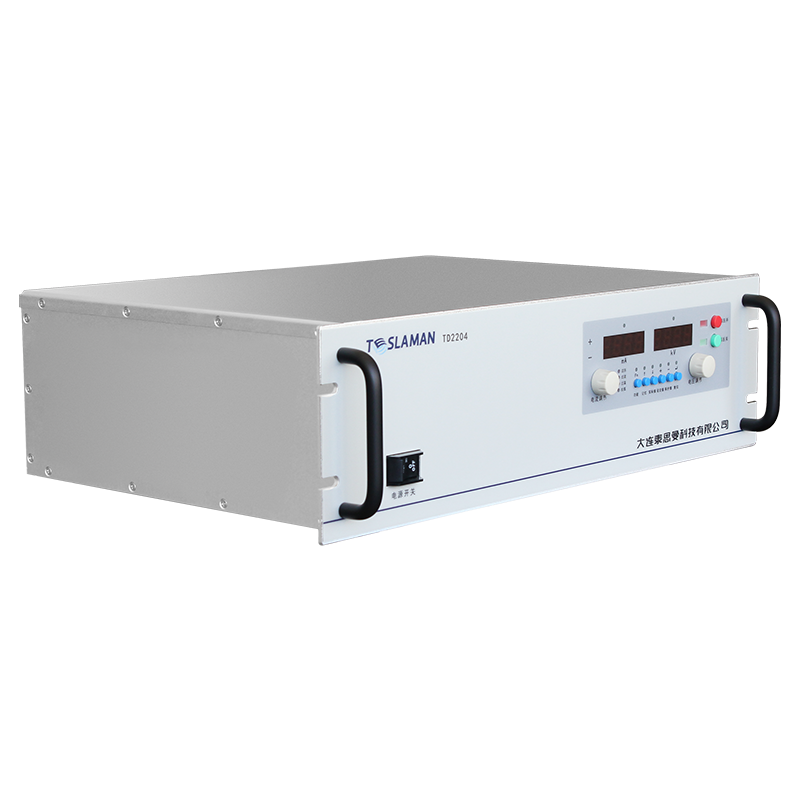
The high voltage power supply for the transmitter must deliver substantial current to the dipole antenna. Typical source currents are hundreds to thousands of amperes, with voltages of hundreds to thousands of volts to overcome the seawater resistance. The power levels can be tens to hundreds of kilowatts. The supply must operate reliably in the marine environment while providing the required waveform control.
The transmit waveform affects the frequency content and the time domain characteristics of the source signal. Different waveforms are used for different survey configurations and target characteristics. Square waves provide a broadband frequency spectrum suitable for multifrequency surveys. Bipolar waveforms with alternating polarity reduce electrode polarization effects. Tailored waveforms can optimize the signal for specific targets.
Square wave transmission alternates between positive and negative current with sharp transitions. The fundamental frequency and the harmonics provide multiple frequencies in a single transmission. The harmonic amplitudes decrease with frequency, limiting the useful bandwidth. The transition sharpness affects the high frequency content, with faster transitions producing stronger harmonics.
The waveform transitions require the power supply to change the output current rapidly. The transition time depends on the supply output impedance, the antenna inductance, and the available voltage overhead. Faster transitions require higher voltage capability or lower output impedance. The transition shape affects the harmonic spectrum and should be controlled for consistent signal characteristics.
Waveform timing accuracy affects the interpretation of the data. The exact timing of the transitions must be known for time domain processing. Jitter in the transition timing causes uncertainty in the signal timing. The power supply timing must be precise and stable for accurate data interpretation.
Current magnitude accuracy affects the source strength calibration. The data interpretation assumes a known source current. Variations in the current cause errors in the calculated subsurface resistivity. The power supply must maintain accurate current output despite variations in the antenna resistance, which changes with seawater conductivity and towing conditions.
Duty cycle control affects the average power and the thermal loading. Higher duty cycles deliver more energy but increase the heating of the antenna and the power supply. The duty cycle must be appropriate for the thermal capabilities of the system. Intermittent transmission allows cooling between pulses.
Optimization of the transmit waveform considers the survey objectives and the environmental constraints. For deep targets, lower frequencies with longer periods provide better penetration. For shallow targets, higher frequencies provide better resolution. The waveform should maximize the signal at the frequencies of interest while minimizing the total energy and the environmental impact.
The marine environment imposes additional constraints on the power supply design. Seawater corrosion requires appropriate materials and protection. The towed configuration imposes size and weight constraints. The power supply must operate reliably despite wave motion and vessel vibrations. The electrical isolation must prevent seawater intrusion.
Real time waveform monitoring enables quality control during the survey. Current sensors measure the actual transmit current, which may differ from the commanded value due to antenna impedance variations. The measured waveform can be used in the data processing to account for any deviations from the ideal waveform. Recording the waveform provides documentation for data quality assessment.